

 GMA Brandtalk
 Tracking
 Archives

DMW chief Cacdac vows to lead Abu Dhabi Dialogue in protecting migrant workers’ rights
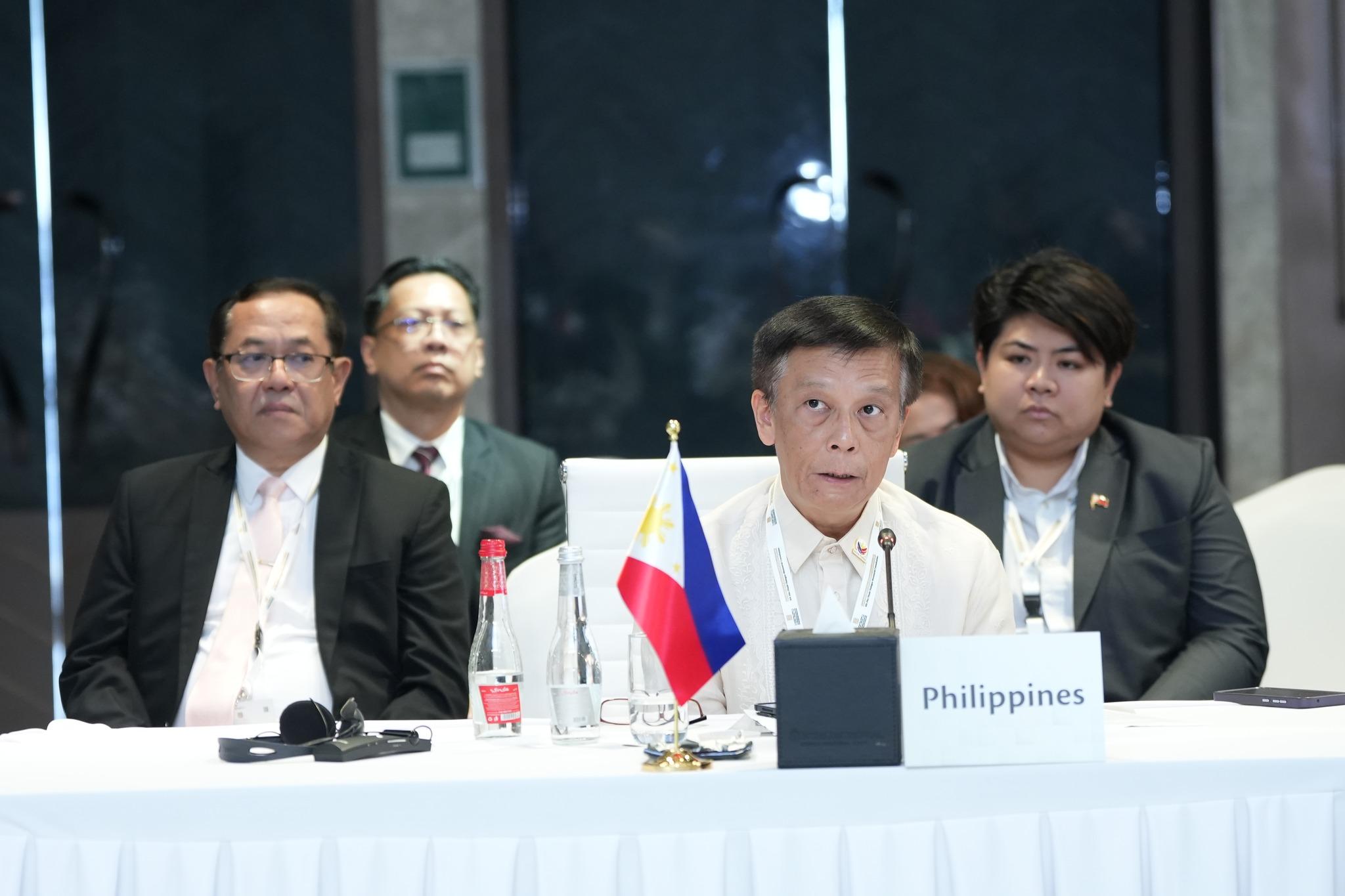
DUBAI, United Arab Emirates – Department of Migrant Workers Secretary Hans Leo Cacdac, who has just taken post as chairman of the Abu Dhabi Dialogue, vowed to lead the international organization in protecting the rights of foreign workers in the Middle East.
“The Abu Dhabi Dialogue (ADD) presents itself as the proper venue to take up all policies and concerns about safe, ethical, and sustainable labor mobility,” Cacdac told the 8th Abu Dhabi Ministerial Consultation organized by the UAE Ministry of Human Resources and Emiratization (MoHRE) earlier this month.
It serves as the perfect venue, he said, “given that 60 to 70 percent of our Overseas Filipino Workers (OFWs) are here in the Gulf.”
“It’s the perfect time and place, especially in this high era of shared responsibility and cooperation among nations,” Cacdac said.
Cacdac holds the ADD chairmanship until next year.
The ADD, a voluntary and non-binding inter-government consultative body formed by the UAE in 2008, engages seven Asian countries of labor destination: Bahrain, Kuwait, Malaysia, Oman, Qatar, Saudi Arabia, and the UAE; and 11 countries of origin: Afghanistan, Bangladesh, China, India, Indonesia, Nepal, Pakistan, the Philippines, Sri Lanka, Thailand, and Vietnam.
Regular observers include the International Organization for Migration (IOM), International Labor Organization (ILO). The past chair is Pakistan.
The ADD aims to address concerns arising from a high level of interdependence on temporary migrant laborers in the Gulf countries over the last two and a half decades.
“Gulf countries host the world’s highest proportion of foreign workers to all workers (35.6%)—or 11.7% of all migrant workers worldwide. The proportion of foreign-born workers in the GCC ranges from approximately 30% to 90%. Workers of Asian origin consequently play a highly significant role in the economies of the Gulf and have contributed to the rapid development that has taken place in the GCC over the last 25 years through their skills, knowledge, and hard work,” the ADD said.
Through multilateral dialogue and cooperation on the joint development of labor mobility-related programming, implementation, and reporting, the ADD helps to ensure that members develop partnerships for adopting best practices and are in a position to learn from one another’s experience, it said. —VBL, GMA Integrated News

