

 GMA Brandtalk
 Tracking
 Archives

Repatriations underway as Middle East conflict continues

Repatriations of Filipinos from countries in the Middle East are continuing amid the conflict in the region that has been heightened by the US and Israel's attacks on Iran, and the Islamic republic's retaliation.
On Sunday, the Department of Foreign Affairs (DFA) reported that 11 Filipinos have safely left Iran for Van, Turkey, thanks to the efforts of the Philippine embassies in Tehran and Ankara.
“The DFA, through the Philippine Embassy in Tehran, remains committed to assisting the estimated 800 Filipinos currently residing in Iran who may wish to return to the Philippines,” the department added in a statement.
“Filipinos seeking assistance are advised to contact the Embassy through the contact numbers and official channels posted on its website and social media pages,” it said.
Also on Sunday, 61 overseas Filipino workers (OFWs) who had been stranded in the United Arab Emirates arrived at the Ninoy Aquino International Airport (NAIA) Terminal 3, according to the Department of Migrant Workers (DMW).
The DMW said the group arrived from Dubai on Emirates flight EK 334 and included three minors. They have been provided financial and transportation assistance so they can return to their provinces, as well as temporary accommodation and psychosocial and medical support.
A day earlier, 81 OFWs returned from the Middle East and were also assisted.
Data from the Philippine government showed there are a total of 1,979 Filipinos in nine countries in the Middle East who are seeking repatriation. The country with the most number of OFWs who wish to go home is Kuwait with 633.
In Doha, Qatar, one Filipino was wounded with minor injuries from intercepted missile shrapnel and is now recovering, the Philippine Embassy said.
At least one Filipino has already lost their life in the conflict: Mary Ann Velasquez de Vera, a caregiver in Israel who was killed in an Iranian strike.
In an interview on Super Radyo dzBB on Sunday, Senator Sherwin Gatchalian said the government needs an additional P7 billion for OFW repatriations should the conflict in the Middle East worsen.
'War risk' areas
The waterways are also a place of great risk, as Iran's Revolutionary Guards target oil tankers that pass through the Strait of Hormuz, a key chokepoint for global shipping that Iran has effectively closed.
On Saturday, the DMW announced that the strait was now classified as a "high-risk" area, meaning Filipino seafarers now have the right to refuse boarding a vessel that will set sail through the strait.
On Sunday, DMW Secretary Hans Cacdac declared both the Strait of Hormuz and the Persian Gulf a "War Risk Operations Area."
“Filipino seafarers, particularly those under ship owners employing Filipino crews, are not expected to be in that area. Otherwise, our Filipino seafarers must be given the right to refuse sailing, and as much as possible, this part of the world should be avoided as it is currently extremely dangerous,” he said.
This week, the House of Representatives will conduct a congressional briefing on the safety of OFWs amid the conflict, with Speaker Faustino Dy III asking the House Committees on Foreign Affairs and on Overseas Workers Affairs to conduct a joint briefing on Wednesday, March 11, to review the situation and the government’s preparedness to assist affected OFWs.
US-Israel attacks, Iran retaliation
The United States and Israel on February 28 conducted air strikes against Iran, including its capital, Tehran.
The attacks led to the death of Iranian leader Ayatollah Ali Khamenei and members of his family. In the ensuing days, hundreds of Iranians have also been killed in subsequent strikes, including dozens of children at a girls' school.
The US also struck an Iranian warship that was docked in Sri Lanka after participating in drills with India. The attack killed 87 sailors and dramatically widened the scope of the US and Israel's attacks on Iranians.
US President Donald Trump has justified the biggest US military operation in the Middle East since the 2003 invasion of Iraq by saying Tehran posed an imminent threat to the United States, without providing evidence. He has also said Iran was too close to being able to build a nuclear weapon.
On Sunday, the Defense Minister of Switzerland said the United States and Israel have broken international law with their attacks on Iran.
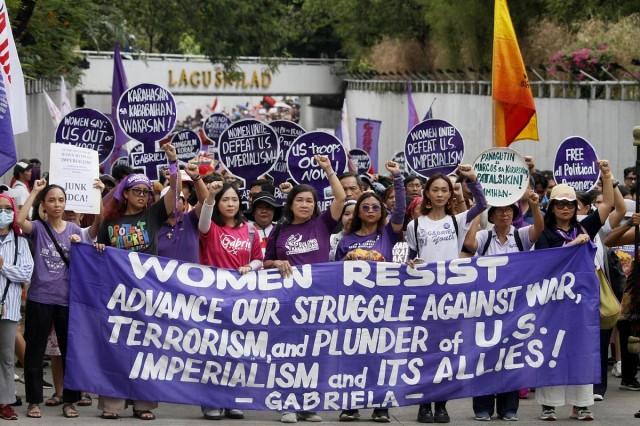
Legal experts have said many countries will consider the attacks unjustified under the United Nations Charter, under which member countries must refrain from using force or the threat of force without UN authorization or unless acting in self-defense.
"The Federal Council is of the opinion that the attack on Iran constitutes a violation of international law," Swiss Defense Minister Martin Pfister said.
Switzerland has joined other states in decrying the Iran attacks, including Canada, Spain, and the Vatican. — BM, GMA Integrated News

