

 GMA Brandtalk
 Tracking
 Archives

Stranded Filipino tourists in Dubai share how the Middle East conflict felt
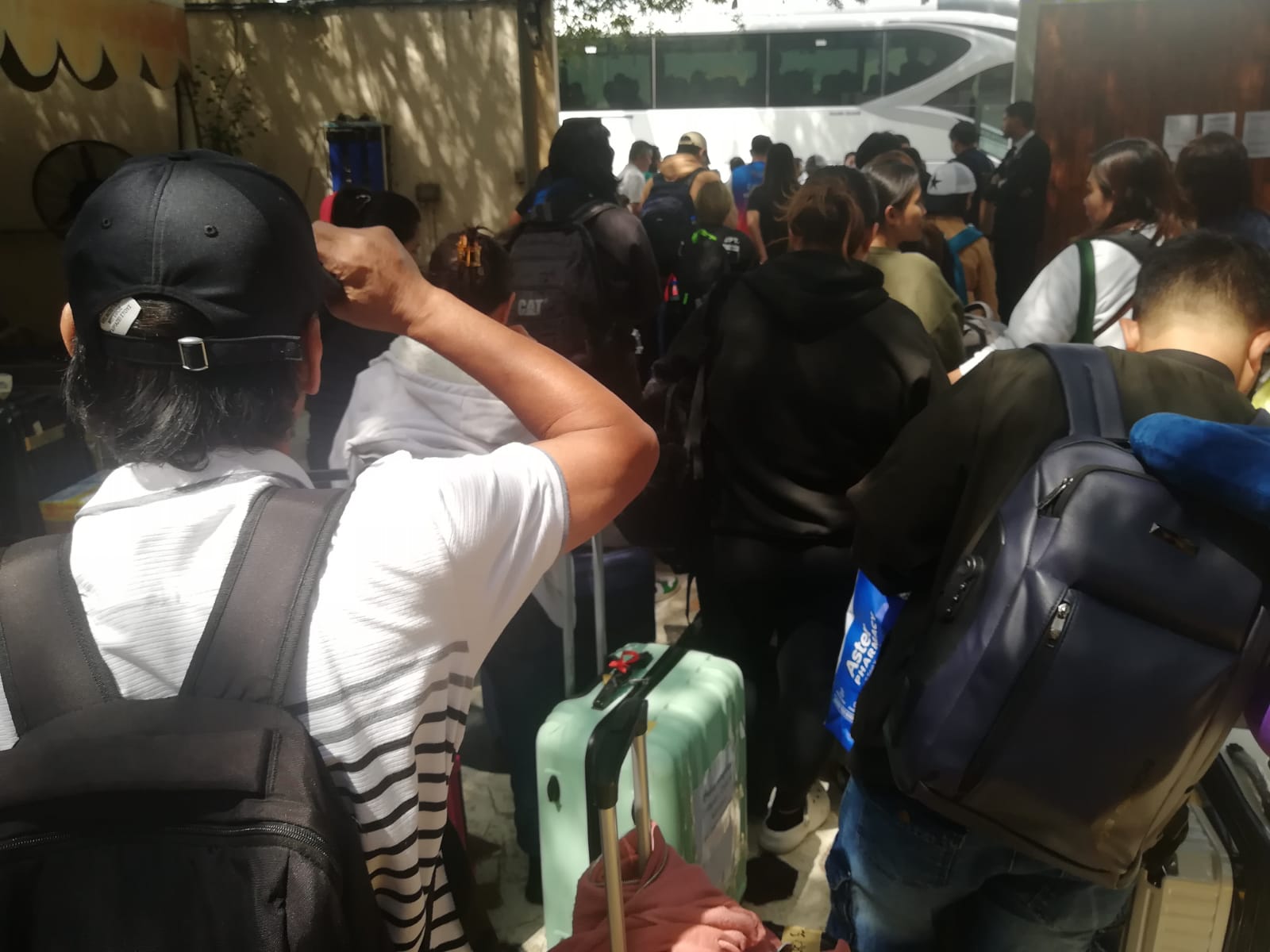
Dubai, United Arab Emirates – You’re enjoying visits to tourist spots and having fun with selfies.
But things changed – overnight.
Suddenly, your flight out has been canceled. Money was running low. The end was elusive.
Hearing it
“Rinig na rinig po namin 'yung lagabog. Takot na takot kami. Napapatayo kami (We were so frightened. It made us stand up),” said Maya Mirasol, who, along with Marilou Orapa, were staying in Al Rashidiya, a few minutes away from Dubai International Airport (DXB).
They arrived on February 26. Two days later, the US and Israel bombed Iran, and the latter retaliated by hitting neighboring Gulf cities. It has been a tit-for-tat barrage of bomb runs since.
Abu Dhabi
Thirty-eight-year-old Carlo Guevarra and his family were in Abu Dhabi, having just visited the Sheikh Zayed Grand Mosque, a tourist spot, and having a late lunch on February 28, when news of the war came out.
“Natakot po kami, bumalik kami ng Dubai (We went scared, so we went back to Dubai),” said Guevarra.
They were staying in Al Nahda, also a few minutes away from DXB. The airport has had three drone attacks from day one of the war.
They came on February 25 and were supposed to leave on March 2. There were 18 of them, all out for good time. But, like Mirasol and Orapa, they had an unexpected change of plan.
Ferrari World
Nick Samson, 42, wife Valerie, and seven-year-old daughter, Via Elize, were about to leave Ferrari World, another tourist spot in Abu Dhabi, when they received an emergency alert.
It was the first time they got a phone alert. And the message was – for lack of words – grim: A “potential missile threat” asking them to “seek shelter.”
It was the 3rd day of their UAE holiday, having arrived also on February 25.
“We got a little panicky because some people started running. A few stalls also closed, but we were able to safely get to the food hall where we stayed for a while and thought about our next steps,” said Samson.
“One thing we noticed was that the locals remained calm and did not panic. Some Filipinos even told us that it seemed normal for them. We were also assured by the local police that everything was safe. Since the theme parks were still open, we decided to push through with our plans,” he added.
Repatriation
What they all have in common was that they left UAE on March 13, Friday, for home, happy, on a Philippine government-organized repatriation that also included overseas Filipino workers (OFWs) and some dependents like seniors and children.
A second repatriation is being finalized this week, according to Ericson Reyes, president of Filipino Social Club (FILSOC), an aggrupation of various Filipino organizations in Dubai and the Northern Emirates.
“The Filipino Social Club (has) just received word from our DMW official that another round of repatriation is scheduled for (this) week,” he told FILSOC members in a Whatsapp message.
He said included in the next batch, scheduled this Wednesday or Thursday, were those who did not make it in last Friday’s repatriation because all the seats were already taken.
Also, new additions of OFWs and stranded Filipinos and will be on this week’s flight, being processed and documented as of press time.
The online edition of The Global Stories DXB, a Dubai-based OFW reading material, have been replete with inquiries from OFWs asking how they can be repatriated.
Last Friday’s repatriation had 442 passengers, 280 of whom were OFWs and their dependents. Included were the approximately 90 Filipinos from Abu Dhabi.
Reyes said a 330-capacity plane will be used this time.
The repatriation, said Labor Attaché John Rio Bautista, head of the Migrant Workers Office (MWO) in Dubai, will push through “depending on the security assessment.”
Migrant Workers Secretary Hans Leo J. Cacdac, had earlier said Filipino community leaders have a vital task in the repatriation.
“Mahalagang papel 'yung coordination with the leaders, kasi 'yung leaders, sila
'yung tulay natin para sa mga workers na gustong maka-uwi,” he said.
(Filipino community leaders have an important role because they are our bridge to the workers who want to go home.)
“Our objective is to bring those who wish come home, home,” Cacdac said.
The repatriation was the largest number of Filipinos brought home from any country, he said.
“Sa buong pagkaka-alam ko, yes (it was the biggest),” he said.
Cacdac flew from Manila to personally see the repatriation and accompany the repatriates on the flight home. It also was his birthday.
Goose bumps
Meantime, Ana Martillano, 30, and an office admin at a firm in Dubai International Financial Center (DIFC), was packing her belongings, getting ready to be repatriated, when an explosion rocked a building near where she was staying.
“Biglang may ‘Boom.’ Malapit lang sa amin 'yung building (na tinamaan). Kinilabutan ako (Suddenly, there was a 'Boom.' It was near where we’re at. I got goose bumps),” she said.
Marian Alitin 40, said they were becoming wary because she filed for repatriation on March 1.
“Give up na talaga kami, hindi na matutuloy. Pero kahapon kinontak kami ng MWO. Aalis kami para sa safety ng mga bata. Nasaksihan po namin (ang lahat). Nagkakaruon na kami ng anxiety. Tuwing may maririnig kami ay umiiyak 'yung anak ko,” said Alitin.
(We were giving up. But we were contacted by MWO yesterday. We are leaving for the kids. We saw everything. We were getting anxieties. My child would cry whenever there were loud noises.)
She added they felt relieved that she and her kids – a year old and a 10 year-old – were finally homeward-bound.
Her husband, Bimbo, who owns a water sport company, is staying behind. The couple were out camping when the war broke out.
Closure
Other OFWs have issues that, perhaps, only a repatriation could bring closure to.
One such was 46-year-old Ana Marie Ambulo of Cavite who worked as housemaid for two years. Her employment visa was not canceled by her employer but she was let go so she could, apparently, find another job.
“Lumapit po ako sa MWO kasi gusto ko na rin pong makauwi. Sabi nila (sa MWO) basta maka-uwi na ako, ok na 'yung kaso, kasi pag nakalabas na ako ng UAE, automatic cancel na yung employment visa ko.” said Ambulo, a mother of five children and a factory worker before she went to UAE, her first work abroad.
(I wanted to go home that’s why I came before MWO. I was advised that my employment visa would automatically be canceled if I leave UAE.)
A similar case was that of 51-year-old Edwin Poloma of Rosario, Batangas, who was going home because his employer, also a Filipino, did not work on his employment visa as a kitchen helper in a restaurant in Satwa, a known Filipino enclave.
“Mahirap na ang sitwasyon tapos hindi pa naayos ng amo ang visa, Pinoy pa naman, kaya uwi na lang ako,” Poloma said. He has been in the UAE for a year; his wife, a nanny at Meydan, has been in Dubai for seven years.
(The situation is getting hard yet my Filipino employer has not been working on my employment visa. So, I’m going home.)
Phone calls
Consul General Ambrosio Brian Enciso III, who heads the Philippine Consulate General (PCG) in Dubai and the Northern Emirates, said they were able to put together the stranded Filipinos through phone calls.
“Simula pa lang ng kaguluhan sinabi na namin ang contact, our hotlines. 'Yung iba nakuha namin dahil nag-comment sa FB page namin. Mula nang magsimula ang gulo, sinabihan na namin sila, especially when it became clear na the Philippine carriers were not able to enter the UAE. Tinawagan na namin sila,” said Enciso.
(We announced our hotlines when it all broke out. The others we got from their comments on our Facebook page. We already told them from day one, especially when it became clear that the Philippine carriers were not able to enter the UAE. We reached out to them.)
The embassy and the MWO did the same.
The repatriation was called a “non-ticketed flight,” Enciso said.
“Manifest lang, then binayaran ng government 'yung charter company (It only involves the manifest then the government paid…) for the whole service – plane and the seven buses that took them (the repatriates) to the Fujairah airport (where flight number TVR 4731 took off carrying Cacdac and the repatriates),” he said.
Fujairah is an emirates some two hours away from Dubai.
The Philippine Airlines and Cebu Pacific have announced they would resume flights to the UAE on March 17.
The repatriates met at the PCG and MWO compound in Al Qusais, Dubai, where they were then transferred to the Fujairah airport. —AOL, GMA Integrated News

