

 GMA Brandtalk
 Tracking
 Archives

In Milan, Filipino migrant retirees push for dementia awareness, mental health
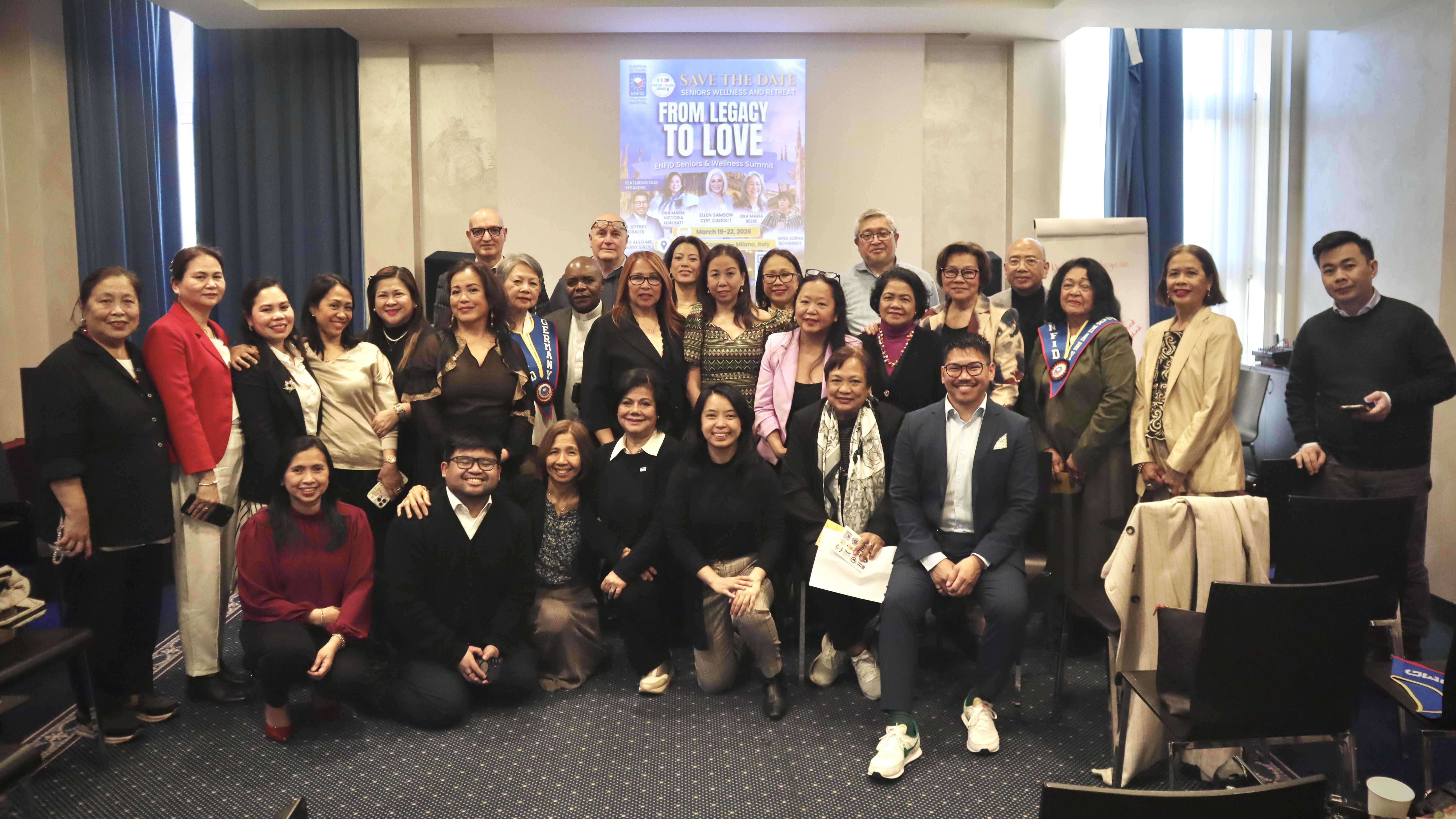
MILAN – A neurosurgery nurse, Nilsa Fischer initially didn’t want to accept her elderly mother’s diagnosis of dementia in 2011.
At a wellness summit in Milan for Filipino retirees on March 20, the 69-year-old nurse recalled how her mother’s situation deteriorated, especially when she became irritable or blurted out statements she would forget seconds later.
“There were times that I became aggressive with my mom, and I felt sorry about it,” Fischer told GMA News Online.
“My mother was very forgiving, telling me, ‘Kung pagod ka na, gusto ko pa rin mag-stay sa’yo, dahil sa’yo ako comfortable. I feel loved (Even if you’re tired of me, I still want to stay with you. I feel comfortable with you).”
Like Fischer, other Filipino retirees at the Milan summit urged migrant groups to include dementia awareness and mental health in their community agenda.
“There must be services for Filipino migrants whose family members have dementia, and they need to be made aware of this disease. Informal caregivers – family, friends, or even neighbors – also need help. People with dementia stay with their families until their death,” Fischer said.
Understanding dementia
The wellness summit, organized by the European Network of Filipino Diaspora (ENFiD), featured discussions on issues affecting senior citizens, including mental health and community leadership.
The opening program focused on dementia, a term that the World Health Organization (WHO) described in its fact sheet as “a syndrome that can be caused by a number of diseases which over time destroy nerve cells and damage the brain.”
While dementia typically leads “to deterioration in cognitive function” beyond the usual consequences of biological aging, the WHO noted that the consciousness of people with dementia is not affected.
For Ellen Samson, a California-based advocate of dementia education and founder of a support service for dementia patients, this condition is a “family problem” that affects relationships, finances, and the emotional well-being of everyone involved.
“If there is a diagnosis, everything breaks loose. And then, you will realize that you need to separate the person from the disease. Sometimes, seniors become very lonely, not because their families don’t love them, but because their families don’t understand dementia,” Samson told the audience of Filipino community leaders from 13 countries across Europe.
Samson also pointed out a cultural tendency among Filipinos to place the entire burden on one person, which she called a “complete monopoly” of care.
“We often assign the care to someone capable: ‘Ikaw ang panganay’ (You’re the eldest) or ‘Ikaw ang nasa abroad, so ikaw dapat ang mag-alaga (You’re the one abroad, so you do the caregiving). That’s our life,” she said.
For Fischer, Samson’s remark mirrored her experience, especially since she lived with her mother in Vienna from 2006 until her death in 2017.
“I thought it was just part of normal aging. When I observed she became irritable, I brought her to a neurologist. He gave her a simple mental test that she failed,” Fischer recalled.
Samson explained that because a failing brain can no longer process logic, caregivers should prioritize providing comfort and connection rather than arguing with or correcting the patient.
She also warned against practices that could harm the dignity of people with dementia.
“These are the people who gave their lives to you. Put yourself in their shoes. Do you want people to try to get you when you have a meltdown? Just let them live. They are in the sunset of their lives.”
Pushing for migrant workers’ mental health
The summit also focused on the mental health of migrant workers, particularly those who are finding their footing abroad.
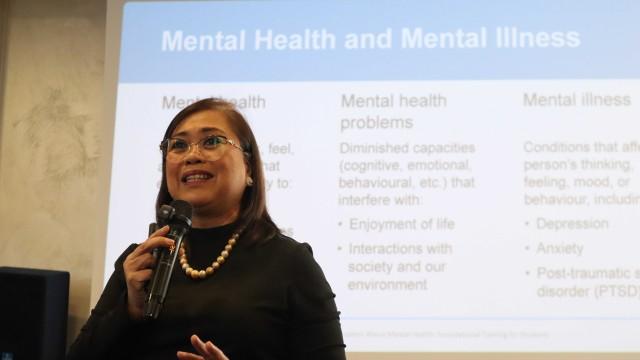
In her talk, Dr. Marivic Lualhati, a psychologist and former hospital president, spoke of the necessity of having a “safe space” and community for Filipino migrant workers.
“Having someone next to you changes the dynamic of loneliness and depression. Why? Because we have one heartbeat, which brings hope to every Filipino. But more than anything, it’s really about transition, which all of us do.”
Lualhati said Filipino migrants, and even retirees, still have the cultural habit of hiding distress even when they are reaching their limit.
“When we’re asked, ‘How are you?’ What’s our default answer? ‘I’m okay.’ And that’s very Pinoy. In our Filipino culture, distress often goes unnoticed. We call it sadness when it’s actually depression.”
While there’s still “stigma surrounding distress”, she encouraged Filipino migrants to acknowledge their emotions, as awareness is the first key to improvement.
She also told them about the power of saying “no.”
“When we experience stress, part of humility is admitting and accepting, ‘I’m stressed out.’ We choose our baggage. We need to pause physically and mentally. We need to be compassionate about ourselves and say no to avoid burnout,” Lualhati added.
The courage to ask for help
Milan-based 65-year-old housewife Ana Bel Mayo, the organizer of the summit, finds value in being part of a Filipino community in Italy, where she and other members can offer support to migrants facing difficulties.
She has lived in Italy for 38 years and actively gives back to the Filipino community, while living with her Italian husband and taking care of her 89-year-old mother-in-law.
In her years of leading Filipino community groups in Milan, Mayo admitted that she sometimes avoids asking for help out of fear of being misjudged.
“But in doing so, my mental health suffered,” she said.
“Hindi ko talaga kaya na pagsabay-sabayin ang lahat, kasi kapag may edad na, may limitations ka. Pero ang natutuhan ko, kailangan talagang makipag-usap (I cannot really juggle everything, because there are limitations, especially when someone gets older. What I’ve learned is the need to talk to others about my situation).”
Lualhati described Filipinos as “social beings” by nature, which is a strength in an international context.
“Our social health will actually come from us. Not everyone is blessed with a good family, but through the connections in our relationships, we are able to ignite the power within us to heal people, be kind to people, and be compassionate towards people,” she said.
Fischer said this need for support is even more urgent for families and Filipinos migrants caring for relatives with dementia.
During her speech, Fischer shared Austria’s national dementia strategy, which supports the estimated 170,000 people with dementia and their families.
The Austrian strategy highlights coordinated care systems and caregiver training, which Fischer said “enables dementia patients to live with dignity and have a good quality of life.”
“We can learn from the experience in Austria, so Filipinos will know how to deal with dementia patients. This is more important for caregivers, because they, too, need care and support,” she said.
In 2025, the Department of Health (DOH) estimated that about 1 million people in the Philippines have dementia, and that one out of 10 elderly Filipinos is “likely affected” by the condition.
During last year’s World Alzheimer’s Month in September, the DOH called for “community support” to help the elderly with dementia.
Recalling her mother’s situation, Fischer said she wished she could have sought more help and paid closer attention to what her mother needed most at the time.
“Nire-regret ko na sana mas naging pasensyosa ako. Pero lagi niyang sa akin, ‘Nagpapasalamat ako na kinuha mo ako rito (I wish I could have been more patient with her. But she always told me, ‘I’m grateful that you brought me to live with you here) For me, it’s a privilege to be here and stay with you,’” Fischer said. — JMA, GMA Integrated News

