

 GMA Brandtalk
 Tracking
 Archives

More Pinoys repatriated from Gulf as DMW eyes alternate OFW job sites
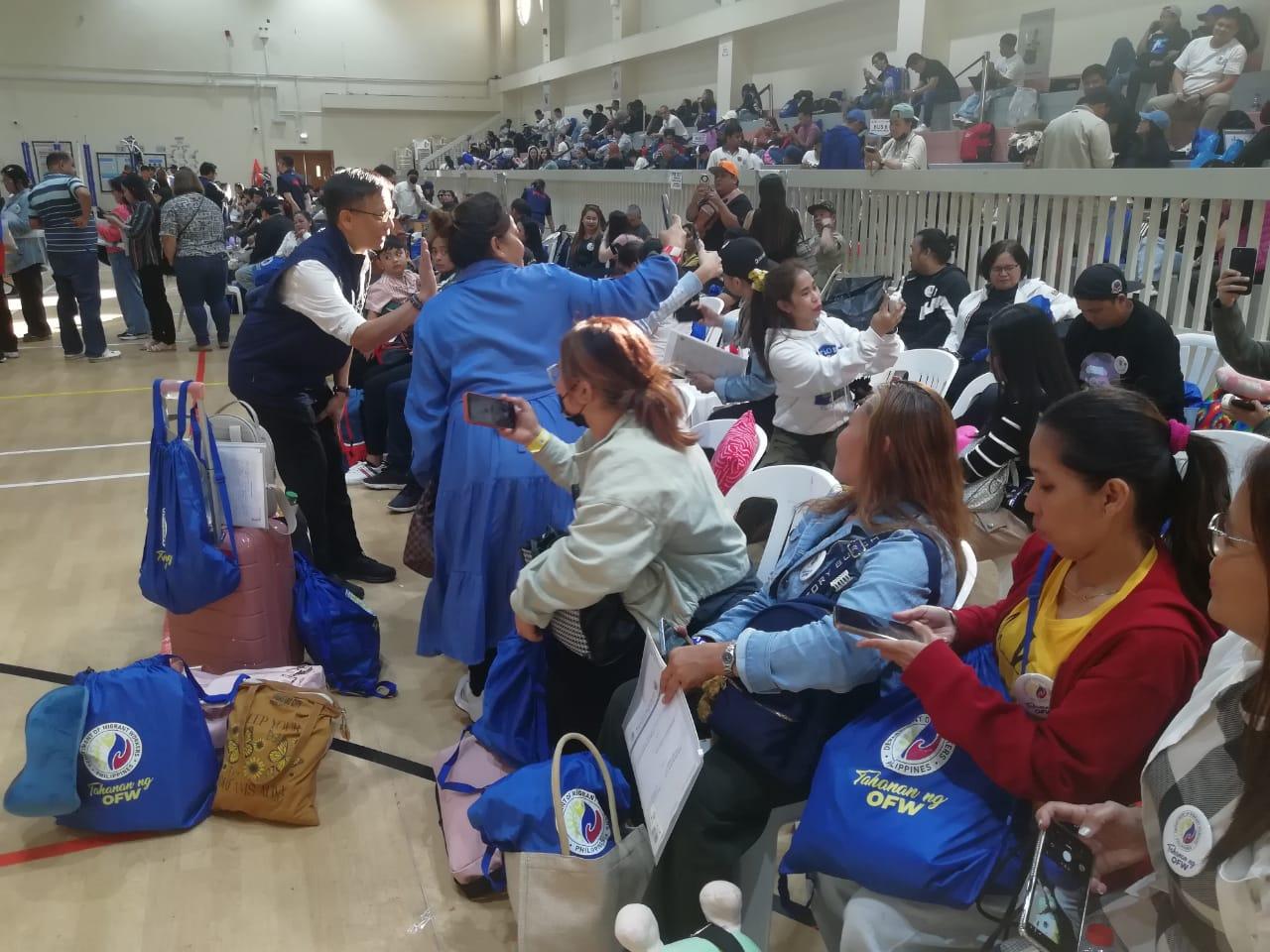
DUBAI, United Arab Emirates – The seventh batch of Filipino repatriates from the Gulf region was flown home to the Philippines on Good Friday, even as the Department of Migrant Workers (DMW) assured that 200,000 job placements elsewhere in the world is a priority to help those displaced by the ongoing Middle East conflict.
Over 300 Filipinos comprise the seventh batch of repatriates, which departed the United Arab Emirates early Friday morning and was expected to arrive in Manila in the afternoon of the same day (Manila time).
Migrant Workers Secretary Hans Leo Cacdac, who flew in from Manila to help facilitate the repatriation effort, told GMA News Online in Dubai that the government is ready to support the returning Filipino workers—whether in the Philippines or in other countries for potential employment.
"Nakahanda naman tayo pagdating nila sa Pilipinas. Humigit kumulang mga 200,000 job orders ang nakaabang. Kasi may idea na rin tayo ng mga profiles nila at ng kanilang mga linya ng trabaho kaya nakahanda na rin 'yung ating mga potential job orders na puwede nating ilatag sa kanila, mga posibleng job fairs na pwede nating idaos para sila'y makapag-explore ng ibang trabaho sa ibang bansa kung sila'y nawalan ng trabahong ganap dito sa UAE," Cacdac said.
(We are ready for their arrival in the Philippines. About 200,000 job orders are ready. We have an idea of their profiles and their lines of work, so we are ready with the jobs orders that they can avail of, and possible job fairs that we can hold for them to explore work in other countries, if they lose jobs in the UAE.)
The DMW chief said Philippine government officials are focused on providing financial assistance to overseas Filipino workers (OFWs) in need, particularly those whose jobs were disrupted through reduced working hours or job loss.
Travel
According to Labor Attaché John Rio A. Bautista, head of the Migrant Workers Office (MWO) in Dubai and the Northern Emirates, there were over 300 passengers in flight TVR 7737 that took off from Abu Dhabi International Airport at around 3 a.m. en route to Villamor Air Base in Pasay City.
The repatriates were accompanied by Cacdac and medical workers from the OFW Hospital in San Fernando, Pampanga.
They left for the airport at around 8:30 p.m. Thursday (Dubai time) on board 11 buses from the sports hall of the Al Hudaibia School in Al Quasis, where they were documented, and the nearby Philippine Consulate General.
Of the figure, Bautista said 232 were OFWs, 69 were dependents, and 15 were stranded Filipinos.

"Halu-halo ang mga OFWs. Mayroong finished contract, may mga work from home, forced leave at mayroong mga may importanteng kailangang gawin sa Pilipinas," said Bautista.
(The latest OFW repatriates are a mix of those who have finished their employment contracts, work from home, on forced leave, and have important things to do back home.)
Financial aid
The OFWs were initially given AED700 (about P11,500) each as financial aid. Over AED140,000 were disbursed by MWO for this purpose.
Cacdac said the OFWs will receive more financial help when they arrive home.
Included in the total number of passengers were 50 visit visa holders processed by the Philippine Consulate General (PCG). Consul General Ambrosio Brian Enciso III said the consulate had to take care of the documentation of these Filipinos as they are not OFWs.
"So far, the consulate has repatriated almost 300 stranded visit visa holders. I think there will be more from both the Department pf Foreign Affairs (DFA) and DMW. We helped each other to ensure that more Filipinos are repatriated. I am sure there will be more [repatriations] in the coming weeks. Would-be repatriates are still signing up," he said in a mix of English and Filipino.
Homecoming stories
Some of the latest repatriates interviewed by GMA News Online have been in the UAE for two to four years. They expressed hope of getting back to the Middle East country once the situation in the region improves.
Junel Kabab, an OFW, said he is sending his wife and three-year-old child home because she was on a husband visa and the situation does not look good for their continued stay.
Ray Christian Nonoc of Zamboanga del Sur, who works as a yacht crew in Dubai Harbor, a popular tourist site, said he is coming home for the time being because he and his co-workers have been on a "no-work, no-pay" set up. He said he could no longer put up with the high cost of living.
Maria Teresa Montecalvo of Sariaya, Quezon, who would have marked two years in Dubai next month, said she is going home for a gall bladder surgery.
Arlyn Alcantara, a domestic helper from Caloocan, said her contract was already finished and that she plans to stay home for a break.
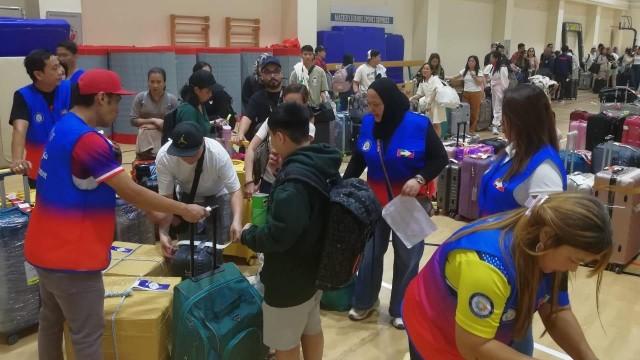
Evan Cardona, an instrument engineer at Ras Al Khaimah (RAK), an emirates two hours by car north of Dubai, said he is coming home because the company he is working for has been affected by the conflict. Like Nonoc and Montecalvo, he still has an employment contract and would await a call from the company. He has been in RAK for three years
Junmar Catava had to go home because the company he was working for had folded up as it was owned by an Iranian, who has left the country on orders of the UAE government. He left his wife, also an OFW, in Dubai. He expressed to return when things get better in the Middle East.
Interventions for OFWs
Cacdac, in his capacity as head of the Abu Dhabi Dialogue (ADD), also met with Dr. Abdulrahman Al Awar, head of the UAE Minister of Human Resources and Emiratization (MOHRE), during his visit to Dubai. Cacdac thanked the MOHRE chief for the protection of OFWs and "how OFWs have continued to ably serve their employers through these challenging times."
The meeting with the MORHE head focused on the UAE labor market, including help for OFWs affected by the Middle East crisis.
"'Yun intervention particular… kung may kailangan ng tulong, kung may adjustment sa trabaho, kawalan ng trabaho, work reduction ay kahit paano nakabuklod pa rin ang labor market dito, at ang patuloy na pag-alalay ng mga sa mga kumpanya sa mga OFWs natin na posibleng dumaranas ng mga adjustment sa working hours," Cacdac said.
(The intervention in particular is ... [for] anybody who needs help adjusting to work, job loss, or work reduction with the labor market setup here… and also with adjustments in working hours in companies employing OFWs.) — VDV, GMA Integrated News

