

 GMA Brandtalk
 Tracking
 Archives

Planning to study in the US? Here are 5 things Filipinos need to know
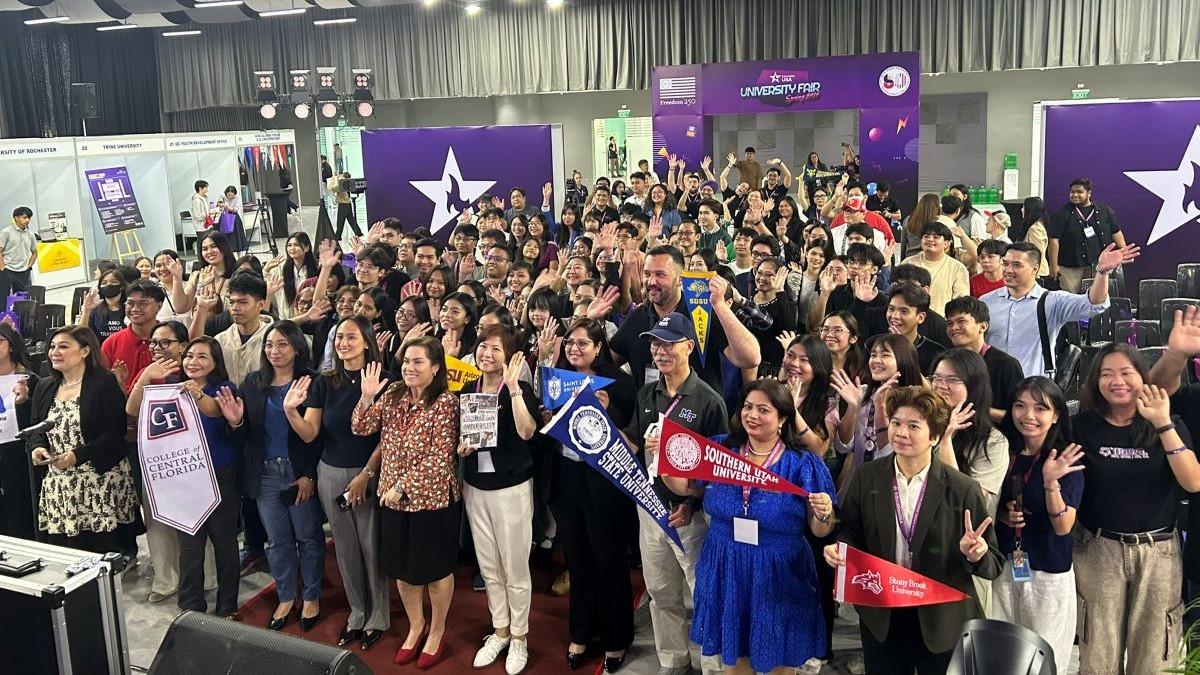
For many Filipinos hoping to study in the United States, the process can be long and overwhelming—from choosing a university to complying with requirements and securing funding.
At the EducationUSA University Fair in Quezon City on Friday, students were given guidance on how to navigate the process, with American institutions and education advisers offering firsthand information.
Here are five key points that were discussed:
1. Start with the right school
With thousands of universities and colleges in the United States, students were encouraged to look beyond well-known schools.
"There are 3,000 to 4,000 institutions," US Embassy Counselor for Public Affairs Jessica Simon said.
"I think there is a university that is a great fit for every single student—you just have to be open to the possibilities," Simon added.
2. Know the requirements
Application requirements vary per school but typically include academic records, essays, and standardized tests.
Many universities also require proof of English proficiency through exams such as IELTS, depending on the applicant's background.
Education advisers said it is important for students to check specific requirements early to avoid delays in the application process.
3. Prepare for the cost
Studying in the US can be expensive, making financial planning a key step.
"That is an important question because it can be very expensive," Simon said.
Students can explore scholarships offered by the Fulbright Commission, as well as financial aid programs provided directly by universities.
Advisers also recommend asking about available funding options when speaking with school representatives.
4. Explore in-demand courses
Filipino students continue to show interest in science, technology, engineering, and mathematics (STEM), particularly in fields related to artificial intelligence.
However, opportunities are available across a wide range of disciplines, including the arts, humanities, and social sciences.
5. Take the first step early
Even for those not planning to study abroad immediately, gathering information early can be beneficial.
"Even if it's not to depart next month or next year, students can benefit from getting this initial information," Simon said.
The EducationUSA University Fair provides free advising services and connects students directly with US universities, helping them better understand their options.
The Quezon City leg is being held on Friday, May 22, while the Davao City leg will be conducted on Saturday, May 23, at the University of the Southeastern Philippines.
The fair features a wide range of American institutions, including Arizona State University, College of Central Florida, Lewis University, Manhattan University, Middle Tennessee State University, Saint Louis University, South Dakota State University, Southern Utah University, Stony Brook University, the University of Akron, Trine University, the University of Rochester, and the University of San Francisco. Participating organizations also include the British Council (IELTS), College Board (SAT), and Pearson. — VDV, GMA News

