

 GMA Brandtalk
 Tracking
 Archives

CFO warns against using exchange programs to permanently migrate abroad
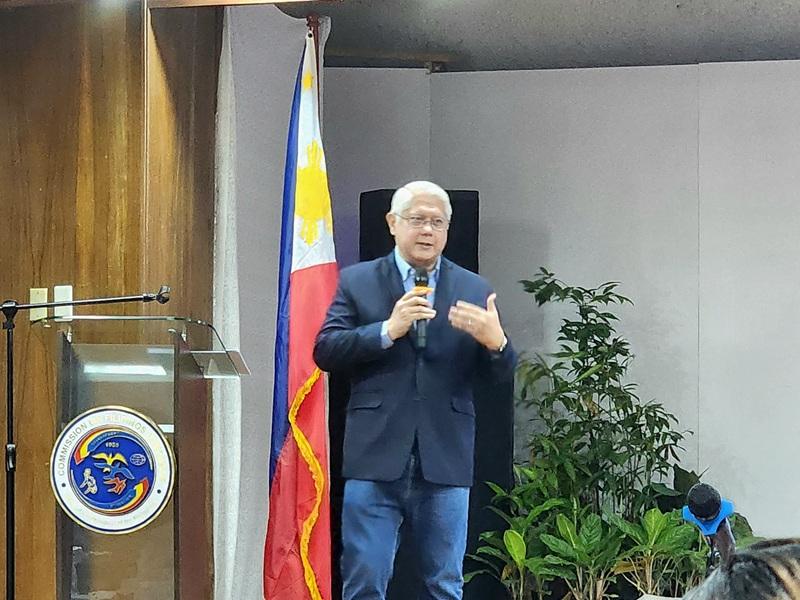
The Commission on Filipino Overseas (CFO) on Friday warned Filipinos that using exchange programs to permanently migrate abroad may expose them to abuses.
CFO Chairperson Secretary Dante "Klink" Ang II made the statement after the United States made adjustment with their permanent residence policies.
“The problem is if their intent is to stay abroad permanently or long-term, and then they use another pathway, such as an exchange program, then they become vulnerable to all sorts of abuses, and this is what we want to prevent,” Ang told reporters.
Echoing Philippine Ambassador to the United States Jose Manuel “Babe” Romualdez, Ang urged Filipinos to follow the immigration rules of their host countries.
“The best advice that we can give is for Filipinos there to follow the rules of the host country,” Ang said.
“If needed be, It's better to return home to the Philippines rather than to get deported because once you are deported, then you lose any possibility of returning back to the U.S. And so the better way is to follow the rules,” he added.
The US Exchange Visitor (J) non-immigrant visa (J-1 Visa) is a non-immigrant visa for individuals participating in approved work- and study-based cultural exchange programs.
Ang said the Philippines and the US are expanding the list of skill sets under the J-1 Visa as Filipinos were reported to be complying with the obligation contract.
“We were hoping to add more inputs on what skills may be needed. That's why we had some consultations with the DOST (Department of Science and Technology), the Philippine Space Agency, and others,” Ang said.
Romualdez earlier said an estimated 100,000 to 200,000 Filipinos may be affected by the new US immigration policy on green card applications for foreign nationals already in the US.
The policy comes after the US Citizenship and Immigration Services (USCIS) announced that adjustment of status, or applying for lawful permanent residence while inside the US, will be granted only in extraordinary circumstances.
The USCIS said adjustment of status is a discretionary benefit, while consular processing abroad remains the regular route for immigrant visa applications.
Romualdez said the rule was explained to them as a way to address cases involving applicants of various nationalities — not specifically Filipinos — who are denied but later do not leave the United States.
The CFO recorded around 5.4 million overseas Filipinos in the US in 2024. — BAP, GMA News

