

 GMA Brandtalk
 Tracking
 Archives

Now open: New hiking trail linking two German towns Rizal once visited

HEIDELBERG, Germany – In time for Dr. Jose Rizal’s 165th birth anniversary, a historic trail connecting two German towns he once visited in 1886 is now open to local and foreign hikers.
The Rizal Historic Trail is a 10-kilometer path that officially connects Heidelberg, where he practiced ophthalmology, and Wilhelmsfeld, a nearby village where he stayed as a guest of a local parish family.
“It’s a very easy hike, and it’s free,” Consul General Ivy Banzon Abalos told GMA News. “Kahit beginner o may edad, basta kaya ng tuhod, pwedeng ma-enjoy ang bagong Rizal trail (Even if you’re a beginner or an elderly, as long as your knees are up for it, you can enjoy this trail).”
It took the Knights of Rizal (KOR) Wilhelmsfeld-Heidelberg chapter and their project partners more than two years to establish the path in the lush Odenwald forest.
“For quite some time, it has been an idea from several Knights to bring a hiking trail to life that resembles — almost perfectly — how Dr. Rizal went to university from Wilhemsfeld to Heidelberg,” Dominik Schaefer, a local KOR member who helped organize the project, said.
The “Flowers of Heidelberg”
GMA News joined KOR members and officials from the Philippine Consulate General in Frankfurt on the hike to Philosophenweg, during the trail’s soft launch on Independence Day 2026.
What had been a rainy, overcast mid-morning became a meditative experience. Birdsongs combined with raindrops that rustled the lush greenery. We were immersed in the view, never minding the dense fog that enveloped the forest toward a path named Philosopher’s Way.
The walk nearly matched Rizal’s descriptions of his morning commute from Wilhelmsfeld.
“Walking through this beautiful nature for two hours really gives you the chance to clear your mind and reflect on whatever larger thoughts you’re having,” Schaefer said.
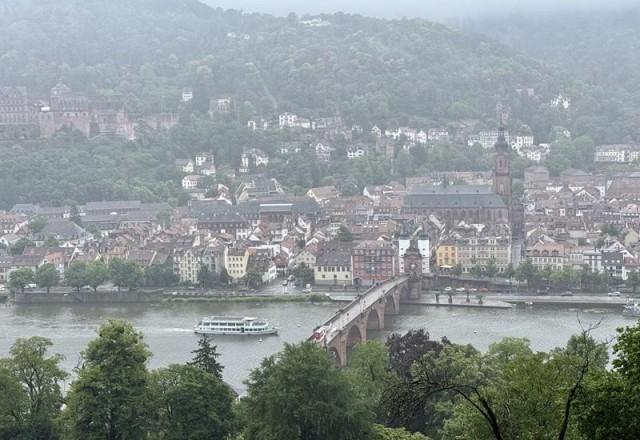
To many Filipinos, Heidelberg is known as the place that Rizal referenced for his poetic longing for the Philippines in 1886.
He penned “A las flores de Heidelberg” (“To the Flowers of Heidelberg”) on April 22 of that year, just four days before he moved to Wilhelmsfeld at the invitation of Pastor Karl Ullmer, whom he met in the woods sometime prior.
Rizal celebrated his 25th birthday with the Ullmers and stayed in the village for six more days before he returned to Heidelberg.
In between this period, the hero completed Noli Me Tangere while living at the Ullmers’ vicarage.
In the novel’s seventh chapter, Rizal’s alter ego "Crisostomo Ibarra" referenced the forest path between the two locations, describing it as one “habited by the wondrous figures of poets and the dark legends of old”.
Schaefer and his co-Knights believe this route is the Philosophers’ Way (Philosophenweg), an uphill track overlooking the Neckar River and Heidelberg’s old town and its famed castle ruins.
A brisk walker
Rizal was a brisk walker, according to Dr. Fritz Hack-Ullmer, the great-grandson of Pastor Ullmer.
“As we know, Rizal went downhill [from Wilhelmsfeld] under 60 minutes, so he could not take one of the detours,” the retired cardiologist explained, adding that Rizal usually followed the path used by local bricklayers who commuted to the city.
Despite his modest daily routine, Rizal left a lasting impression on his hosts.
Dr. Hack-Ullmer noted that while their vicarage hosted famous figures like Empress Elizabeth of Austria, Rizal’s stay was the “most important”.
The cardiologist’s grandfather, also named Fritz, was 15 years old when he met Rizal on his three-month stay with the Ullmers.
“He told us so many things about Filipino culture, about Filipino songs, and about his family and about his trouble living in Europe,” Dr. Hack-Ullmer recalled his grandfather as describing their Filipino guest.
With the trail’s opening, Filipinos and other visitors can relive the story of Rizal’s time in the two towns.
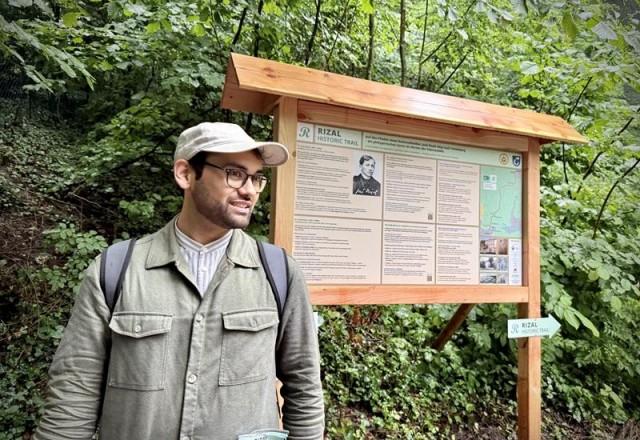
When asked about the process of mapping the route, Schaefer told GMA News that he had walked the route six times while his fellow organizers, including their chapter commander Herbert Ehses, coordinated with local government agencies to obtain clearance for the project.
The 30-year-old executive noted that the trail traverses forest paths managed by two separate local governments.
“Once we had the papers, the actual work of putting the marks on the trail started,” Schaefer added.
An eternal guest
This modern effort to reconstruct the path relied on matching the lore of the hero’s daily life, as shared by the family that hosted him, with official records.
Wilhelmsfeld Mayor Dr. Tobias Dangel, who is also a KOR, said the town’s historical documents enabled the organizers to reconstruct the route — a “new aspect” that his town would offer visitors, in addition to the Ullmer Vicarage and the Rizal Park.
For him and many people in Wilhelmsfeld, the Filipino hero is an eternal “guest”.
“We know a lot about his ideas and the impact of his ideas on Filipino culture. He is not a person from a time that is over; he is a member of our time, and we can learn a lot from him today.”
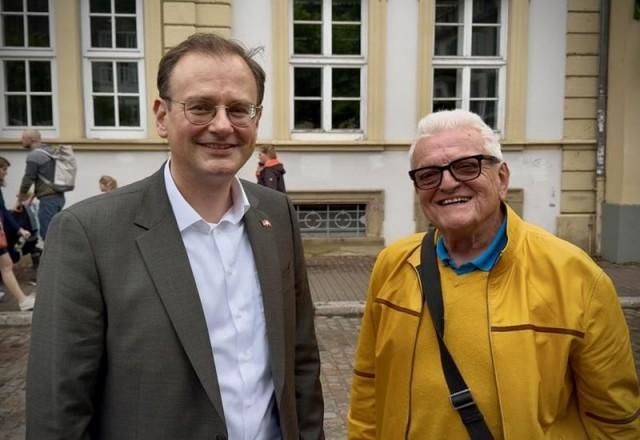
The Rizal Historic Trail officially opens on June 20.
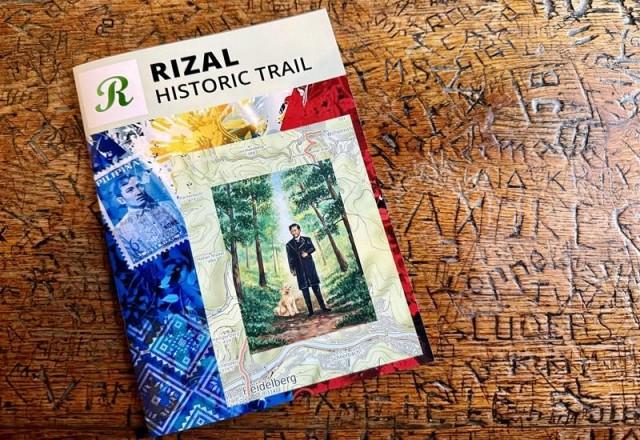
An accompanying brochure, available in both English and German, serves as a comprehensive guide that maps out the “precise path” the hero took in 1886.
Visitors can get physical copies at the tourist information offices in both towns, and soon at the Philippine Consulate General in Frankfurt.
Its contents will be made available digitally on the Knights of Rizal Wilhelmsfeld chapter website.
The 10-kilometer hike carries “almost a sacredness” and provides an emotional connection to Rizal’s internal world, Consul-General Banzon Abalos noted.
“There are many activities related to Rizal, but perhaps, many have not considered the aspect of what he was thinking while walking that path — that same mood, same spirit that he would have had while walking and contemplating his time in Germany, the work that he’s been doing on Noli Me Tangere.”
Today, these footsteps not only “celebrate the past” but also serve as a lesson for present-day Filipinos, as Banzon Abalos noted.
“It shows how cooperation between the Filipinos and Germans yields something meaningful—not just economically profitable or politically advantageous, but something that is close to the heart, close to the soul. I would say this is a top-notch example of how people-to-people relations come to life.” — BAP, GMA News

