

 GMA Brandtalk
 Tracking
 Archives

81 Pinoys in PH flagship vessels still stranded in Strait of Hormuz — MARINA
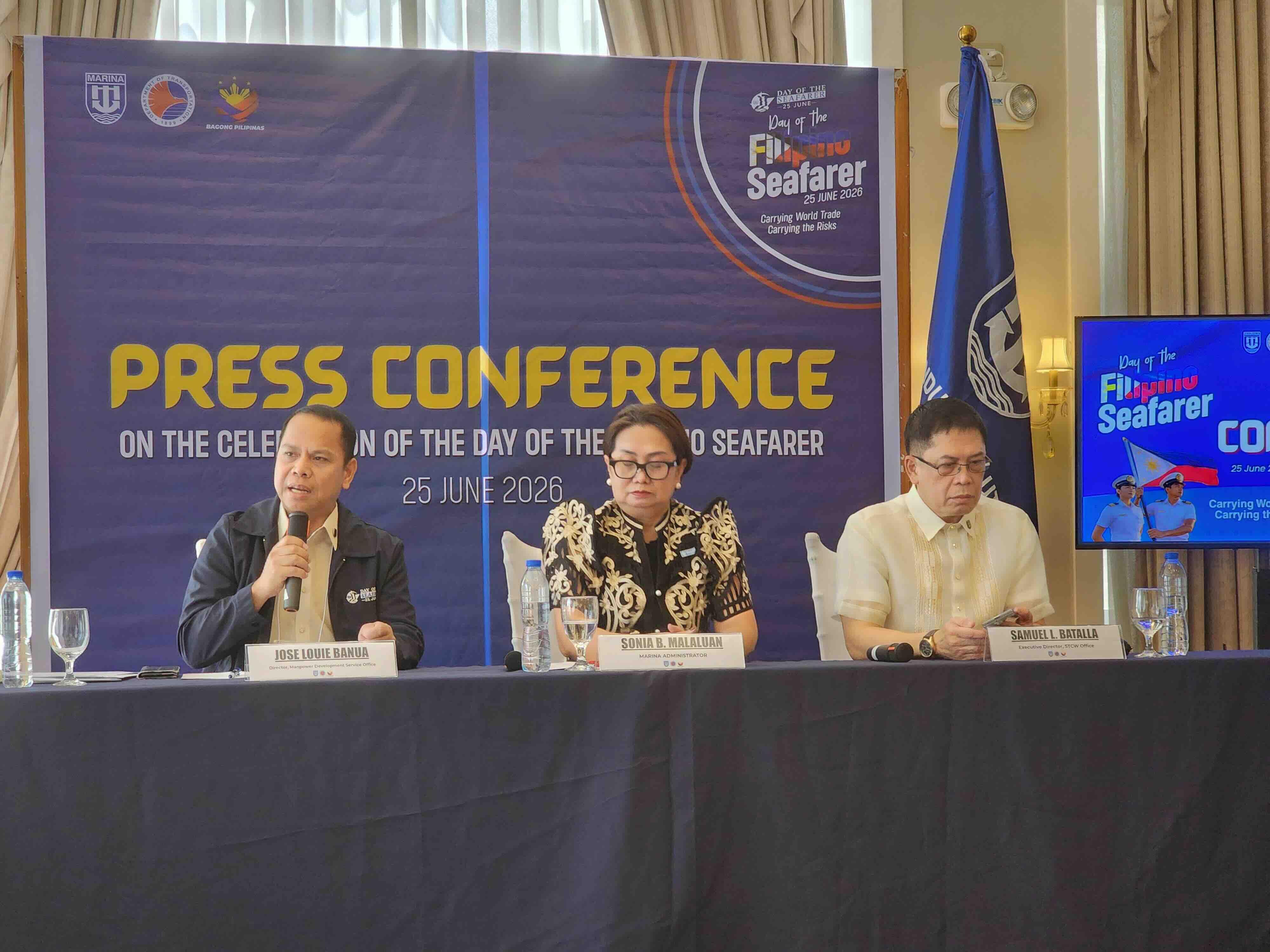
There are still 81 Filipino seafarers in four Philippine flagship vessels still stranded in the Strait of Hormuz amid the Middle East conflict, the Maritime Industry Authority (MARINA) said Thursday.
At a press briefing, MARINA administrator Sonia Malaluan said the stranded Filipinos are safe and provided with necessities like food and drinking water.
"We are assured of the charterer to the owner na maayos naman ang kanilang kalayan except nga lang yung fear and anxiety of being there," Malaluan said.
(We are assured of the charterer to the owner that they are safe except of having fear and anxiety of being there.)
"So in terms of provision, in terms of food, water, communication, wala naman problema (there is no problem)," she added.
According to Malaluan, there are also Filipino seafarers onboard foreign-flagged vessels that are stranded in the Black Sea, Red Sea, Persian Gulf, Gulf of Oman, and Strait of Hormuz.
Of the 20,000 seafarers stranded, 20% are Filipinos, Malaluan said.
Following a ceasefire deal with between Iran and the United States, an evacuation plan to evacuate hundreds of ships stranded to sail through the Straight of Hormuz is underway.
"We have now started contacting the ships to start the evacuation," a spokesperson with the UN's International Maritime Organization (IMO) said, without providing a timeframe.
The IMO added that it had secured the necessary safety guarantees and verified conditions for safe navigation in close coordination with Iran, Oman, all other coastal states in the region, US, and the maritime industry.
Three stranded tankers carrying 5 million barrels of crude oil were exiting the Strait of Hormuz, as the interim deal between Iran and the US unlocks more supply stuck in the Gulf.
These are South Korean-flagged VL Breeze, VLCC Plata Carrier, and Hyundai Oilbank.
US President Donald Trump said Iran had agreed to nuclear inspections into “infinity,” while Tehran said it had made no such concession in negotiations, raising questions about the viability of their fragile peace deal.
The two countries, which held a first round of negotiations in Switzerland that ended on Monday, also offered conflicting accounts about major aspects of the framework deal that they signed last week: financial incentives for Iran, control of the Strait of Hormuz, and Israel’s parallel war in Lebanon.
Trump maintained that negotiations were going smoothly with Iran, remarking: “We’re getting along quite well.” — RSJ, GMA News

