

 GMA Brandtalk
 Tracking
 Archives

Filipina space biologist Pauli Basubas: Dream began during starry nights in the Philippines
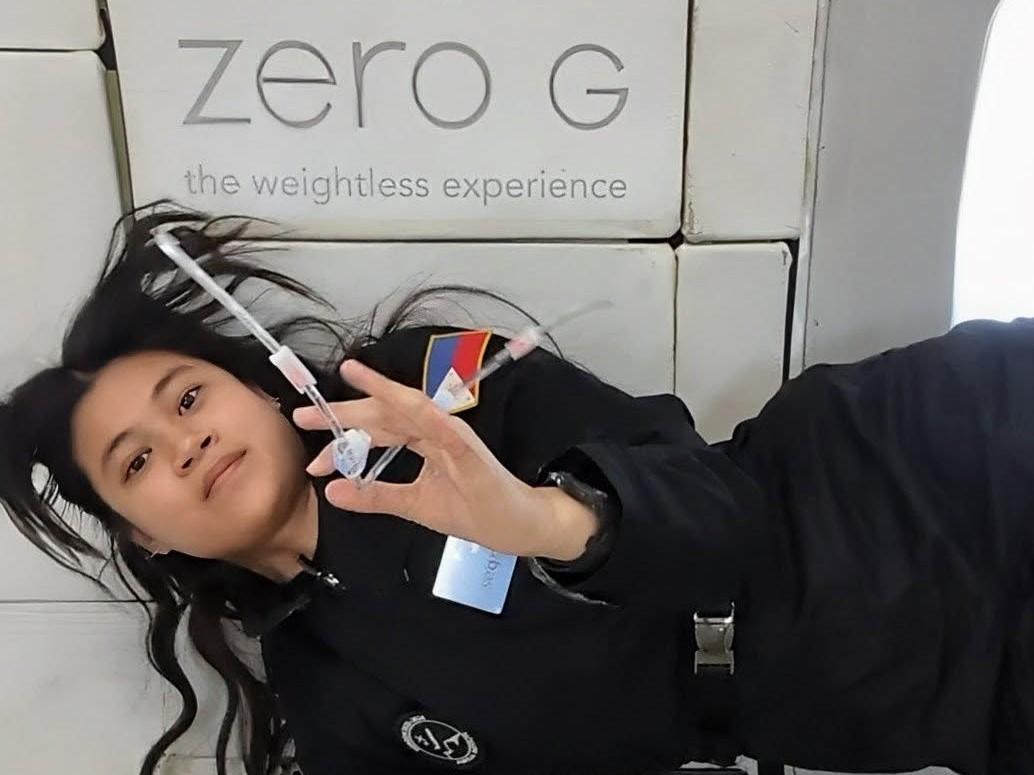
As a child growing up in a rural community in the Philippines, Pauli Basubas spent countless nights looking up at the sky full of stars.
Those quiet evenings, along with watching NASA documentaries with her grandfather, planted the seed of a dream that would eventually take her into the field of space biology.
Today, Basubas is a Filipina space biologist whose work spans biomedical research, drug discovery, and the growing field of commercial spaceflight.
"For the past 11 years, I've been training and working as a biomedical scientist, primarily in drug discovery research focused on cancer and viral diseases," Basubas shared in recent Sparks of Joy feature by GMA Pinoy TV.
She said her fascination with space began long before she entered a laboratory.
"I grew up in a rural area where the night sky was incredibly clear. I would look up at the stars and just feel this sense of wonder," she recalled.
"My lolo loved watching documentaries, so we would watch NASA missions together."
Outer space for all
Basubas said the rise of commercial spaceflight is creating opportunities for countries that have historically had little or no representation in space exploration.
"The founders recognized that there are still many countries that have very few to no astronauts," she said.
"This is about widening space and ensuring that the future of space includes voices and talents from all over the world."
Beyond confidence
For Basubas, empowering women in science goes beyond encouraging confidence.
Her professional growth has been accompanied by a journey of discovery about gender.
"For me growing up in the Philippines, I personally did not feel limited because I was a woman. It was only when I was studying abroad that I became more aware of gender-based discrimination," she said.
Basubas expressed belief that true empowerment comes from creating opportunities.
"It's not just about having the confidence. It's really about access and opportunity."
"It's about girls and young women seeing leaders who look like them—in government, in science, business and education."
Finding joy in science
Despite the challenges of research, Basubas said the laboratory is still the place where she feels most fulfilled.
"When people ask why I became a scientist, I often say science makes me feel alive," she told GMA Pinoy TV.
"Every time an experiment works, every time we have results that could contribute to solving the biggest problems in the world—such as chronic diseases or infectious diseases, it reminds me why I chose this path."
For Basubas, success is not measured by avoiding failure, but by continuing to pursue meaningful work.
"Joy is not the absence of failure or sadness," she said.
"It's choosing to continue because what you're doing matters."
Filipino kids can dream, too
To date, Basubas has already gained a following on social media. Basubas shares updates about her journey to her 185,000 followers on Facebook and 36,600 followers on Instagram, based on figures as of posting time.
She said she is working towards becoming a future astronaut, while advocating for greater Filipino participation in space science. She describes her mission as inspiring "Filipinos and island kids to dream" and promoting "Space Biology for Humanity."
In a recent Facebook post, Basubas said, "I hope my journey can inspire others to keep pursuing their passions, stay committed to their goals, and continue working toward their dreams. Hard work may be tiring, but when it is driven by purpose, it becomes truly fulfilling."
As more Filipinos break into emerging fields such as space science, Basubas hopes her story reminds young dreamers that even those who start in small towns can one day reach for the stars. — VDV, GMA News

