

 GMA Brandtalk
 Tracking
 Archives

'Ube is ours,' but what does that really mean?
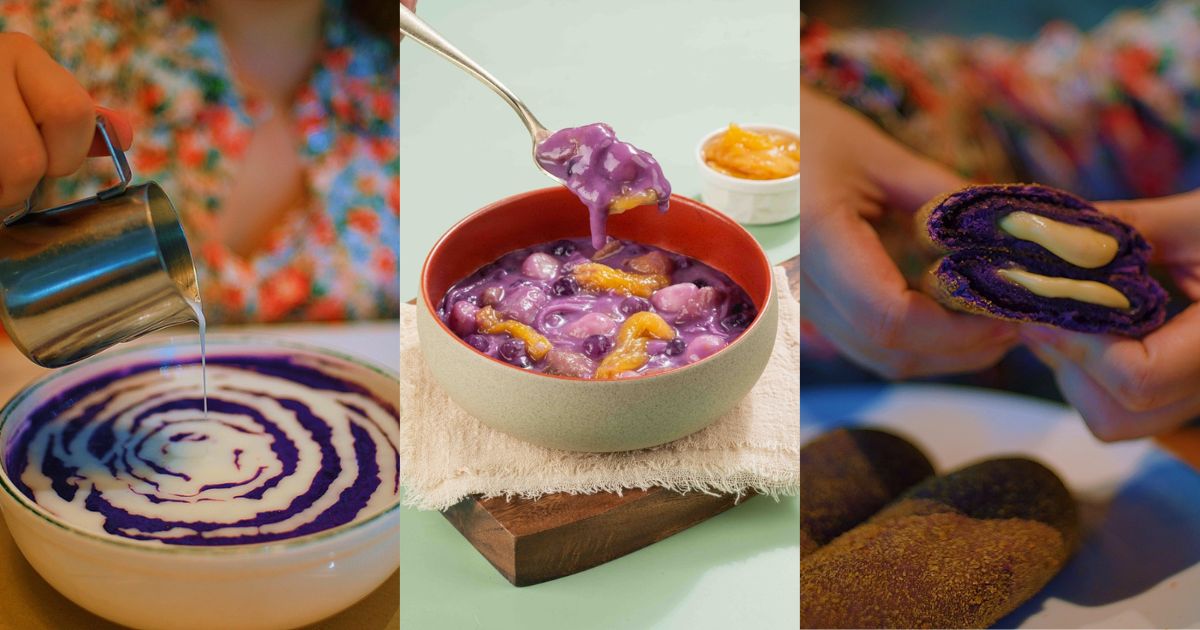
As purple yam becomes a global food sensation, the Philippines faces the challenge of how to protect, define, and capitalize on a crop that has become deeply identified with Filipino culture.
Ube is many things to many of us. It is ube halaya at Christmas, the colorful swirl in halo-halo, a favorite ice cream flavor and the distinctive ingredient in cakes, breads and other Filipino desserts. Today, it is also a global food trend, appearing in products far beyond Filipino and Asian markets.
But as ube gains international popularity, a question is becoming increasingly difficult to ignore: Can Filipinos really claim ube as "ours?"
The answer requires some nuance.
Ube is not exclusive to the Philippines. Purple yam is grown in several countries across Southeast Asia and elsewhere like Japan and India. Some are saying the Philippines cannot claim ownership of the crop simply because it is cultivated there.
But there is another kind of ownership: a cultural and culinary one.
The word "ube" itself comes from the Tagalog word, and Filipinos have developed an extraordinarily rich culinary tradition around the ingredient. Philippine cuisine has played a major role in transforming ube from a traditional root crop into an internationally recognizable flavor.

That distinction may ultimately be the key to how the Philippines positions ube in the global marketplace.
"We have to be precise and intentional about how we communicate that message," said Trade Commissioner Alma Argayoso from her office in New York when interviewed by The FilAm. "While ube is not exclusively grown in the Philippines, no country is more closely associated with ube as a food and cultural tradition than the Philippines."
Thanks to social media, ube has moved from Filipino bakeries and Asian supermarkets into mainstream ice cream shops, restaurants, bakeries and packaged-food aisles in North America, Europe and other parts of Asia. The Philippine government has increasingly taken notice.
The Department of Agriculture said in June that the Philippines exported about 1.7 million kilograms of ube worth approximately $3.2 million in 2025, an increase from the previous year. At the same time, the government acknowledged a fundamental problem: international demand is rising faster than domestic production.
The response has begun at the farm level.
In June, the Bureau of Plant Industry distributed more than 60,000 purple yam planting materials worth nearly ₱2.6 million to farmers in Leyte and Bohol. The program covered some 900 farmers and more than 60 farmer groups, said Argayoso.
"The investment is significant because the challenge is no longer simply how to market ube. It is how to produce enough of it," she added.
Protecting the Filipino identity
The question of intellectual property is more complicated.
According to her, there is currently no indication of a major international legal battle in which the Philippines has sued another country or company for "stealing" ube. Instead, the country is beginning to pursue a more targeted strategy: protecting particular Philippine varieties and their geographical identity.
A major step came in June when the Provincial Government of Bohol, through its economic development office, filed an application for Geographical Indication (GI) registration for Bohol Ubi Kinampay with the Intellectual Property Office of the Philippines (IPOPHL).
GI protection is designed to connect a product's qualities, reputation and characteristics to a particular geographical area — much like the way certain famous products around the world are associated with their places of origin.
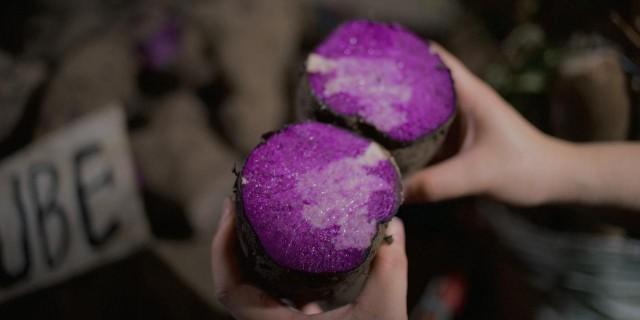
The very popular Bohol Ubi Kinampay is known for its naturally vibrant violet flesh, distinctive aroma and flavor. The GI application seeks to formally recognize characteristics tied to Bohol's geography, soil, climate and traditional farming practices.
"This is a very different claim from saying, ‘The Philippines owns ube.'"
Instead, it says: this particular ube, with these particular characteristics and traditions, comes from this particular place.
That distinction could become increasingly important as global demand grows, she stressed.
Difficult to tell
For the ordinary consumer, determining whether a product actually contains ube can be "surprisingly difficult."
Some commercial products use real ube — in the form of puree, powder, jam or extract. Others rely primarily on flavoring and food coloring to recreate the purple appearance and taste associated with ube. Some products contain a combination of both. The color alone, therefore, is not proof.
Consumers interested in authentic ube can look at the ingredient list for terms such as ube puree, ube powder, purple yam or ube extract. Real ube also tends to have a more complex flavor profile—mildly sweet, earthy, nutty and sometimes reminiscent of vanilla—rather than simply tasting like artificial "purple" flavor. This may be an area where a Philippine-led consumer education campaign could make a difference, the commissioner said.
There is a sense that the Philippine government recognized ube's international potential only after the crop had already begun making waves globally. The rise of social media has accelerated that process enormously. Not quite, said Argayoso citing the work of the Department of Agriculture in supporting root crop research and cultivation.
Meantime, the government continues to address the less glamorous side of the business: farming, planting materials, supply chains, quality control, processing, export standards and farmer income.
What about New York's Ube Festival?
The annual Ube Festival in New York, organized by Filipino restaurant owners and community entrepreneurs, is an example of how the Filipino diaspora has helped turn ube into a cultural phenomenon abroad. But these community-led celebrations are not currently formal government programs.
"The DTI does not have an institutional role in organizing or funding the New York festival," she said. Its larger concern is strengthening the supply side of the industry and creating opportunities for Philippine farmers, suppliers and exporters.
Now, do we "own ube"? The real opportunity is not simply to claim purple yam, said Argayoso.
It is to claim a place in the global ube economy, while making sure the farmers, communities and culture that helped give ube its identity are not left behind.
"When the world thinks of ube, it should know the Filipino story behind it," she said. — The FilAm

