

 GMA Brandtalk
 Tracking
 Archives

In Valencia, Pinoy foodies lead Filipino culinary history class for foreigners
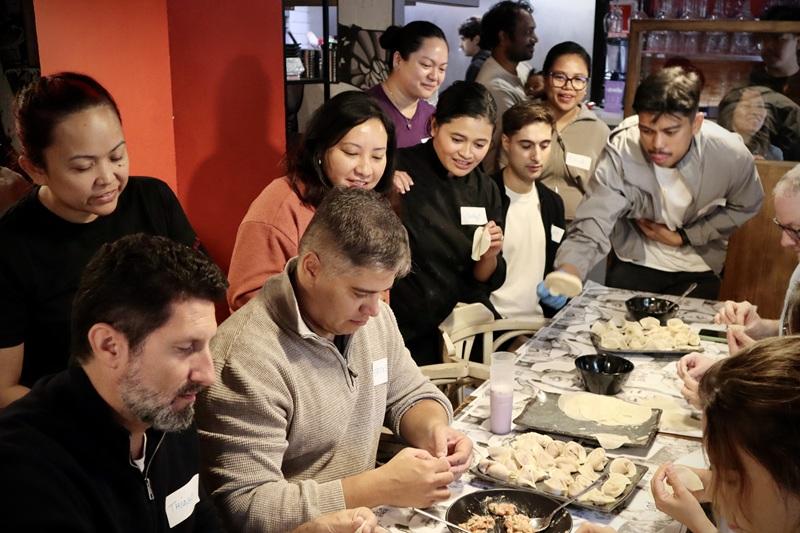
VALENCIA, Spain – A group of Filipino foodies organized a cooking class in Valencia to offer Spaniards and other expatriates a taste of Philippine cuisine, particularly dishes with historical ties to Spain.
The pop-up and tasting session is aimed at promoting Philippine culinary talent in a country known for its rich food culture.
Munich-based Filipina chef Shelley Balicante opened the kitchen demonstration with a brief overview of the different cooking methods across Philippine island regions.
The 34-year-old private chef and entrepreneur, who regularly bakes ube treats and caters for European clients in Germany, traveled to Valencia to lead her first cooking masterclass in Spain.
She introduced local and expatriate guests from Spain, the United States, the United Kingdom, Brazil, and other countries to the historical evolution of Philippine staples, most notably chicken adobo.
While Spaniards are familiar with their own adobado or marinating techniques, pop-up participants were intrigued to discover how Filipinos transformed the concept over centuries into an unofficial national dish with over a thousand regional and household variations.
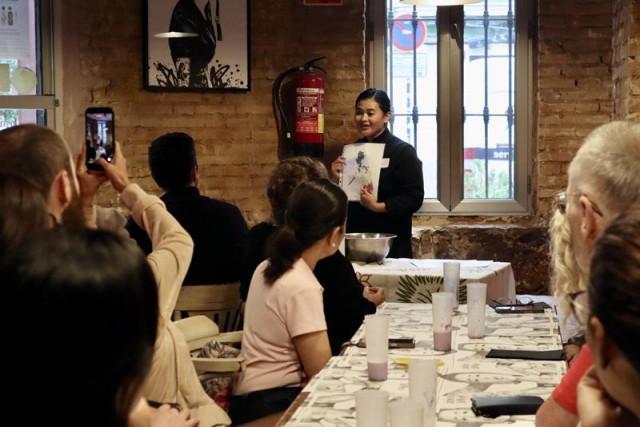
Pinoy food takeover in Valencia
The pop-up was hosted at a local Filipino fusion restaurant co-owned and run by Jerine “Nanay” Quemades, a 40-year-old Cebuano chef who has lived in Valencia for two decades.
Over the years, Quemades has built a reputation for thoughtfully adapting traditional Filipino recipes to Spanish palates by balancing bold, intense flavors like bagoong with fresh local ingredients.
Aside from running her restaurant, Quemades has elevated Philippine heritage in Europe. In 2018, she was selected by the Valencian community to represent the region at a national culinary competition in Mallorca, where she reached the semi-finals.
More recently, she was chosen as one of the representatives of the Philippines’ first-ever participation in Valencia’s Día de la Hispanidad celebrations.
“United we go, the better we do,” Quemades noted regarding the gathering of Filipino food advocates in her kitchen.
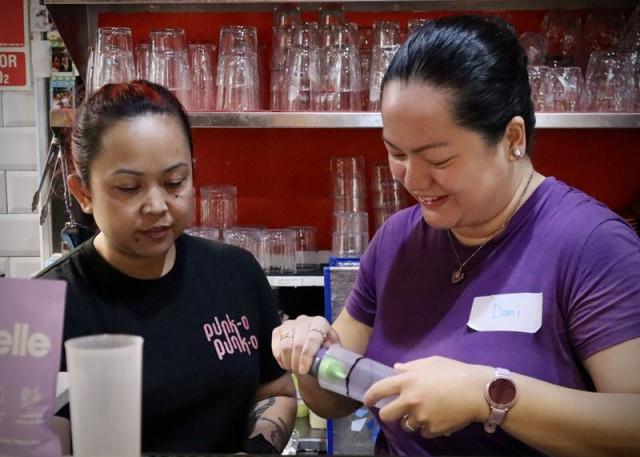
The pop-up also included an introduction to Philippine ube (purple yam) with Dani de Castro, a 39-year-old Filipina entrepreneur in Valencia.
As a staunch promoter of “legit” ube in the European market, De Castro is on a mission to spark a “Filipino ube explosion” across Spain while safeguarding its quality.
She emphasizes that authentic ube is traditionally a celebratory sweet treat best paired with coconut milk rather than standard dairy or nut milks.
So when local Spaniards sample authentic ube for the first time, de Castro says their reaction is almost always overwhelmingly positive.
“They will almost always say ‘¡Qué rico!’ (So delicious!),” de Castro told GMA News. “They are drawn to the striking purple color and delighted by its pleasant, earthy, vanilla, and nutty flavor profile.”
Expat diners delight in culinary ties
At the pop-up class, attendees were shown how to marinate chicken for adobo, with Balicante sharing the vinegar-to-soy-sauce ratio and the local brands that best capture Filipino taste. They later learned wrapping dumplings and turon with banana and jackfruit fillings.
Maria Coloma Escudero, a 31-year-old resident of Oliva near Valencia, sampled chicken adobo alongside an authentic ube latte.
She expressed surprise at finding a dedicated Filipino restaurant in her region, praising the dishes for delivering an “explosion of flavors”.
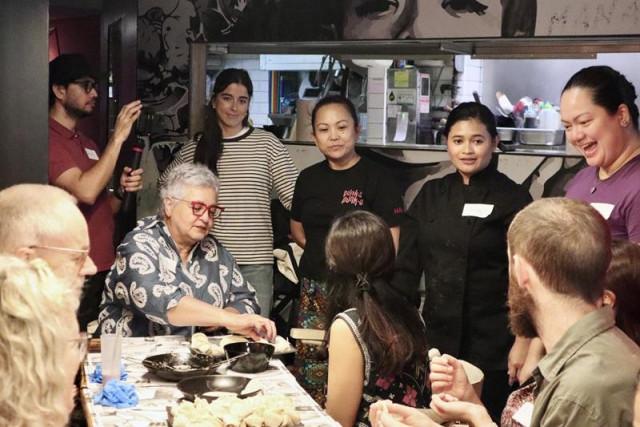
She also reflected on the intriguing linguistic parallels between Spanish and Filipino food terms, such as “turon.”
While Spanish turrón refers to a traditional almond nougat, Philippine turon evolved into a beloved crispy banana dessert.
“Filipino cuisine is not as known as it probably should be,” Coloma Escudero said, adding that the pop-up was a welcome initiative to expose local Spaniards to genuine Asian flavors.
Balicante hopes the gathering can place Filipino food alongside widely recognized cuisines like Thai or Vietnamese.
“We really have a big chance, and I think our cuisine deserves to be on the international stage,” Balicante added. “Adobo is, no doubt, very good. But we have ube, and now the calamansi. I’m anticipating it will boom now, and I know that it will prosper in Europe.” — BAP, GMA News

