

 GMA Brandtalk
 Tracking
 Archives

Filipino IT exec in Saudi: Pinoys still ‘associated’ with domestic, hospitality work
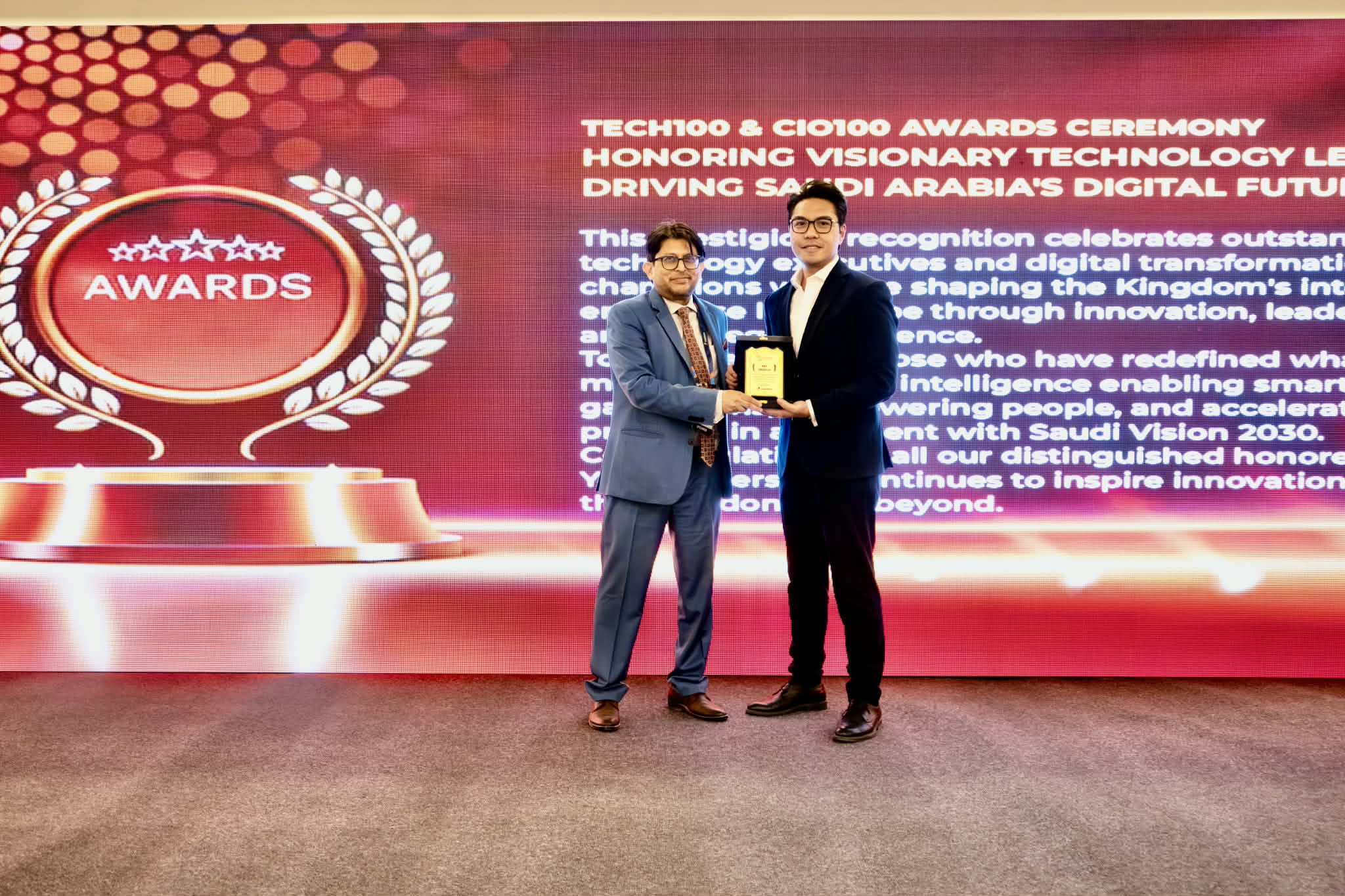
DUBAI, UNITED ARAB EMIRATES – A Filipino IT specialist in Saudi Arabia has lamented the perception that Filipinos are associated with domestic and hospitality work, stressing that Filipinos like himself are “equally capable of leading in executive roles.”
“Here in Saudi Arabia, many Filipinos are still commonly associated with domestic and hospitality roles. Work that I deeply respect because these jobs are built on dignity, sacrifice, and resilience,” said 37-year-old John Michael Panghulan, Assistant Vice President – IT Project Delivery at one of Saudi Arabia’s leading sovereign investment institutions.
“At the same time, I also want to help expand that narrative by showing that Filipinos are equally capable of leading in management, technology, strategy, and executive roles. My own journey into leadership and recent recognition serves as proof that we belong, not only in support functions, but also in decision-making spaces,” he said.
A native of Tanauan City, Batangas and a 2009 graduate of the First Asia Institute of Technology and Humanities in Tanauan City, Panghulan said the perception that he shared about Filipinos in Saudi Arabia was purely based on his personal experience.
He recalled moments that he felt “looked down upon, such as when entering luxury shops” and when he was asked about his profession during non-business interactions.
“I'll put it this way. I’m recognized as a Filipino and sometimes not respected on a casual day in a fine dining or high-end shop, but assumed to be non-Filipino when I wear a professional suit,” Panghulan said.
“These experiences shaped my perspective, but I acknowledge that they do not represent everyone’s reality, and I’d like to change this stereotype that Filipinos are only excellent in support environments but also in executive environments,” he added.
According to the Saudi Ministry of Human Resources and Social Development (MHRSD), there are 898,014 Filipino workers in Saudi Arabia, making it the sixth-largest expatriate community in the country.
Although domestic helpers still account for a big chunk of overseas Filipino workers (OFWs) there, many Filipinos are now getting also into the private sector – oil and gas, transportation, telecom and medical fields, among others – as the country opens up.
Filipinos first figured in the Saudi Arabia employment scene in the 1970s with the arrival of engineers and construction workers as well as domestic helps and nannies.
A shared win for all OFWs
Panghulan, who has worked in the United Arab Emirates since 2014, was recently recognized as one of the leading tech professionals at The Intelligent Data, AI and Automation Summit held last October 8 and 9 in Riyadh – and the only Filipino at that.
“For me, it felt like a shared win for Filipinos who consistently give double the effort just to be seen and heard in highly competitive global workplaces. Having worked in the UAE for many years, I witnessed how Filipinos are highly diverse in their professional roles and are widely accepted in management and leadership fields,” he said.
Panghulan, who completed a project management program with Cambridge Education last year, leads high-impact workplace enhancement, digital transformation, and enterprise IT projects that contribute directly to national-scale development.
He leads the planning, execution, and delivery of high-scale IT and digital transformation projects focused on modern workplace technology and works closely with technical teams, consultants, and stakeholders.
Panghulan said this includes enterprise systems, smart building integrations, audio-visual solutions, collaboration platforms, and network and security infrastructures.
Very difficult turn
He has come a long way from hardships he experienced earlier. In college, he worked at McDonald’s and then at a call center. In 2015 while at the UAE, his life took a very difficult turn.
“I went into a deep depression, neglected my health, and eventually suffered a major medical crisis that left me partially paralyzed and confined in the ICU,” he said, adding: “It was the lowest point of my life.”
He also lost his job and for a few months, experienced homelessness and relied on the kindness of people who took him in.
At one point he only had AED10 ($3) left in his pocket and asked his brother in the United States for some money. He was excited when his sibling sent him AED2,500 ($680) that he meant to use in securing a bedspace in Dubai.
“But when I checked the ATM, it showed a zero balance. I later realized my credit card had automatically deducted the entire amount. That moment broke me,” Panghulan said.
He survived this dark period with the help of a close friend who lent him money and shouldered the cost of renting a bedspace.
No one formula for success
Panghulan said the “fear of ever returning to that kind of hardship pushed me to give my best in everything I do.”
For Panghulan, there is no single formula for success. He stressed not settling “for less than the growth and opportunities you know you deserve.”
“Remove self-doubt and fear, because once you truly believe in your value, the opportunities you manifest will begin to follow,” he said.
Panghulan also advised those in the tech industry to always stay two steps ahead.
“The moment you become complacent is the moment your growth stops,” he added. — JMA, GMA Integrated News

