

 GMA Brandtalk
 Tracking
 Archives

UP professor invokes 'kapwa' in Tsinghua graduation speech
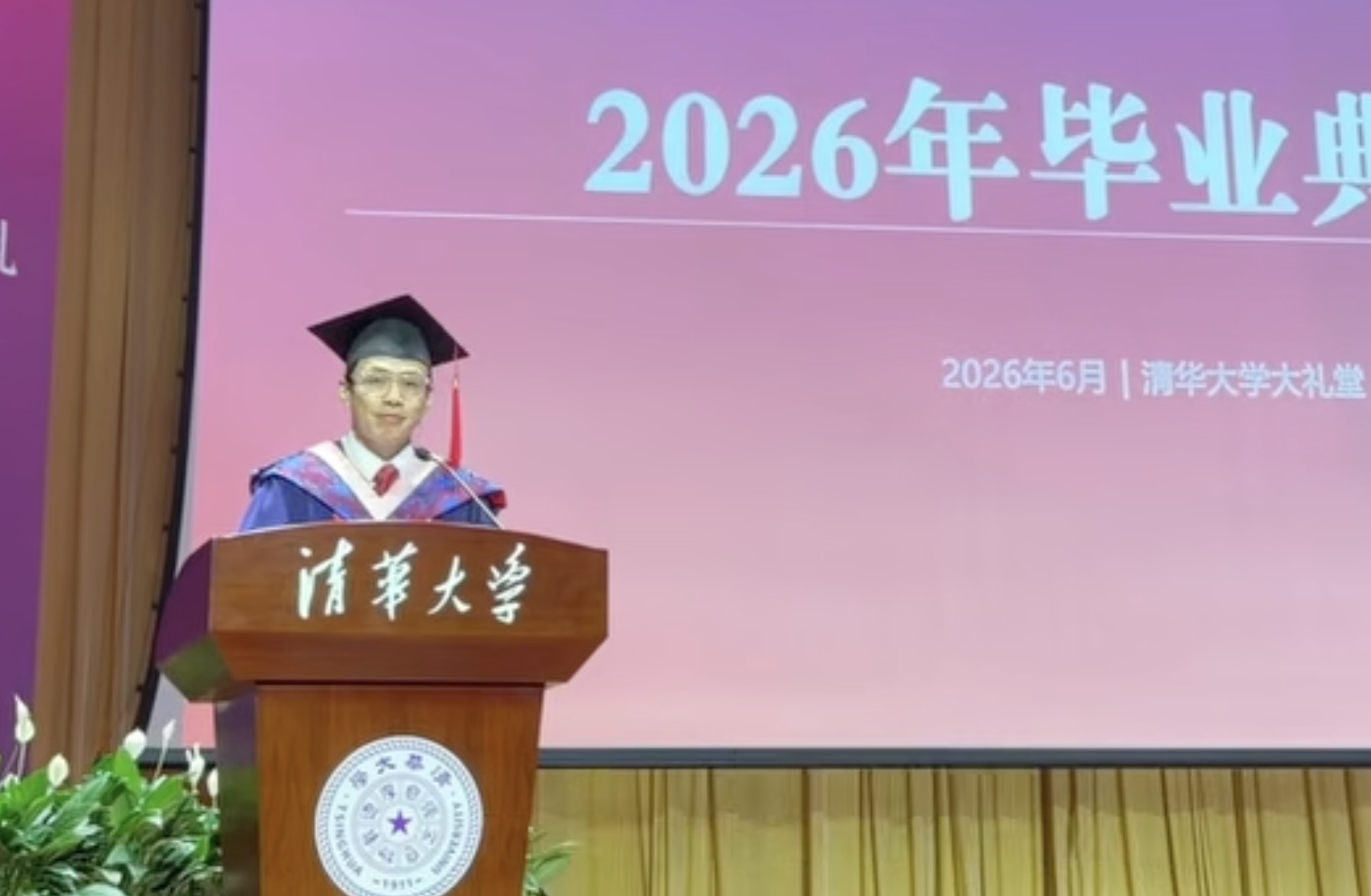
A Filipino professor from the University of the Philippines - Diliman invoked the Filipino concept of kapwa in a commencement speech at Tsinghua University, drawing parallels with the Chinese virtue of rén (仁) or benevolence to cite the shared values that bridge Filipino and Chinese cultures.
Dr. Enrico Gloria, a political science professor at UP Diliman, represented international students during Tsinghua University’s graduation rites on June 26 after completing his PhD in Political Science.
In his speech, Gloria anchored his message on the idea that human growth is shaped by community — a principle he linked to "kapwa," the Filipino notion of shared identity, and rén, a core Confucian value centered on empathy, humaneness, and moral responsibility.
“A single tree does not make a forest. Should we aspire to be the best version of ourselves, our efforts must not occur in isolation. We grow through the communities that welcome us, challenge us, and help us see the world more deeply,” Gloria said in Mandarin.
“In the Philippines, we refer to this idea as kapwa — the recognition that the Self is always connected to others. Perhaps in Chinese, it is close to the spirit of rén — a sense of humaneness, empathy, and moral responsibility,” he added.
Gloria was selected to deliver the commencement address from among international students, who make up 30 to 40 percent of the student population at Tsinghua’s School of Social Sciences.
According to the Department of Foreign Affairs, Tsinghua is regarded as one of China’s top universities and is often compared to the Massachusetts Institute of Technology in the United States.
Gloria first earned his master’s degree in Political Science from Tsinghua in 2018 before returning in 2022 to pursue his doctorate.
In his address, Gloria reflected on the challenges faced by international students — from culture shock and language barriers to being far from home — but said those struggles were eased by the support systems and communities he found in China.
Though a foreigner on campus, he said he felt welcomed and treated as an equal, recalling how his professors patiently listened even when he spoke Chinese with a heavy accent.
Gloria also paid tribute to his longtime mentor, Professor Chen Qi, who guided him through both his master’s and doctoral studies.
“Under the supervision of Professor Chen Qi, I found a life-long mentor I will forever cherish,” Gloria said.
He said Chen taught him not only how to study China’s political system, but also the importance of understanding the country through its history and people.
Gloria said his years at Tsinghua also reshaped his perspective on international politics.
As a scholar of global affairs, he said war, rivalry, and conflict are often seen as enduring realities — but beneath state-to-state tensions are human relationships where compassion and understanding remain possible.
“Before there are states and their respective conflicts, what exists are connections at the most basic personal level,” Gloria said.
“And at this level of basic human connection, kindness is still possible, understanding can be established, and compassion is still something we can choose to give one another.”
Following his graduation, Gloria will return to the Philippines to resume teaching at UP Diliman, bringing with him the lessons of kapwa and rén that he hopes to pass on to his students.
He will also help establish a China Politics and Foreign Relations Research Program under UP’s Department of Political Science — an initiative aimed at expanding Philippine scholarship on China’s politics and foreign policy.
Philippine Ambassador to China Jaime FlorCruz congratulated Gloria, saying educational exchanges like these are crucial in deepening understanding between neighboring countries.
“We need more Filipinos like Dr. Enrico Gloria who has acquired deep knowledge of our neighbors like China,” FlorCruz said.

