

 GMA Brandtalk
 Tracking
 Archives

ADVERTISEMENT
Filtered By: Publicaffairs
Public Affairs
PHOTOS: ‘Born to be Wild’ HD macro shots reveal world from bug’s eye view
+
Make this your preferred source to get more updates from this publisher on Google.
“Born to be Wild” hosts Doc Ferdz Recio and Doc Nielsen Donato visited two locations in Luzon – Binictican village in Olongapo, Zambales, and Burdeos town in Quezon – that are home to an array of tiny critters.
Using macro photography, “Born to be Wild’ gives us a glimpse of the world from these creatures’ point of view.

Insects may be small, but their tiny worlds are also filled with turf wars and battles for survival.
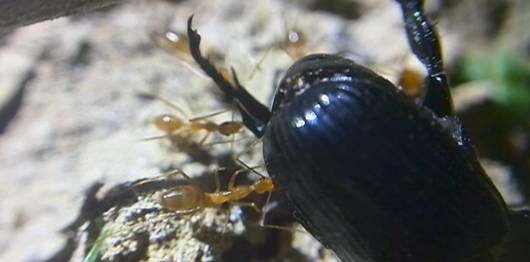
Beetles and ants are not exactly the best of friends. These tiny insects have always slugged it out for supremacy, survival and territory.
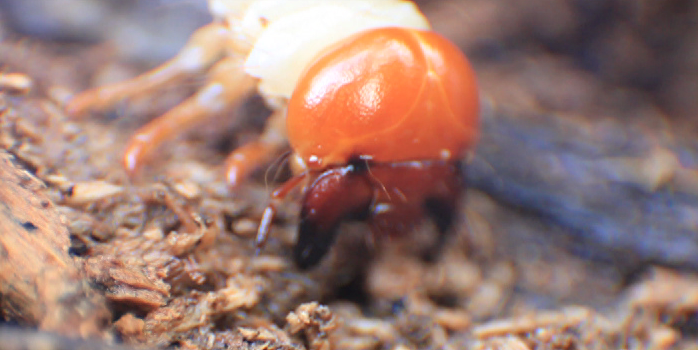
Despite their size, ants are known to overpower other insects and dominate terrestrial environments by maintaining a large population size. Not to mention, these insects have very sophisticated social systems for food gathering and building homes.
Beetles, on the other hand, are the most common type of insects in the macro world and are considered the "most common animals on the planet." Estimates vary, but the number of beetle species is thought to be anywhere from over 350,000 to as much as 400,000.

A dragonfly is an impressive and fast flier. It can remain suspended in the air to hunt and look for food. Dragonflies are solitary animals whose strength and agility allow them to hunt for prey on their own.

Dragonflies have very good eyesight. The eye of a dragonfly has nearly 30,000 lenses and can view its surroundings in 360 degrees.

During the exploration, Doc Ferdz also came across a wild scorpion. Although these creatures are often viewed as frightening and dangerous due to their poisonous sting and numerous eyes (they can have as many as 12!), it is interesting to know that, unlike dragonflies, these creatures have rather poor eyesight. A scorpion relies on its sense of smell to scour for food and hide from its predators.
Reptiles and amphibians
The Philippines is known to have more than 111 species of amphibians, 80 percent of which are endemic, and 270 reptile species of which 70 percent are endemic. Some of these creatures are the endemic Philippine freshwater crocodile, the Gray's monitor lizard and the Philippine forest turtle. Recently, two species of fruit-eating lizards have been discovered in the country: the Northern Sierra Madre forest monitor lizard and the Panay monitor lizard.
In Burdeos, an island in Quezon, Doc Nielsen encountered an Amboina box turtle which derives its name from its curious ability to hide or "box" itself up entirely inside its shell. These animals are omnivorous, but the younger ones tend to eat more meat and the older ones are vegetarian.


Doc Nielsen also encountered a Pacific house gecko, which is also known as the Asian house lizard. The snout of the Pacific house gecko is longer than the distance between their eyes and their ears, unlike other lizard species. These animals also have specialized toe pads that allow them to climb smooth, vertical surfaces.
At the end of their journey into the macro world, the vets agreed that in this sphere of life, supremacy isn’t defined by how big or how strong a creatures is.
“Sa mundong ito, hindi palakihan o palakasan ang labanan kung hindi pagalingan at patindihan ng paggamit ng sandata para mabuhay,” Doc Ferdz Recio concluded. –Jan Suing/CM/PF, GMA News
Using macro photography, “Born to be Wild’ gives us a glimpse of the world from these creatures’ point of view.
Insects may be small, but their tiny worlds are also filled with turf wars and battles for survival.
Beetles and ants are not exactly the best of friends. These tiny insects have always slugged it out for supremacy, survival and territory.
Despite their size, ants are known to overpower other insects and dominate terrestrial environments by maintaining a large population size. Not to mention, these insects have very sophisticated social systems for food gathering and building homes.
Beetles, on the other hand, are the most common type of insects in the macro world and are considered the "most common animals on the planet." Estimates vary, but the number of beetle species is thought to be anywhere from over 350,000 to as much as 400,000.
A dragonfly is an impressive and fast flier. It can remain suspended in the air to hunt and look for food. Dragonflies are solitary animals whose strength and agility allow them to hunt for prey on their own.
Dragonflies have very good eyesight. The eye of a dragonfly has nearly 30,000 lenses and can view its surroundings in 360 degrees.
During the exploration, Doc Ferdz also came across a wild scorpion. Although these creatures are often viewed as frightening and dangerous due to their poisonous sting and numerous eyes (they can have as many as 12!), it is interesting to know that, unlike dragonflies, these creatures have rather poor eyesight. A scorpion relies on its sense of smell to scour for food and hide from its predators.
Reptiles and amphibians
The Philippines is known to have more than 111 species of amphibians, 80 percent of which are endemic, and 270 reptile species of which 70 percent are endemic. Some of these creatures are the endemic Philippine freshwater crocodile, the Gray's monitor lizard and the Philippine forest turtle. Recently, two species of fruit-eating lizards have been discovered in the country: the Northern Sierra Madre forest monitor lizard and the Panay monitor lizard.
In Burdeos, an island in Quezon, Doc Nielsen encountered an Amboina box turtle which derives its name from its curious ability to hide or "box" itself up entirely inside its shell. These animals are omnivorous, but the younger ones tend to eat more meat and the older ones are vegetarian.
Doc Nielsen also encountered a Pacific house gecko, which is also known as the Asian house lizard. The snout of the Pacific house gecko is longer than the distance between their eyes and their ears, unlike other lizard species. These animals also have specialized toe pads that allow them to climb smooth, vertical surfaces.
At the end of their journey into the macro world, the vets agreed that in this sphere of life, supremacy isn’t defined by how big or how strong a creatures is.
“Sa mundong ito, hindi palakihan o palakasan ang labanan kung hindi pagalingan at patindihan ng paggamit ng sandata para mabuhay,” Doc Ferdz Recio concluded. –Jan Suing/CM/PF, GMA News

