GMA Brandtalk
 Tracking
 Archives

ISSUE NG BAYAN: The Ghosts of Bulacan
In the last six weeks, Unang Hirit's Issue ng Bayan segment mounted live, remote broadcasts in three separate locations in Bulacan to tackle the issue on anomalous flood control projects. This is part of our objective to help viewers make sense of the raging issues of the day —more notably, to put a face to these issues and to give voice to those who are most affected.
First, we went to Barangay Frances in Calumpit, where President Bongbong Marcos himself visited a supposedly completed project, but saw a "ghost" that he said got him
"very angry"
Next, we visited Barangay Malis in Guiguinto, where we talked to Norlyn Responso, the woman who went viral for the raw and profound rage she so eloquently expressed in a Reporter's Notebook episode on flood control projects. We also found a "ghost" just very near her flooded home.
And then there was Hagonoy, a town slowly sinking every year due to land subsidence, its situation made worse by poorly planned, if not non-existent (again, ghosts) flood control projects that were doomed to fail from the beginning.
Barangay Frances, Calumpit
Just two weeks before this episode aired President Marcos visited Barangay Frances in Calumpit to inspect a segment of a P77-million flood mitigation structure. A resident supposedly wrote the President, describing a damaged dike in their community, and asked that it be inspected because of what he suspected was substandard construction. The President confirmed the suspicion, and as he would witness in succeeding visits in different areas, it was just the first of many that will be exposed as either substandard, non-existent or unfulfilled contractual obligations. Ghost projects, as we call them now.
Before going on air that day I saw portions of the retaining wall that the residents called
"ampaw", or hollow. Hollow indeed it was, with concrete way below the required standard of 12-inch minimum thickness. How the concrete pulverizes with a mere squeeze of a human hand tells of the substandard-ness of the project.
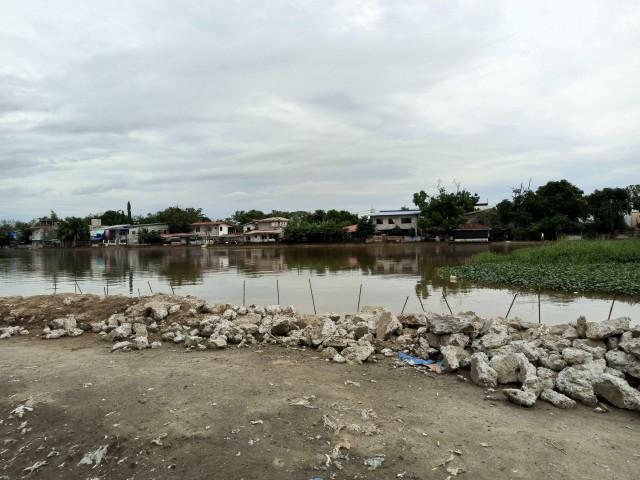
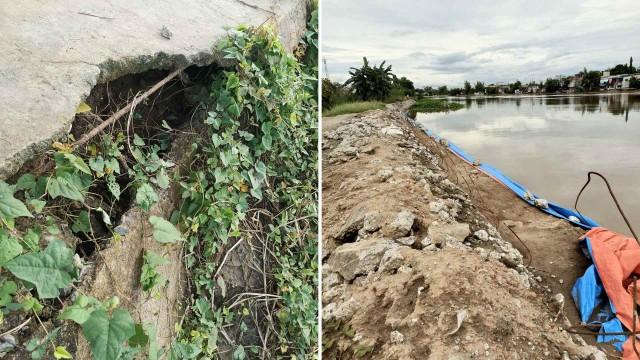
In this particular project, the contract included not just the construction of the revetment wall but also the desilting and dredging of the river to increase its capacity and prevent water from spilling to the nearby communities, which in this case was Barangay Frances. Based on the Sumbong sa Pangulo website, its completion date was July 2023. This contractual obligation was apparently unfulfilled; paid for but not delivered. A ghost, but in a different guise.
Marcos was quoted as saying during his visit, "Sa kontrata, may desiltation, dredging, completed. Tingnan mo naman, paano magiging completed 'yan. Tingnan ninyo, may isla sa gitna, tinutubuan na ng damo na napaka... masukal na 'yan oh, ibig sabihin matagal na sila hindi nagdredredge."
It is already infuriating to watch these things in the news or to read the stories online, yet somehow it hits harder when you get to talk to the residents who live with the life-altering consequences of these failed projects. On live television, one farmer laments how his livelihood has suffered through the years, as what used to be tillable land has now turned into a swamp. Or how, on most days, face-to-face classes are simply impossible because schools are often inaccessible by foot or by usual transportation.
When I asked one resident how he feels when he sees how money meant for flood control was lost to corruption, how projects that could have given them relief from this misery went to the lavish lifestyles of the corrupt, his response was inappropriate for morning television:
"Gusto ko po silang pugutan!"
But when his livelihood and children's education suffer because of other people's greed, can anyone blame him?
Watch the episode here::
Barangay Malis, Guiguinto
Situated along the Guiguinto River, Barangay Malis is no stranger to flooding. Just not this bad, and not this constant, its residents told me.
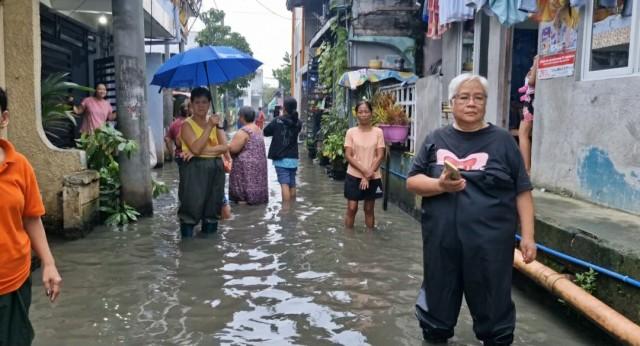
Nanay Norlyn went viral in a Reporter's Notebook clip when, upon seeing the TV crew filming near her house in Barangay Malis, the words just flowed out of her, her voice cracking with rage at the misery of living practically submerged in water.
"Ang kakapal ng mukha nila, ang sasarap ng buhay nila. Dalawang beses na kong inaatake dahil diyan sa baha na yan. Baka sa pangatlo patay na ko. Di ko na abutan makita na gumanda yang daan na yan dahil sa kakakurakot nila," she said.
Watch the episode here::
Nanay Norlyn was born and raised in Malis. She remembers a time, not so long ago, when the ground they stood on was dry most days of the year. The great irony of their situation is how the flood control projects of the last eight years — meant to improve the flooding situation-did the opposite.
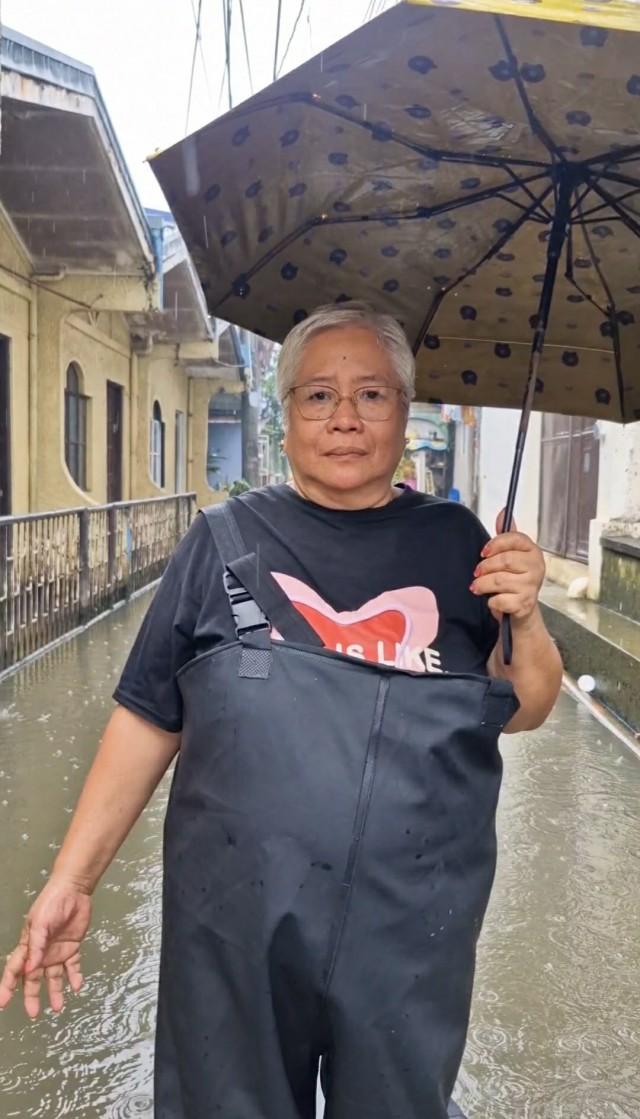
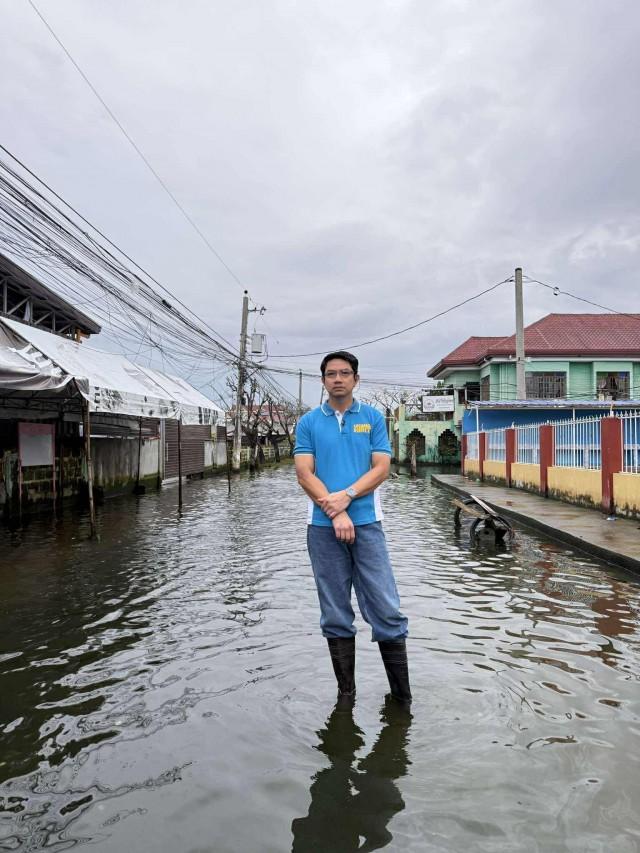
For the actual segment, Nanay Norlyn and I stood right in front of her flooded house.
We were both in waders, with the water thigh or waist deep, depending how tall one is.
It can get worse at different times of the day. During habagat or a big typhoon, she said, the floods can get to depths at which one's height would cease to matter. Of course, it is obvious how miserable living under these circumstances can be, but one question popped into my head: What about emergencies? How does one respond to an emergency in a place like this?
"Nung ako'y inatake, binuhat ako, inilabas ako sa mas malalim na baha. Hindi ko alam kung aabot ako ng kalsada; wala namang rescue na pumapasok dito kasi ang hirap ng daan," she said.
_2025_10_24_16_16_17.jpg)
In our effort to help Nanay Norlyn for answers, and perhaps some much needed assurance that something is being done, we asked to speak with Guiguinto's municipal engineer. Having held the position for 37 years, Arcadio Sulit knows the behavior of Guiguinto River like the back of his hand. But as is the case with many local government unit officials, he was not consulted in any of the 13 flood control projects, totaling to about P800 million, in Barangay Malis alone.
Just right behind us, Engineer Sulit said, was a ghost project.
"Tulad ng nasa likod natin. Ito ay matandang revetment wall na siguro 2018, or 2017 nandiyan na siya. Ni-release-an ulit siya ng pondo worth 96 million mahigit. Ang contractor Wawao (Builders) pero wala po, dapat po mataas na yung wall diyan. Hindi accomplished pero collected po," he said.
_2025_10_24_16_18_19.jpeg)
Watch the episode here:
Barangay San Sebastian, Hagonoy
I arrived at Barangay San Sebastian Elementary School a few minutes past 5 in the morning. My team chose this location for our live point, as it more or less illustrates the conditions that residents put up with every day, living in streets that are never dry.
They had two words to describe the flooding in this part of town: tubig bata or tubig matanda, which simply means high or low, but flooded nonetheless.
After a few minutes, school children started coming in, most of them in modified tricycles called "tikling" — tricycles with lifted suspension systems to enable them to roll through flooded streets. There were some who came on foot, some with boots, others in slippers, and then there were those who were carried on a piggyback ride by their parents.
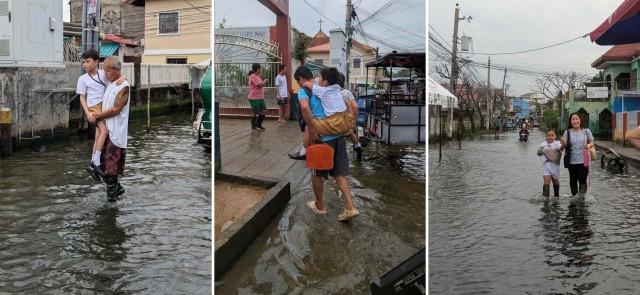
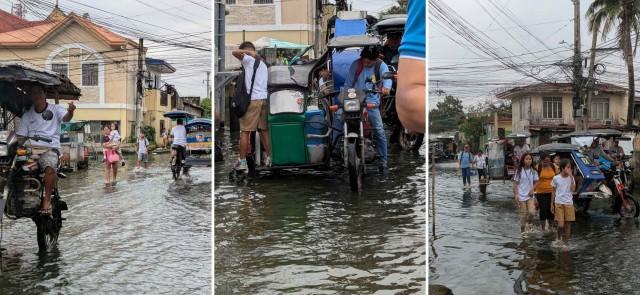
It would be interesting to see the luxury SUVs of the legislators, the contractors, and whoever else driving on these roads rendered almost impassable due to their misdeeds, I thought.
At this point, it was almost predictable that parents will be livid if I ask them about flood control. But my first interviewee, a mother, told me she was actually sad about all of this. She yearned for what used to be, or for what can still be.
"Mahirap para sa amin. Malungkot dahil dati tuyo ito, nakakagawa kami ng activities sa school. Ngayon po hindi lalo sa araw-araw pagpasok namin," she said.
Hagonoy is a coastal town sitting in a low-lying land area and is thus naturally prone to flooding, Municipal Engineer Eugene Miguel explained. This, he said, is made worse by land subsidence -the town is sinking at the rate of about 10 centimeters (4 inches) a year. Land subsidence also affects the other towns of Bulacan.
The Department of Public Works and Highways has been introducing interventions, among them 42 flood control projects in the entire municipality of Hagonoy alone, based on the Sumbong sa Pangulo website. Another 21 contracts have been signed for 2025, but every single one of them have been abandoned when the flood control scandal broke out.
Meanwhile, eight of the 42 projects cannot be located, according to Engineer Miguel.
Each of these eight projects cost the government P74 million. Such expensive ghosts.
Engineer Miguel claims that he was never consulted in these projects at all:
"Putol-putol po kasi ang pagkakagawa at walang naging epekto at di naramdaman ng mga taga Hagonoy." He recommends a flood mitigation and water management master plan, in coordination with the nearby LGUs of Paombong, Malolos, and Calumpit. Flooding does not honor boundaries after all.
Watch the episode here:
Exorcising the ghosts
After having done three episodes of Issue ng Bayan in three different locations, but with the same story to tell, I felt like I was possessed with renewed eloquence, uttering words that could have come from Philippine literary giant and Bulakenyo Francisco Balagtas (maybe not in these exact words, but close):
Kawawang Bulacan
Lalawigang pinagnakawan
Ang pondong pinaghirapan
Pinag partehan ng mga kawatan.
Judging by all the creative memes, speeches, and other colorful language that have graced social media and the many protest actions of late, it appears that the eloquence and creativity in expressing the anger over this scandal has infected many of us.
This is what we need: we, as a people expressing our collective anger, calling out corruption, and demanding that the culprits are held accountable. This is necessary to secure the critical mass that will kickstart meaningful change. So far, the government has been responding: investigations are ongoing, names of those possibly involved are being floated, assets have been frozen, lookout bulletins have been issued. Strong statements from government officials raise hopes that those who caused of all this will have their well-deserved comeuppance.
But we need to keep watch because as this is being written, not a single person higher than a DPWH official has been charged. There is not a single one behind bars.
Suspicions of coverups and selective prosecution are being raised. While some of those under investigation are starting to play the sick card, authorities are raising the due process requirement. Familiar?
In all of these, people are getting restless and impatient. There is a growing sentiment that what is getting done to punish the corrupt is too little, and too slow. What might follow is the defeatist attitude that no one is going to be held to account in the end.
Such attitude is partly what enabled this corruption to happen, at this scale, in the first place.
When asked in casual conversations what I think of this latest corruption scandal that has rocked the country, I always say that I am cautiously optimistic that people will remember this one, and might actually trigger the change we have been longing to see.
There is so much public pressure on the administration and on our institutions, and officials are taking notice.
But they will only do so, and keep doing so, if they know that we, the people, are watching. Ultimately, the power to exorcise these ghosts that haunt us, that terrify us, that make us miserable, and that has held us back-lies on us.