

 GMA Brandtalk
 Tracking
 Archives

Why the next Winter Olympics matters to South Korea and Asia
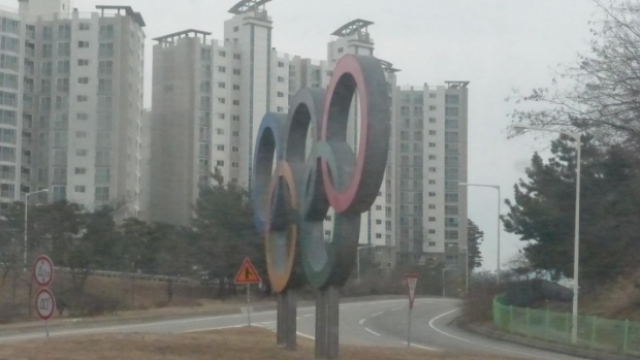
One night in July 2011
People cheered and hugged each other in the streets. Some wept openly and proudly. There were fireworks in the sky and the entire nation rejoiced. After two failed bids for the 2010 (Vancouver won) and 2014 Games (awarded to Sochi), the resort city of PyeongChang in South Korea has finally made it.
Then International Olympic Committee (IOC) President Jacques Rogge announced that they have officially chosen PyeongChang as the host of the XXIII Winter Olympic Games. It won by an avalanche of votes over European candidate cities Munich and Annecy.
“The South Korean project will leave a tremendous legacy as PyeongChang will become a new winter sports hub in Asia,” Rogge said during the announcement.
South Korea will become the second Asian country to host both the Summer and Winter Olympics, following the footsteps of Japan, and to be succeeded by China in 2022.
It’s going to be a big deal not just for the country of more than 50 million people, but also to the entire Asian continent. By bringing the Winter Games to South Korea, the IOC hopes to involve and engage young Asian athletes in winter sports, opening up a new market and audience for the Games.
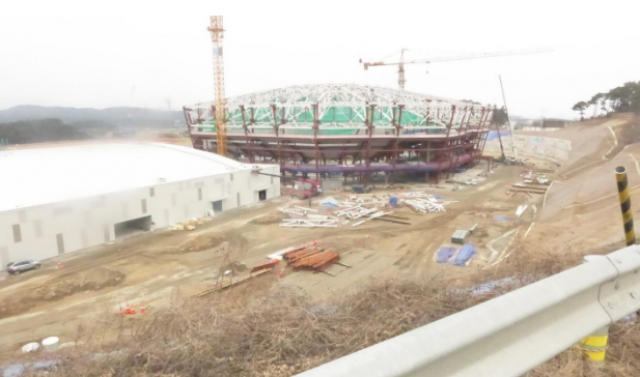
Preparations in full swing
Fast forward to five years after that defining moment, PyeongChang’s Olympic Organizing Committee or POCOG is busy in keeping track with all the developments in preparation for the Games.
South Korea has promised to build six new competition venues, while $4.1 billion was allocated to fund 14 different transportation infrastructure projects. In fact, a new high-speed railway that will link Incheon International Airport, the country’s main gateway, to the venues located 300 kilometers away is almost finished.

A new expressway is also being built to complement Yeongdong Expressway I to make PyeongChang and the coastal city of Gangneung more accessible.
But that’s not the only aspect of the Games they have been busy with. Aside from the heavy construction of venues and railways, POCOG has also been steadily building buzz in social media and popular culture.
To generate excitement and encourage participation among young South Koreans, they maintain active social media accounts that also try to engage followers from other countries. Popular actor Lee Min-ho and national athlete Yuna Kim have been named PyeongChang 2018 ambassadors, attracting legions of fans to look forward to the Winter Games. “I will do my best to promote the Games internationally so that more people can celebrate together,” says Lee.
PyeongChang also showcased the 15 sports disciplines up for competition in 2018 at the recently concluded Rio Olympics. They hope to convince spectators of the Summer Games to also consider going to the Games’ Winter staging.
To document South Korea’s preparations for 2018, “I-Witness’” Sandra Aguinaldo and her team flew to South Korea earlier this year to learn more about the country’s master plan in hosting the 50,000 participants and a projected 500,000 visitors expected to attend the Games.
A tale of two cities: PyeongChang and Gangneung
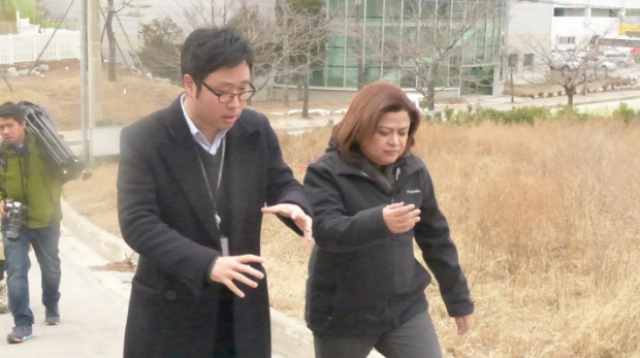
Lee Myungwon, project manager of POCOG’s Engagement Team, welcomed the team in the construction sites in Gangneung, a coastal city on the eastern part of the country. Collectively called the Gangneung Cluster, this will be the venue for ice sports such as curling, ice hockey, speed skating and figure skating.
Snow sports like alpine skiing, ski jumping and snowboarding, and sliding sports which include bobsleigh, luge and skeleton, will be hosted in the PyeongChang Cluster. The opening and closing ceremonies will also be held there.
“We have less than two years to go for the PyeongChang 2018 Games which is we’re right on track with all the constructions and the preparation of the infrastructure, the transportation network,” says Lee about their preparations. As he briefs the I-Witness team about the different arenas being built for the Games, he points to each one from atop the hill overlooking the entire construction site. He is quick to say that the venues are expected to be finished before the start of the 2016-2017 winter season, and test events can be hosted as early as December.
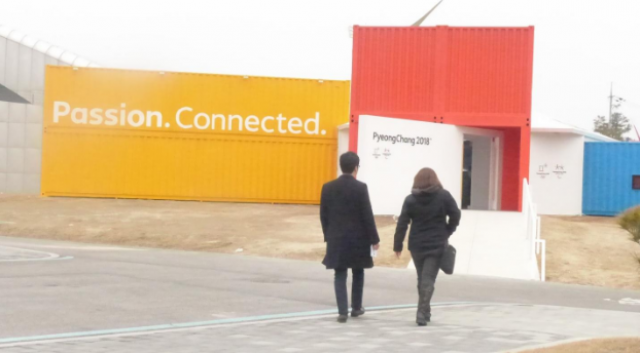
Aside from the sports venues, Lee also talks about how Gangneung and nearby PyeongChang seem to have been tailored for the Games. Ski resorts and hotels run aplenty in this part of the country, and they don’t have to worry about building new hotels and other accommodations for the influx of tourists as the Games approach. He goes on to talk about their slogan, “Passion. Connected.” which symbolizes the “new era of festivity” and Korea’s warm-heartedness.
Journey to the Games, and beyond
Inside the PyeongChang 2018 House, visitors are greeted by a huge countdown projected on a wall. The house is adorned with Olympic emblems and memorabilia from PyeongChang’s journey to becoming a host city.
On another side, pictures of young athletes line up a wall that says “The Dream Programme.” This is a project that was started in 2004, as part of PyeongChang’s first bid to host the Winter Games. It aims to give chance to aspiring athletes who reside in countries that do not have winter, or those that do not have the means to train in winter sports. So far, they have already admitted 1,574 participants to the programme, including 12 Filipinos who trained in figure skating.
Lee also opens up about the legacy that they want the Games to have. Most Olympic cities have to deal with maintenance of the venues and keeping them operational long after they’ve hosted the Games.
In fact, the fates of PyeongChang 2018’s venues have long been decided. Some will be converted into college centers and medical facilities while others will be open for public use. The Olympic Village and the Media Village will be sold to private companies for conversion to housing complexes or hotel accommodations.
Lee says they seek to boost the tourism industry in Gangwon Province, hoping it will create a lot of opportunities and jobs for Korea and even neighboring countries including the Philippines. The steady growth of tourists in the country is already a good start. Right after PyeongChang was elected as host city in 2011, the number of tourist arrivals in South Korea in general has been steadily increasing, with total arrivals not going below the ten million mark.
In 2014, Hyundai Research Institute projected that PyeongChang 2018 would add a whopping 64 trillion won to South Korea’s economy.
Despite this, South Korea is not eager to keep the success just for themselves. “New Horizons,” PyeongChang 2018’s official vision, aims to tap Asia’s “virtually unlimited potential for growth in winter sports,” citing that the region has the largest young population compared to the other continents, and that it is the fastest growing market in winter sports today. PyeongChang is definitely set to open access to Asia’s winter destinations, and give the rest of Asia an access to winter sports.
Post script
After touring the team on-site and answering questions on camera, Lee Myungwon decides to entertain a few more from this author. One of the topics that was brought up was the rising tensions between the two Koreas. Will their brother from up north attend or will they boycott the Olympics?
“We don’t care about the political situations. We want everyone to come,” Lee says. It would indeed be big news if Kim Jong-un attends.
Nonetheless, this new wave of Korean passion and culture is set to hit it big. The cold doesn’t really bother them, anyway. ---BMS, GMA Public Affairs

