

 GMA Brandtalk
 Tracking
 Archives

ADVERTISEMENT
Filtered By: Publicaffairs
Public Affairs
'KMJS' Staff Blog: The story of Dada Mary and Rawan
+
Make this your preferred source to get more updates from this publisher on Google.
"Kapuso Mo, Jessica Soho" is a weekly news magazine show hosted by Jessica Soho, one of the most awarded broadcast journalists in the Philippines. For more information, follow the show on Facebook, Twitter and Instagram.
________________________________________________________________________________
I have been working for TV for more than three years now. Over the years, I’ve learned that there is no single, golden formula when it comes to searching for stories that would pique the interest of the viewing public.
In a restless generation that glorifies the word “busy” and “stress” as if these are the barometer with which we measure someone’s success, my personal golden rule for finding good stories is this: did it make you stop, think twice, drop everything and read?
If it took a few unadulterated minutes of your precious time, it is a good story. It is worth stopping for. When I read in our local paper that a Saudi journalist launched a search for her Pinay nanny who left their family 22 years ago, I stopped. I read on. I wanted to know more.
 Maybe it was the peculiarity of it all — once, we produced a story about a mother searching for her missing son after the onslaught of habagat in 2012. We did find the boy; he was exactly how his mother remembers him, only he was lifeless.
In the age of social media, we see stories of people searching for their long-lost loved ones every day. Once in a while, we’d get calls from people asking us for help. Sometimes, we talk of decades of separation, moms and dads and children alike. The invisible thread that connects them all: they are FAMILY. They are flesh and blood that needed to be found.
Rawan Radwan’s was a different story. Without the invisible thread, just out of pure gratitude and big what-ifs, she needed to find the woman she calls the rock star of her childhood years — her Pinay nanny, Dada Mary.
In a country of a hundred million people, how much faith does it take to actually hold on to the hope of finding your long-lost nanny?
Maria Luningning Bernardo, then a widow and having no kids, left the Philippines in 1987 to work as a nanny for the Radwan family in Jeddah. For five years, she treated the Radwan kids as if they were her own.
She told me that you don’t need to bear kids to learn how to be a second mother to your “alaga” — when you have the heart of selfless service and you’re able to raise others’ children in a way that makes you proud as a woman, you are as much a mother to them as the woman who brought them into the world. Such is the pride and heart of this Pinay nanny who raised 7 kids in different parts of the world.

Rawan’s search ended on August 5, 2014 through a Skype reunion facilitated by our team. I admit, it was one of those poignant moments in life where you just stop and appreciate all the goodness that is happening right in front of you.
We watched Dada Mary clap her hands like a proud mother as Rawan, now 30 years old, sang “Pen Pen De Sarapen”—making her nanny proud just like her 8-year-old self did.
The days that ensued were more surreal than ever.
The next day, Rawan organized another Skype reunion, this time reintroducing Dada Mary to the entire Radwan family: her sister Hadeel, who Dada fondly calls “Lully,” is now an artist. Faris, her youngest brother, is now a doctor.
The most touching all was Dada Mary’s reunion with her old “madam,” Rawan’s mother, who treated her like a sister. There was so much pride in the smile of the old nanny after knowing that her babies all succeeded in their chosen professions, it was contagious.
 They say there is nothing more fluid than this job because every week offers a new story and you have to move with the cycle of news. But to be able to capture and immortalize moments like these leave imprints in the heart that you just cannot easily forget.
One day after the story aired, I got a call from Rawan bringing some good news. A leading women’s magazine from Saudi Arabia was willing to sponsor her trip to the Philippines. The sleepless nights of organizing the trip and the reunion were nothing compared to the excitement we all had for Rawan and Dada Mary.
On August 23, 2014, a month after Rawan launched her search for her nanny, the two finally met again in Candelaria, Quezon in what I could say was one of the most heartfelt reunions I’ve seen in years.
Maybe it’s true that no amount of virtual presence can compare to a real hug shared by two people who have counted decades apart. Rawan’s first words to her missed nanny: “Mahal kita.”
The Dada Marys of the world
Our OFWs’ part in keeping our economy afloat cannot be denied. In 2012, they sent P165 billion in remittances to their families, and every year the numbers go up as more Filipinos leave to work in foreign lands.
According to the statistics of the Philippine Overseas Employment Administration, about 9.5 million to 12.5 million Filipinos, or 10-12% of our population, are currently dispersed worldwide as OFWs.
To give us an idea, that is 4,500 Dada Marys leaving their families every day to seek greener pastures abroad.
Maybe this is the reason why Dada Mary and Rawan’s story touched the hearts of Filipinos all over the globe. Ask one household in the Philippines if they have a relative who’s an OFW and I am sure they’d say yes.
In our family, most of the men have been working abroad for decades now too. We are from the generation who would record our voices on cassette tapes and airmail them abroad, write dedications on the back of photographs, and call collect on special holidays.
We’ve known how much weekly long distance calls can mean, and are grateful for the easy daily chat provided by Skype or Facetime these days.
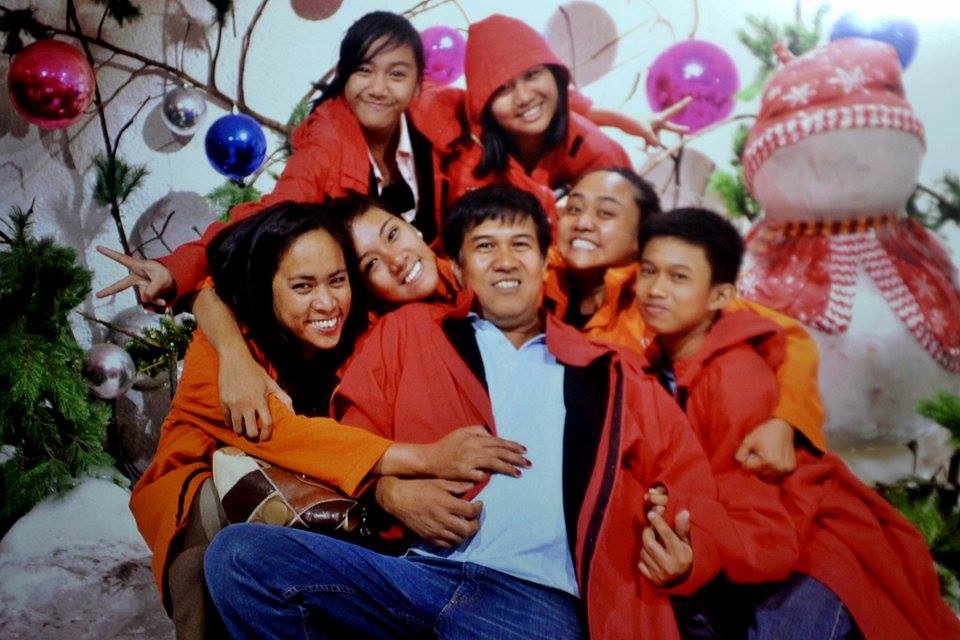 My father left for Saudi Arabia in 2007 despite having a stable job in the Philippines. Tuition fees at the University of the Philippines had shot up 300%, and all he ever wanted was for me to experience the best education there is.
He had to leave 4 daughters and a wife who managed to co
mpensate for the lack of a man in the house. We all have Dada Marys who occupy the empty bed in the room, hug us on bad days, and celebrate the good days with.
The sacrifices of our Overseas Filipino Workers cannot be stressed enough. Time and again, the social cost of sending OFWs to care for other families while leaving their kids has also been discussed.
Currently, it is estimated that there are 9 million Filipino children under 18 years old who get left behind by their OFW parents.
While Filipina nannies raise other kids all over the world, it is ironic that there are 9 million kids in our country who grow up with virtual moms on Skype.
This story made me realize that while there are lucky ones who have good employers like Rawan and her family, the government has to step up and ensure that we do not leave our OFWs’ fate to luck.
While we are bombarded every day with news of abuse and the looming terrors in war-torn, epidemic-stricken countries for our OFWs, it is a sigh of relief that there are people like Rawan who treat our families like their own.
We who get left behind can only pray to God that as we send our relatives to foreign territories, they find all the Rawans out there who will embrace and love them the way we do. — BM, GMA News
________________________________________________________________________________
I have been working for TV for more than three years now. Over the years, I’ve learned that there is no single, golden formula when it comes to searching for stories that would pique the interest of the viewing public.
In a restless generation that glorifies the word “busy” and “stress” as if these are the barometer with which we measure someone’s success, my personal golden rule for finding good stories is this: did it make you stop, think twice, drop everything and read?
If it took a few unadulterated minutes of your precious time, it is a good story. It is worth stopping for. When I read in our local paper that a Saudi journalist launched a search for her Pinay nanny who left their family 22 years ago, I stopped. I read on. I wanted to know more.
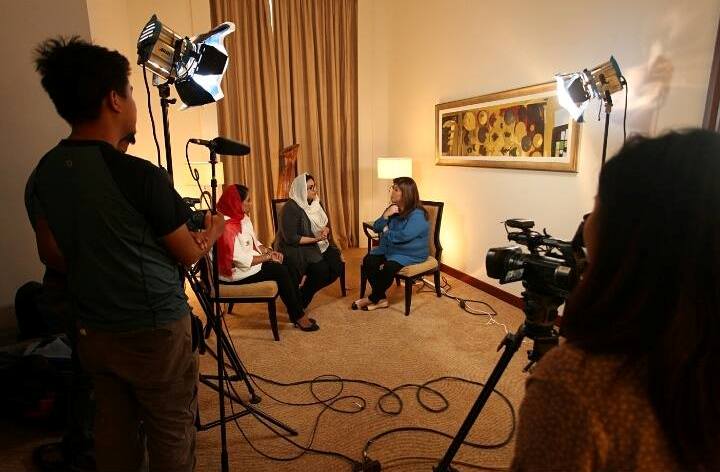
Behind-the-scenes. The author has been working for TV for more than three years now.
In the age of social media, we see stories of people searching for their long-lost loved ones every day. Once in a while, we’d get calls from people asking us for help. Sometimes, we talk of decades of separation, moms and dads and children alike. The invisible thread that connects them all: they are FAMILY. They are flesh and blood that needed to be found.
Rawan Radwan’s was a different story. Without the invisible thread, just out of pure gratitude and big what-ifs, she needed to find the woman she calls the rock star of her childhood years — her Pinay nanny, Dada Mary.
In a country of a hundred million people, how much faith does it take to actually hold on to the hope of finding your long-lost nanny?
Maria Luningning Bernardo, then a widow and having no kids, left the Philippines in 1987 to work as a nanny for the Radwan family in Jeddah. For five years, she treated the Radwan kids as if they were her own.
She told me that you don’t need to bear kids to learn how to be a second mother to your “alaga” — when you have the heart of selfless service and you’re able to raise others’ children in a way that makes you proud as a woman, you are as much a mother to them as the woman who brought them into the world. Such is the pride and heart of this Pinay nanny who raised 7 kids in different parts of the world.
Rawan’s search ended on August 5, 2014 through a Skype reunion facilitated by our team. I admit, it was one of those poignant moments in life where you just stop and appreciate all the goodness that is happening right in front of you.
We watched Dada Mary clap her hands like a proud mother as Rawan, now 30 years old, sang “Pen Pen De Sarapen”—making her nanny proud just like her 8-year-old self did.
The days that ensued were more surreal than ever.
The next day, Rawan organized another Skype reunion, this time reintroducing Dada Mary to the entire Radwan family: her sister Hadeel, who Dada fondly calls “Lully,” is now an artist. Faris, her youngest brother, is now a doctor.
The most touching all was Dada Mary’s reunion with her old “madam,” Rawan’s mother, who treated her like a sister. There was so much pride in the smile of the old nanny after knowing that her babies all succeeded in their chosen professions, it was contagious.
Behind-the-scenes. The author with Rawan Radwan, Dada Mary and "KMJS" researcher Warren.
One day after the story aired, I got a call from Rawan bringing some good news. A leading women’s magazine from Saudi Arabia was willing to sponsor her trip to the Philippines. The sleepless nights of organizing the trip and the reunion were nothing compared to the excitement we all had for Rawan and Dada Mary.
On August 23, 2014, a month after Rawan launched her search for her nanny, the two finally met again in Candelaria, Quezon in what I could say was one of the most heartfelt reunions I’ve seen in years.
Maybe it’s true that no amount of virtual presence can compare to a real hug shared by two people who have counted decades apart. Rawan’s first words to her missed nanny: “Mahal kita.”
The Dada Marys of the world
Our OFWs’ part in keeping our economy afloat cannot be denied. In 2012, they sent P165 billion in remittances to their families, and every year the numbers go up as more Filipinos leave to work in foreign lands.
According to the statistics of the Philippine Overseas Employment Administration, about 9.5 million to 12.5 million Filipinos, or 10-12% of our population, are currently dispersed worldwide as OFWs.
To give us an idea, that is 4,500 Dada Marys leaving their families every day to seek greener pastures abroad.
Maybe this is the reason why Dada Mary and Rawan’s story touched the hearts of Filipinos all over the globe. Ask one household in the Philippines if they have a relative who’s an OFW and I am sure they’d say yes.
In our family, most of the men have been working abroad for decades now too. We are from the generation who would record our voices on cassette tapes and airmail them abroad, write dedications on the back of photographs, and call collect on special holidays.
We’ve known how much weekly long distance calls can mean, and are grateful for the easy daily chat provided by Skype or Facetime these days.
The author's family. Her father left for Saudi Arabia in 2007 despite having a stable job in the Philippines.
He had to leave 4 daughters and a wife who managed to co
mpensate for the lack of a man in the house. We all have Dada Marys who occupy the empty bed in the room, hug us on bad days, and celebrate the good days with.
The sacrifices of our Overseas Filipino Workers cannot be stressed enough. Time and again, the social cost of sending OFWs to care for other families while leaving their kids has also been discussed.
Currently, it is estimated that there are 9 million Filipino children under 18 years old who get left behind by their OFW parents.
While Filipina nannies raise other kids all over the world, it is ironic that there are 9 million kids in our country who grow up with virtual moms on Skype.
This story made me realize that while there are lucky ones who have good employers like Rawan and her family, the government has to step up and ensure that we do not leave our OFWs’ fate to luck.
While we are bombarded every day with news of abuse and the looming terrors in war-torn, epidemic-stricken countries for our OFWs, it is a sigh of relief that there are people like Rawan who treat our families like their own.
We who get left behind can only pray to God that as we send our relatives to foreign territories, they find all the Rawans out there who will embrace and love them the way we do. — BM, GMA News

