

 GMA Brandtalk
 Tracking
 Archives

Kidapawan City cha-cha-chas their way to a world record
In the past few months, the city of Kidapawan has been attached to two painful words: Kidapawan Massacre, the bloody dispersal of farmers who demonstrated along the national highway of the said city April this year. With three deaths and over a hundred injuries, this tragedy undeniably left a shadow all over the city.
In the hopes of lifting the spirits of the residents, the city government decided to craft an event that can serve as a source of happiness for the people and would entail participation from all over Kidapawan---a conscious effort to temporarily ease everyone’s worry. It was then when they eagerly started pursuing their attempt to set a Guinness Book of World Records for the largest cha-cha-cha dance event.
THE FIRST FEW STEPS
According to Cherry Galanto, one of the organizers, the dance event started brewing August last year but wasn’t acted upon until May this year. They had to wait for the approval of their application from the Guinness World of Book Records which took almost half a year to be completed.
As soon as they received the approval, they started contacting various schools, universities and organizations to join them in this conquest. Galanto shared that they got positive and overwhelming support from all the organizations they invited, only showing how eager every resident of Kidapawan wants to contribute in alleviating their image.
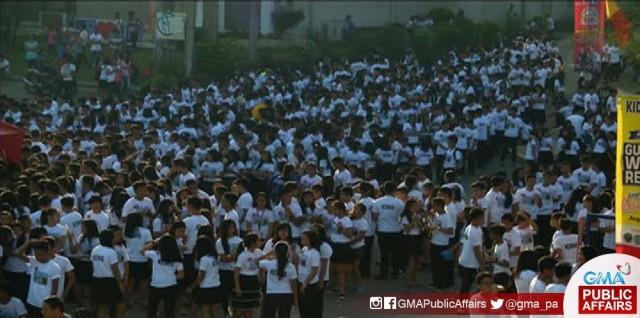
Although they got this kind of responses, Joey Recemilla, city tourism and investment promotions officer, pointed out how grueling the process leading to the big day was. Logistics-wise, the preparation for the event was like a nightmare of sorts because of the large number of participants.
“Operation, administrative, pati ‘yung technical. It’s a complicated thing to do considering na malaki ‘yung target mong population na sasali, so it's really a nightmare for the preparation stage,” Recemilla explained.
Their target was to have around 10,000 individuals or 5,000 pairs in order to beat Singapore’s record of about 3,000 people. After organizing a core group to head all the coordination that was about to take place, they also chose around 30 dance instructors and three professionals to serve as witnesses to the event as part of Guinness’ protocol. They systematically arranged dance practices every single day for three months.
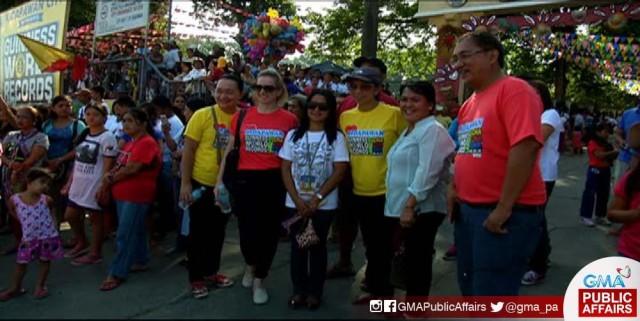
Their dance routine was only composed of six steps: the basic cha-cha-cha movement, New York, shoulder-to-shoulder, hand-to-hand, time step and three consecutive cha-cha-cha movements. It sounded easy but teaching around 16,000 participants proved otherwise.
“So, every day we usually devote two hours, may contact numbers na kino-contact ang organizations, ini-schedule with our parents and coaches. Then, hinahati-hati po ‘yung team para mas maraming grupo ang mapuntahan,” Galanto said.
CHA-CHA-CHA TO THE PARTICIPANTS
From 10,000 as their initial target, they ended up teaching around 16,000 participants. It was composed of Kidawapan City residents of all ages – young students, working class, and even senior citizens.
Among them were Lola Aida and Lola Fe who claimed to still enjoy dancing cha-cha-cha even in their old age. They also decided to join the event for meaningful reasons.
“Sumali ako para ‘yung mga apo ko, ma-encourage na sumali din at hindi mapapunta sa kung ano-anong mga hindi mabuting gawain,” Lola Aida explained.
On the other hand, Lola Fe who is a retired teacher and taught Physical Education subjects for 40 years, revealed how cha-cha has always been a part of her everyday life.
“Kahit nagpupunas ng plato, kahit nagsasalamin... napapasayaw ako, kasi parang mannerism na,” she said.
DANCING TO THE TUNE
The participants started arriving and lining up for registration as early as 6am. When the siren started wailing at 8:45am, it was the mark for everyone to start dancing around to warm-up. The actual dance routine immediately followed at 9 in the morning.
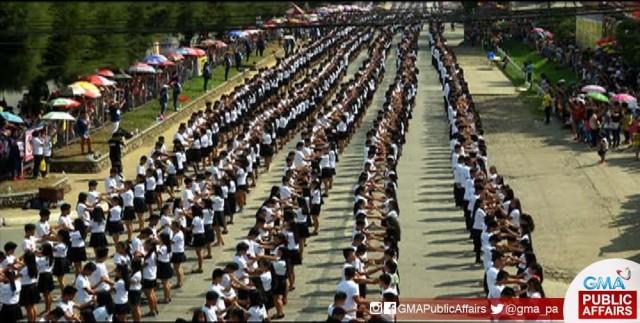
Because of the large number of the participants, the chosen witnesses had to walk from end to end of the Quezon Boulevard Road where the event was being held. Julie Plummer, a British who has been residing in the Philippines since 2011 and one of the witnesses, had to walk 2 kilometers in order to monitor the dance routine.
“I had to walk around many of the sectors, I walked along and I had to double check if they were dancing and if they were doing the steps correctly and in unison with everybody else, and working together,” Julie explained.
Although their attempt is yet to be certified by the Guinness Book of World Records, the organizers are confident that they’ll make it, especially after hearing that the witnesses had nothing but praises for all the participants and a feeling of amazement as to how that many people succeeded in dancing cha-cha-cha in unison.
Lowell Tan, another witness exclaimed, “Of course, they’ll get this...I will be mad if they're not going to get the Guinness Book of World Records of the largest cha-cha-cha dancers in the country or around the world.”
The wounds incurred by the Kidapawan Massacre are still fresh and the residents are trying to heal from these by slowly building a happier and more united city, one cha-cha-cha step at a time. ---Sarah Jean Sarte/BMS, GMA Public Affairs

