

 GMA Brandtalk
 Tracking
 Archives

ADVERTISEMENT
Filtered By: Scitech
SciTech
REVIEW: ‘Alien: Isolation’ chest-bursting terror offsets prolonged tedium
+
Make this your preferred source to get more updates from this publisher on Google.
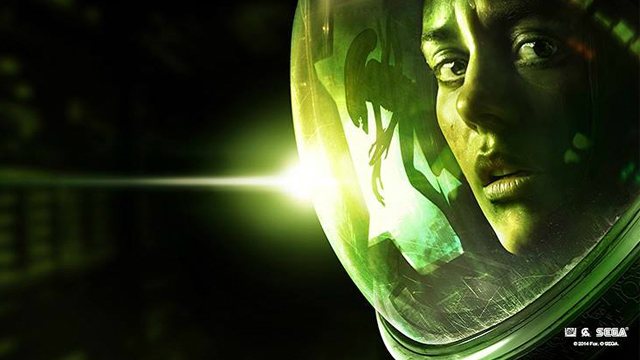
The bone-chilling fear elicited by the xenomorph of the “Alien” films has long been diluted, thanks to ineffective sequels, hokey crossovers, and a contrived cameo in 2012’s “Prometheus”. Video game adaptations have been just as unsuccessful in recapturing the sheer, creeping dread of Ridley Scott’s 1979 sci-fi horror classic, with many pointing fingers at last year’s “Aliens: Colonial Marines” as the prime example of how not to do an Alien game.
“Alien: Isolation” is an attempt to steer the spacecraft back on course by returning to the franchise’s roots, and sticking a lone survivor in dark, claustrophobic environs with a nine-foot-tall monstrosity on the loose. It’s such a no-brainer move one would wonder why it had to take this long for such a game to be made.
Like mother, like daughter
“Alien: Isolation” is set fifteen years after the events of the first “Alien” film, which concluded with Ellen Ripley surviving the xenomorph that had murdered the Nostromo’s crew. Unaware of her mother’s fate, engineer Amanda Ripley is fueled by abandonment issues and a desire for closure. So when she learns that the flight recorder for her mother’s vanished ship is aboard the Sevastopol space station, she accepts the megacorporation Weyland-Yutani’s invitation to retrieve it.
Needles to say, all hell breaks loose upon arrival at her destination. And as the situation deteriorates, Ripley will find herself stalked by the same kind of horror that had hunted her mother fifteen years prior.
Ripped straight from the Alien universe
The opening sequence, which trots out fuzzy VCR visuals and narration from Sigourney Weaver’s iconic heroine, provides a hint of the direction developer Creative Assembly have taken with “Alien: Isolation”. The moment you are given free rein to roam the Torrens vessel and the dark, dank depths of the Sevastopol , it becomes crystal clear that they knew exactly what they were doing with the license.
From the antiquated, translucent CRT monitors to the constricting tunnels littered with mist-spewing exhaust vents, “Alien: Isolation” is as faithful to Scott’s “Alien” universe as a game can get. The films’ retro future technology, including the phone receivers and the DOS-like operating systems, are all intact. Even the eerie background music and sound effects are immediately recognizable from their source. The impact is as powerful as it is immediate: this is not a game merely inspired by “Alien”. This IS “Alien”.
Surviving the horror
Taking it cues from the original film, “Alien: Isolation” is all about building up the suspense. It uses its first hour getting you intimate with Sevastopol – a metropolis-turned-ghost town populated by suspicious shadows, flickering lights, and a few stragglers driven to paranoia. The point when you encounter your first corpse, the atmosphere of helplessness and vulnerability has already reached suffocating levels, a beast gorged with a meal of steadily rising terror finally sinking its teeth into you.
It is this excellent setup that makes the xenomorph’s introduction so utterly terrifying. Worse still when the game kicks into high gear and sics the creature on you.
The xenomorph cannot be killed. The second it spots you, you’re as good as dead. The only thing you can do is hide – under tables, inside lockers, or behind any kind of obstacle to its line of sight. But make a noise or shine your flashlight at the wrong place and time, and it will seek you out. Even the symptoms of Amanda’s distress can give you away – thankfully you have the option to have her hold her breath as the Alien prowls close by.
What makes the xenomorph such an unpredictable and potent killer is that it is an unscripted, free-roaming AI. Its movements are not restricted to fixed patterns that can be memorized and taken advantage of. Sometimes the fiend will linger in an area for minutes before leaving; occasionally it will disappear into a vent only to reappear seconds later. The Alien also “learns” through your behavior, modifying its hunting technique as the game progresses.
You’ll eventually find a motion tracker that detects nearby movements. Like in the films, however, the gadget won’t pinpoint the Alien’s location if it’s standing still. Nor will it tell you whether the invisible predator is approaching from above or below you. The tracker’s light and beeping sound can also lure it to your location, so exercise prudence when using it.
Further down the line, you’ll be able to create distractions to lure away the monster, or temporarily dissuade it from attacking you with a blast from the good old flamethrower. But rest assured, the Alien will always be back to begin the hunt anew.
There is nothing quite as panic-inducing as unlocking a door or waiting for the arrival of a slow-moving tram, knowing that the Alien could be sneaking up on you right that very second. Before long, exploration becomes a thing of intense apprehension. “Alien: Isolation” is not something you play to relax. It will grip you by the throat, and squeeze.
Game over, man! Game over!
You will die plenty in “Alien: Isolation”. There is no auto-save; save points take the form of emergency stations scattered throughout the levels. But each of these takes seconds to activate – meaning even the act of saving your progress can get you disemboweled. Due to repeated deaths, you’ll be forced to replay entire sections of an area, which can quickly become exasperating. Sadly, this only increases the risk of transforming the xenomorph from a figure that inspires face-bleaching terror into something of a giant nuisance.
And when the Alien does skedaddle to let you breathe – it can be a very long breath. Because when you’re not evading death, you will be walking – lots. And crawling through shafts. And opening more doors. Every once in a while, other survivors will try to murder you, forcing you to defend yourself with the weapons you’ve collected and crafted. But the game’s strong suit is its stealth, not direct combat.
In the latter part of story, “Alien: Isolation” chucks another menace your way – the Working Joe. These mannequin-like, emotionless androids – which were being manufactured en masse in Sevastopol – have gone rogue. Like the xenomorph, they will attack you on sight; unlike the xenomorph, they will kill you with a touch of courtesy. Though their blank stares and flat voices will make your skin crawl, their creepiness wears off as soon as you realize how slow and vastly one-dimensional they are compared to the Alien. The developers seem aware of this too, as they eventually attempt to rectify the problem by throwing throngs of these rubber-faced zombies at you.
In service of blockbuster-style spectacle, the game also undergoes a drastic tonal shift towards the end, casting aside its elegant stealth aspects for something more appropriate in a blustery first-person action game. By this time, the game has been stretched thin by hours spent deviating from its initial laser-like focus on what made Scott’s film so unnerving.
A return to form
While “Alien: Isolation” gets many things right, it squanders its finer points for woefully inferior enemies, less interesting combat-oriented segments, and an endgame that betrays what Creative Assembly worked so hard to build up in its first dozen or so hours. Add to these concerns the frustrating, repetitive cycle of dying and retreading miles of previously explored passageways, and you could end up whittling your teeth down to knobby stumps from so much grinding.
Still, “Alien: Isolation” marks a return to form for one of the most horrific monsters to slither its way into pop culture. The art direction and sound design impeccably distill the gloomy, inhospitable ambiance of 1979’s “Alien”, capturing the very essence of the masterpiece that made us distrust our own shadows and fear every unexplained clunk and scrape in our surroundings. The xenomorph is a cunning, frightening foe, its presence paving the way for exhilarating stealth that achieves a sense of exposure and powerlessness other horror games can only dream of. Ultimately, it is worth braving the hazards of the game’s lows for the utterly terrifying experience of being pursued by a remorseless, implacable force of nature. — TJD, GMA News

