

 GMA Brandtalk
 Tracking
 Archives

Alexandra Cousteau puts focus on PHL marine biodiversity hotspot Tañon Strait
Filmmaker and water issues advocate Alexandra Cousteau is in the Philippines to help bring attention to local marine conservation issues in the country, including illegal fishing, the dwindling sardine catch, and the protection of two important biodiversity areas in the Philippines: the Tañon Strait Protected Seascape in the Visayas and the vast Benham Rise off Luzon.
The granddaughter of legendary undersea explorer Jacques Cousteau, Alexandra is a senior adviser with international organization Oceana. Her itinerary in the Philippines includes meeting with government officials and private sector representatives to push for programs that support local fisheries and the implementation of the enforcement plan in Tañon Strait.
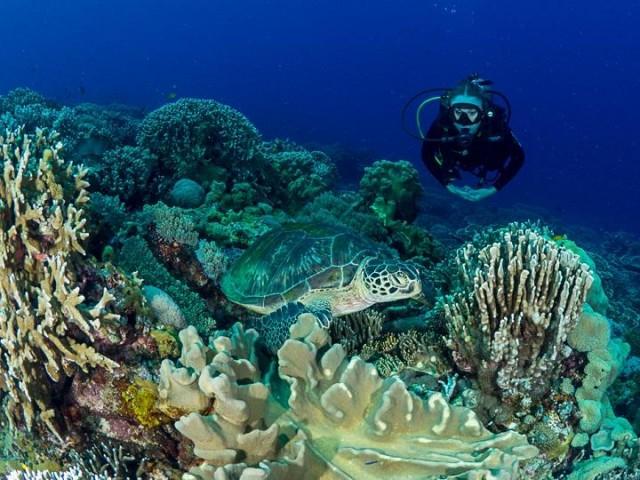
The Tañon Strait Protected Seascape
Situated between the islands of Cebu and Negros, Tañon Strait is the largest marine protected area in the Philippines. More than 500,000 hectares in size, it covers three provinces and 41 municipalities and cities.
According to Oceana Philippines, the strait is a habitat and migratory route for 14 species of marine mammals including spinner dolphins, dwarf sperm whales, pygmy killer whales, and spotted dolphins.
It was declared a Protected Seascape in 1998.
"But as you know, being declared a protected area doesn't mean it has actually benefited from protection in the last 17 years," Oceana Philippines campaign manager Daniel Ocampo told reporters last week.
According to Oceana data, the strait sustains 43,000 local fishers, making it a major fishing ground in the country. However, commercial fishing by large companies is also taking place in the area, said the organization.
"Tañon Strait is a protected area. It shouldn't have commercial fishing in it; it should benefit locals and local communities. It's a very narrow body of water; that makes it all municipal waters, where commercial fishing is banned," said Ocampo.
In 2015, the Supreme Court struck down a deal allowing the exploration and development of petroleum resources within the protected body of water. The court declared unconstitutional a service contract between the Department of Energy and Japan Petroleum Exploration Co., Ltd. (JAPEX) to drill in the area for petroleum resources, and indeed the Japanese company had already been drilling off Pinamungajan town in western Cebu.
Apart from commercial fishing and oil exploration, Oceana enumerates other illegal activities detected in the area: overfishing, the conversion of coastal habitats to industrial uses, and dump-and-fill projects that "destroy mangroves, seagrass and corals, which serve as spawning grounds and nursery grounds of not only small fishes, but other marine mammals, as well as crabs,” said Oceana Philippines senior marine Jimely Flores.
Ocampo noted that illegal fishing and overfishing in the strait have also taken their toll on the country's sardine catch—a growing problem that ordinary Filipinos might not notice because of the seeming abundance of sardine products on the market.
"[I]n the past few years our sardine population [has been] slowly diminishing, and even collapsing in some areas," he said. "Oceana is looking into developing a policy framework to manage fisheries. Right now we have pockets of protection. We have fishing bans in the Visayas during some seasons But it's not enough. People are slowly beginning to talk about there being years where there is an unusual drop in catch."
Ocampo said that one of Cousteau's goals while in the country is to help Oceana Philippines get the management plan for the strait implemented, including vessel monitoring mechanisms that will allow them to track commercial fishing vessels to make sure that they don't fish in Tañon Strait.
Cousteau says it is urgent that saving places like Tañon Strait is vital—and that the Philippines is an important battleground in the fight to save the oceans. "Our oceans are the source of life on this planet," she said. "They produce our oxygen, they feed us, they give us all of these things that are necessary to not just thrive and prosper but to survive.
"Oceana has been working with this idea that we can save the oceans of the world—that [we can do it] if we're able to stop by-catch [the unwanted marine life caught during commercial fishing operations for other species], stop over-fishing, and expand the marine protected areas in two dozen countries that control almost 90 percent of fishing around the world. That's something we can do. It's not 120 countries; it's maybe 30, and the Philippines is one of those countries." — BM/AT, GMA News

