

 GMA Brandtalk
 Tracking
 Archives

EXPLAINER: What are pyroclastic density currents or PDCs?
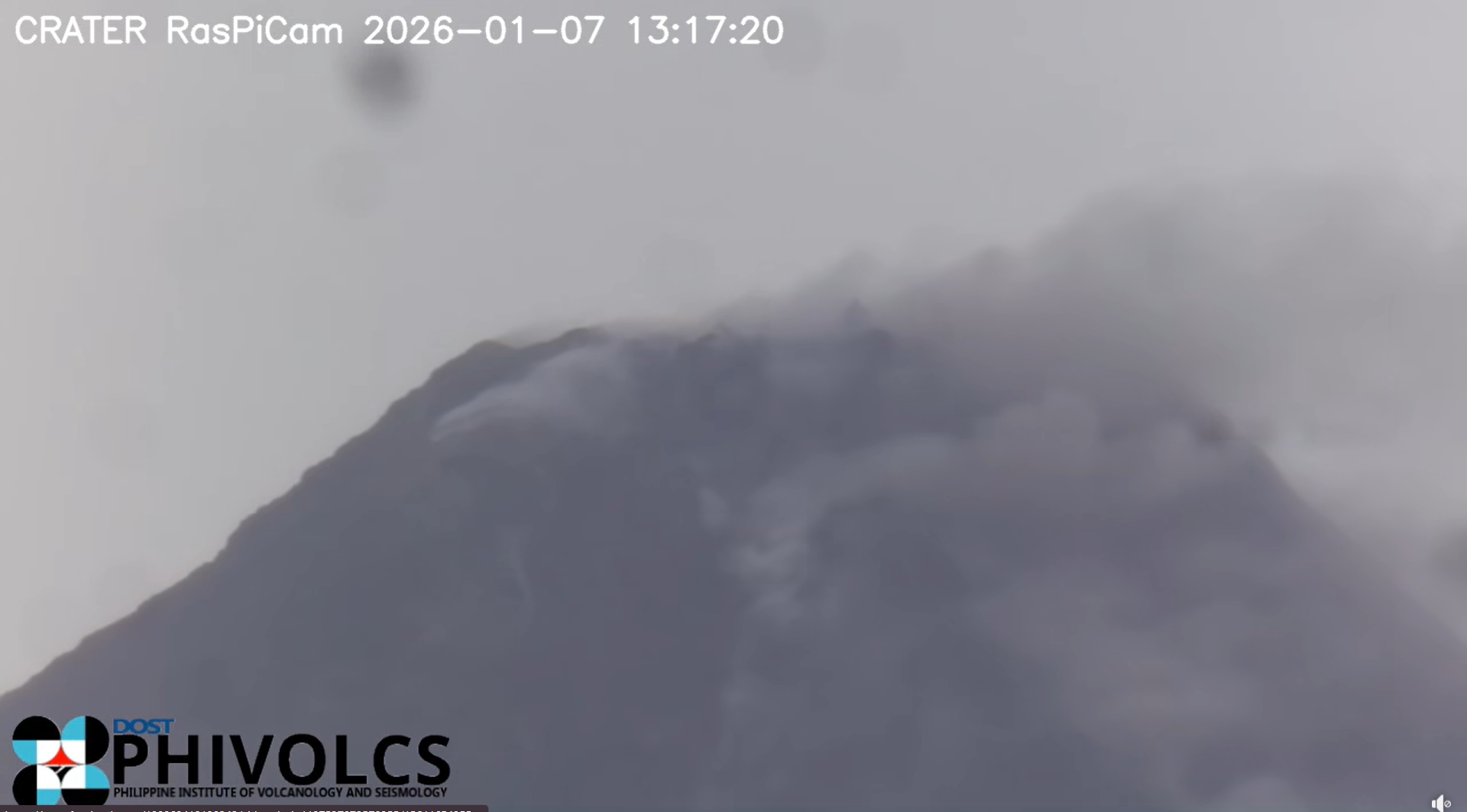
Alert Level 3 was raised over Mayon Volcano in Albay due to a “high level” of unrest, with pyroclastic density currents (PDCs) recorded.
But what exactly are PDCs?
The Philippine Institute of Volcanology and Seismology (PHIVOLCS) explained that pyroclastics are fragmented volcanic particles. When these mix with hot gases and ash, they form what are known as PDCs.
“Mixture lang yan ng hot volcanic gases, hot volcanic rocks, at saka ash or abo. Pinaghalo-halo. Yan, and then bumabagsak doon sa dalisdis ng bulkan,” said PHIVOLCS director Teresito Bacolcol in an interview with GMA News Online.
(It’s just a mixture of hot volcanic gases, hot volcanic rocks, and ash. Everything is mixed together. Then, it falls down the slopes of the volcano.)
State seismologists said that PDCs can range from pyroclastic flows to pyroclastic surges. On Tuesday, PHIVOLCS recorded PDCs in Mayon Volcano’s Bonga Gully that lasted three minutes.
Bacolcol explained that PDCs are generated when an eruption column collapses under its own weight. Unlike typical rockfalls, which involve only rocks, PDCs are more dangerous due to their combination of gases, ash, and rocks.
“Ang nagti-trigger dyan, for example, yung gravity, naging unstable yung lava dome natin sa taas, nabibiyak, and then, bumabagsak na siya," Bacolcol said.
(The trigger, for example, is gravity. Our lava dome at the top becomes unstable, it cracks, and then it falls.)
"Para lang siyang rockfall, kaso mas malaki sa rockfall. Kasi yung rockfall, puro bato lang talaga yan. Ito, may kasama ng gas, abo, and bato,” he added.
(It’s just like a rockfall, except it’s bigger. A rockfall is strictly rocks. This [PDC] includes gas, ash, and rocks.)
PHIVOLCS noted that PDCs typically involve larger rocks than rockfall events.
“Yes, mas malaki yung mga bato dito at destructive din (Yes, the rocks here are larger and also destructive),” Bacolcol said.
The state seismic bureau also warned that PDCs are life-threatening.
“Mainit kasi ito. More than siguro 1,000 degrees Celsius yung temperature nito. So, ma-incinerate ka talaga,” Bacolcol said.
(This is hot. The temperature is probably more than 1,000 degrees Celsius. You could be incinerated.)
The PHIVOLCS director added that more than 70 individuals died due to PDCs during Mayon’s 1993 eruption.
Albay Governor Noel Rosal said a total of 2,889 individuals, or 729 families, in the province have been evacuated due to Mayon Volcano’s activity.
Source
Entry to the 6-km radius Permanent Danger Zone is also prohibited due to the threat of PDCs, lava flows, rockfalls, and other volcanic hazards.
PHIVOLCS earlier said that the present unrest of Mayon Volcano is comparable to its eruption in 2023.
“If this will follow the 2023 template, this will take five to six months,” Bacolcol said.—MCG, GMA Integrated News

