

 GMA Brandtalk
 Tracking
 Archives

In Siargao, a new Climate Field School launches with a pioneering batch of 60 farmers and fisherfolk
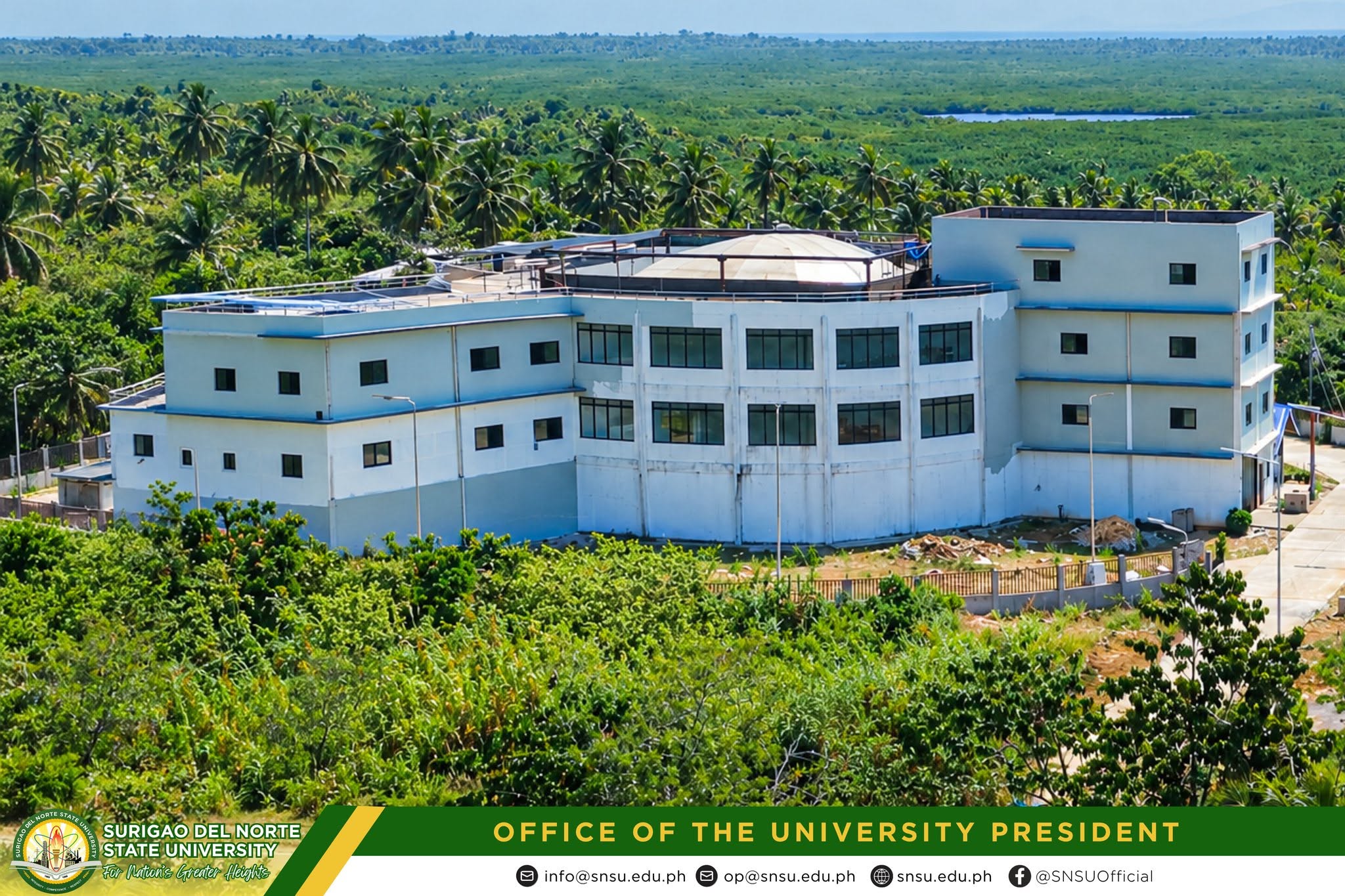
At the first Siargao Climate Week, a new climate field school for farmers and fisherfolk was launched in the Municipality of Del Carmen.
Alongside a new Water Testing Laboratory and a DOST iHub, the Climate Field School for Farmers and Fisherfolk is located at the Surigao del Norte State University (SNSU) Del Carmen Campus.
A flagship recipient of the People's Survival Fund (PSF), the Climate Field School underscores the shift from climate policy to action. It aims to introduce science-driven adaptations tailored for small island-based ecosystems, as well as to establish an integrated approach to local resilience with robust science services, technological innovations and capacity-building for the community.
It all sounds technical and hifalutin but its main effect is something simple and tangible: Food and food security for the small island community.
“The Climate Field School serves as a training ground for our farmers and fisherfolks to improve their sources of livelihood amidst the climate vulnerabilities that our locality faces," Del Carmen Municipal Mayor Alfredo M. Coro II, said in a statement.
"Our project serves as the benchmark for other local government units in accessing the People’s Survival Fund, especially for small island municipalities,” he added. “By prioritizing data-backed tools, we ensure that our frontline producers are no longer at the mercy of unpredictable skies, but are actively secure in their food production.”
Speaking on behalf of the Climate Change Commission and its Vice Chairperson and Executive Director Robert E.A. Borje, Assistant Secretary Romell Antonio O. Cuenca addressed local stakeholders, acknowledging that "climate change is not an abstract concept or a distant concern for Siargao."
"It is visibly altering your landscape through unpredictable weather and escalating extreme events. This is a direct, immediate threat to the food on your tables, the yield of your local fisheries, the stability of your water resources, and the world-class ecosystems that drive your livelihoods," he continued.
Meanwhile, SNSH President Dr. Rowena A. Plando said, "By integrating the Climate Field School, the Water Testing Laboratory, and the DOST iHub into our Del Carmen campus, Surigao del Norte State University pledges to remain the engine of localized science. We will translate high-level climate theories into practical, language-accessible technologies that our farmers and fisherfolks can apply daily to protect their yields and safe-keep our local water resources.”
The Climate Field School has a pioneering batch of 60 farmers and fisherfolk, who are "not just students but are co-creators of climate-resilient agriculture," Dr. Joey G. Escauso, Campus Director of the SNSU–Del Carmen Campus said.
"Hazards are inevitable, but disasters need not be. By providing reliable scientific data on water quality and giving our local communities direct access to science-related interventions, we are equipping Siargao with the digital and technical infrastructure needed to transform local producers from victims of climate shifts into victors of sustainable development," DOST Undersecretary for Regional Operations Sancho A. Mabborang said.
The municipality of Del Carmen has long been climate forward. It was able to grow its Mangrove Reserve from 4,200 hectares of mangroves in 2012 to more than 4,800 hectares in 2025 through education and ecotourism training and opportunities instead of policing; local government officials did house-to-house dialogues with fishers and community-based information campaigns about mangrove protection and to abandon illegal fishing.
In 2024, the Del Carmen Mangrove Reserve was designated as a wetland of international importance under the Ramsar Convention on Wetlands.
According to a statement from the Climate Change Commission, Surigao del Norte has made significant progress, with 16 of its 22 LGUS having submitted their Local Climate Change Action Plan. Del Carmen is among the LGUs with such plan, which the CCC looks to as a practical investment tool in prioritizing critical interventions like the Field School.
"Climate finance should not only be used to build physical infrastructure like seawalls; it must also build knowledge and human capacity. The PSF is designed to provide resources for concrete, community-driven adaptation initiatives so that local governments can fund solutions that respond directly to their actual, localized climate risks," Borje said.
"Ultimately, the success of the Siargao Climate Field School will not be measured simply by the number of people trained inside these walls. It will be measured outside—in the practices adopted, the risks reduced, the livelihoods strengthened, and the communities made safer," the CCC said in the statement.
According to a Facebook post by the SNSU Office of the President, "under the existing agreement, the Municipal Government of Del Carmen will manage the Climate Field School for two years before its eventual turnover to SNSU."
"The launch also highlighted the role of the Climate Field School in equipping farmers and fisherfolk with practical knowledge and skills to respond to climate-related challenges and adopt sustainable livelihood practices. The initiative marks an important step toward building local capacity through science-based training, innovation, and community engagement," it said. — GMA News

