

 GMA Brandtalk
 Tracking
 Archives

DENR, PH Eagle Foundation reps in Prague to advance collab with Czech institutions
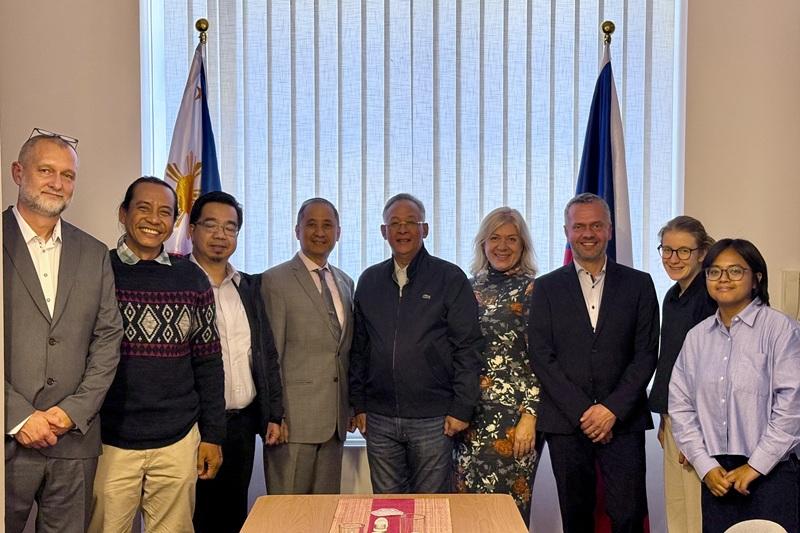
PRAGUE, Czech Republic – A delegation of Filipino conservationists is in Prague on a research visit, supported by the Czech government, to advance cooperation with environmental institutions to save the critically endangered Philippine eagle.
Philippine Eagle Foundation (PEF) Director for Operations Dr. Jayson Ibañez told GMA News the mission aims to formalize long-term scientific cooperation between his institution, the Department of Environment and Natural Resources (DENR), several Czech zoos, and research organizations.
Ibañez described the partnership as “cutting-edge” as it includes plans for breeding programs, practical solutions to the erosion of genetic diversity of the Philippine eagle, and preventable hazards in the wild.
“Through a potential partnership with the Czech Republic and Liberec Zoo and its network of experts, we can also develop protocols, procedures, and best practices that we can also adopt for similar loan programs with other countries. It can provide tangible and practical solutions to the issue of Philippine eagle extinction,” he said.
Preventing accidental electrocutions
The mission aligns with the blueprint laid out in the national ten-year Philippine Eagle Species Action Plan (PESAP).
The visit also focuses on addressing juvenile eagle mortality.
A week before the delegation arrived in Prague, two Philippine eagles died of accidental electrocution. The poles where these raptors were electrocuted were distribution lines with different designs and variations.
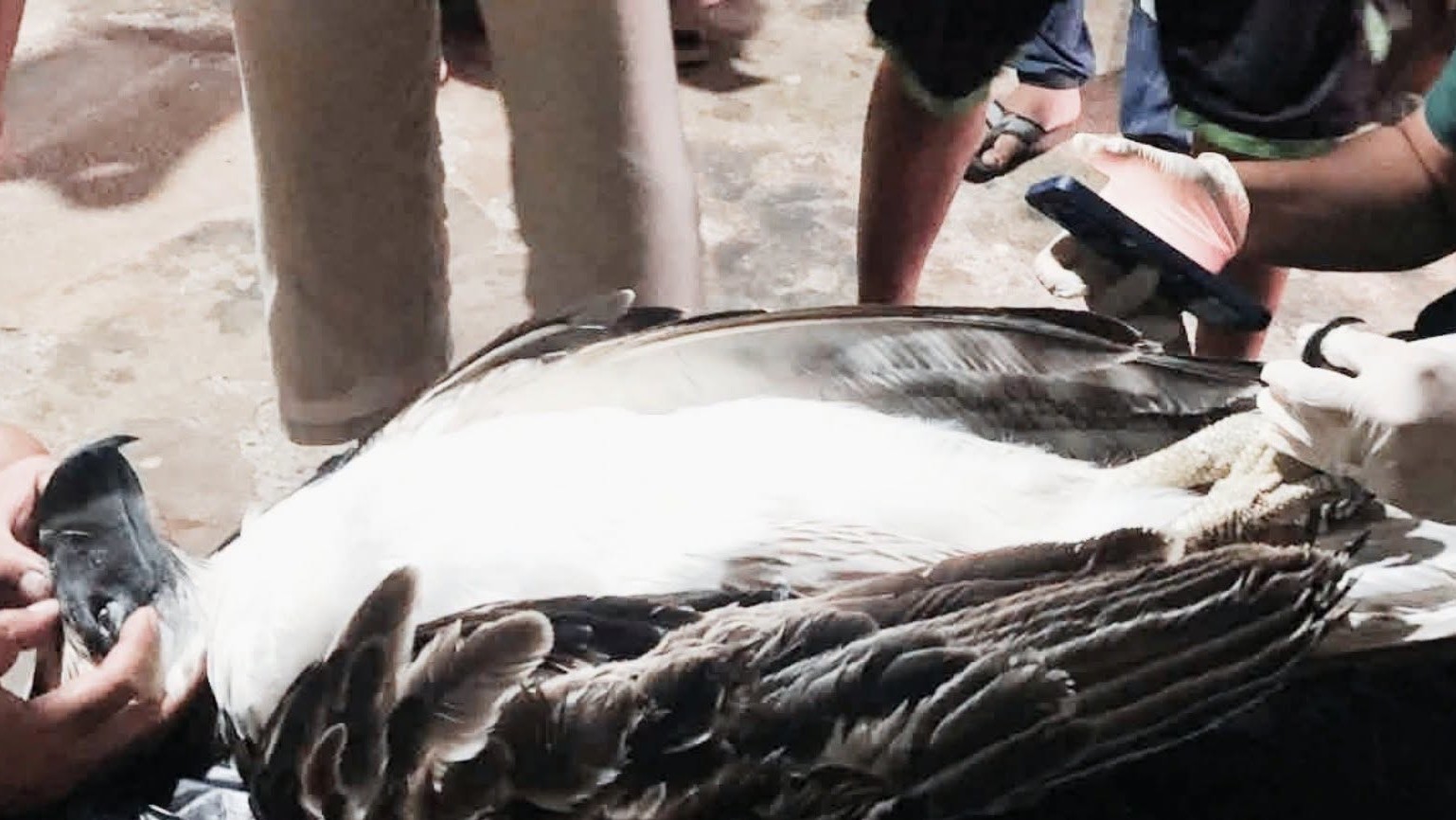
“The good news is that this [kind of accident] is 100% preventable,” Dr. Ibañez told GMA News.
He explained that retrofitting technologies, such as 3D-printed pole covers and silicone insulation tubes, can isolate high-risk power poles near nesting sites.
“You don’t need to cover all the lines, just the power poles in a certain length, maybe one meter, just to cover the eagle’s wingspan,” Ibañez added.
The PEF and the DENR are set to pilot a retrofitting project in January 2027 in key distribution areas like Salay, Misamis Oriental and Arakan, Cotabato, where the recent accidents happened.
When asked about the project’s cost, Ibañez said it is “affordable” and “customizable”.
“The goal is to mass produce, if needed, this insulation mechanism with the cost of the mass production taken or supported by the power company itself.”
Ibañez said there are ongoing discussions with the Department of Energy aimed to formulate a national policy requiring electric power distributors to retrofit lines in eagle habitats.
“One of the Department of Energy directors hinted [at] the idea of coming up with a national policy mandating all power distribution companies to ensure that for power poles in high-risk areas or areas close to nesting sites, [retrofitting] would become mandatory... and use the pilot project as a basis for that national policy. I think that would make a big difference to ensuring the safety of Philippine eagles across the Philippines.”
Meanwhile, Hanel also said he was saddened to hear of the accident, especially since the Philippine eagle population is critically low.
“Electrocution in general is a problem for birds of prey because of their long wingspan. Big eagles — like Philippine eagles or European ones — could have a wingspan around two meters, and it is more likely that when they land on the pole that they will be electrocuted.”
In Europe, he said, electrocution prevention is standard, adding that over 90% of power poles in the Czech Republic are now fully protected through partnerships with utility providers.
“There is a rule that every new pole constructed must be secured for birds of prey with the systems mentioned by Dr. Jayson. And the old poles are being reconstructed and rebuilt or equipped with safe things just to prevent electrocution.”
'Precarious' genetic state of the Philippine eagle
Another challenge facing the Philippine eagle is severe genetic erosion in its wild population.
Earlier this month, the PEF announced two landmark studies that Ibañez described as “converg[ing] on the sad situation of our eagles”.
The first study – a genome sequencing of 35 Philippine eagles at the PEF published in April 2026 –revealed a heterozygosity of 0.000309.
Ibañez explained that this figure indicates “inbreeding between close relatives”.
His research colleagues say that this low heterozygosity “increases vulnerability to diseases and habitat loss”.
At the same time, it is the lowest recorded among raptors and among the lowest for any threatened bird species.
“This highlights the precarious genetic state of the Philippine eagle,” the study emphasized. “[It] indicat[es] that breeding and translocation programs must explicitly account for genetic effects to maintain demographic stability and support long-term genetic resilience of this critically endangered species.”
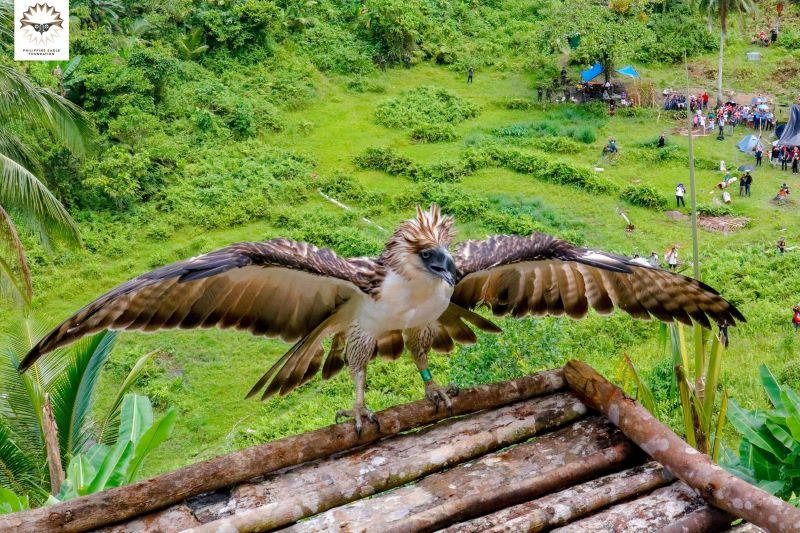
The second study identifies two distinct maternal clusters alongside three genetically distant haplotypes, based on a partial mitogenome sequencing of 13 captive-bred eagles at PEF and 19 rescued wild captives.
This represents the “existence of genetically useful breeding stocks”, which PEF researchers say “can be prioritized in the current conservation program”.
The study also suggests that PEF’s captive-breeding program produces more haplotype combinations, and that its efforts can “somehow maintain or improve the genetic diversity of the species.”
One ongoing conservation method for the Philippine eagle population is artificial insemination. PEF conservationists used this technique to breed Chick 32, named Bayani, which hatched in December 2025.
The current research mission explores a potential “insurance policy” of depositing Philippine eagles, or their frozen semen or eggs, in institutions outside the country.
Dr. Ibañez calls this approach the principle of “not putting all eggs in one basket.”
DENR Undersecretary for Legal and Administration Atty. Ernesto D. Adobo Jr., noted the Czechs’ “advanced knowledge” of breeding and conservation of raptors, which could add to efforts to save the Philippine eagle.
“We’re looking forward to institutionalizing this cooperation with the Czech Ministry of Ecology and Environment. They are very receptive, and we will have exchanges and a specific agenda for cooperation. We are very excited, specifically on conservation,” Adobo told GMA News.
A week-long mission for long-term plans
During a courtesy call at the Philippine Embassy in Prague on October 12, Pěčková said the research mission is supported under the Czech government’s Projects for the Promotion of Economic Diplomacy (PROPED) initiative.
Describing the mission, Pěčková noted that while PROPED typically handles economic and trade projects, this mission held a heart-led purpose.
“It’s a very ‘unusual’ mission for me, but it’s something... you want to do it because it’s like from the heart,” she shared during the courtesy call on Ambassador Eduardo Martin Meñez.
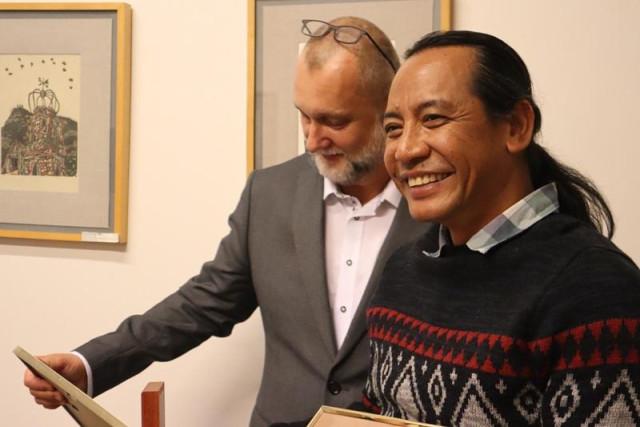
Hanel also told GMA News that his institution, Liberec Zoo, has supported Philippine wildlife projects since 2010, and this mission formalizes government-to-government cooperation alongside partner zoos in Ostrava and Olomouc.
“This mission gives us an opportunity to strengthen the relationships, not only with each NGO but also between our governments. We are happy to have this support from the Filipino and Czech governments,” Hanel said.
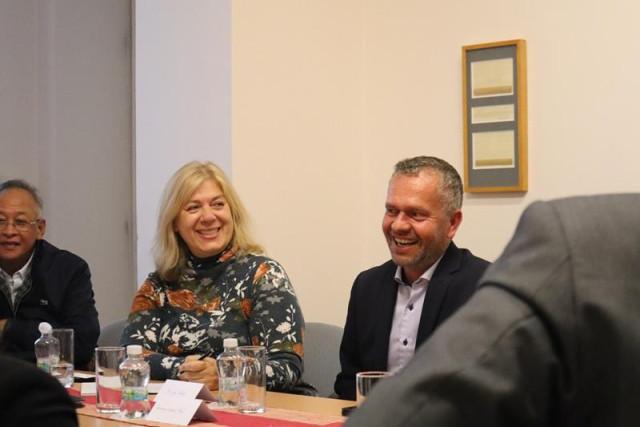
Liberec Zoo and Ostrava Zoo are now funding the salary of Dr. Pasion, providing PEF with its first full-time veterinarian after years of relying solely on on-call medical support.
Beyond visits to Czech zoos, the delegation also engaged in academic and cultural outreach across the Czech Republic to raise global awareness of Philippine biodiversity.
Ibañez and DENR’s Anson Tagtag delivered a joint lecture at Charles University’s Faculty of Science in Prague on October 13, encouraging zoology students and researchers to conduct field studies in the Philippines under local environmental research frameworks.

To build public engagement, Liberec Zoo’s Hemelikova showed the Philippine Embassy a photo of a sample glass craft featuring an engraved Philippine eagle design made by a historic glass factory in Harrachov, a town in the Czech Republic’s northern Bohemian region.
A local Czech outdoor apparel brand is also designing eagle-themed merchandise for next year.
The PEF and Czech partners are arranging local screenings of documentaries like “To Save Our Eagle” to inspire audiences and raise critical conservation funds.
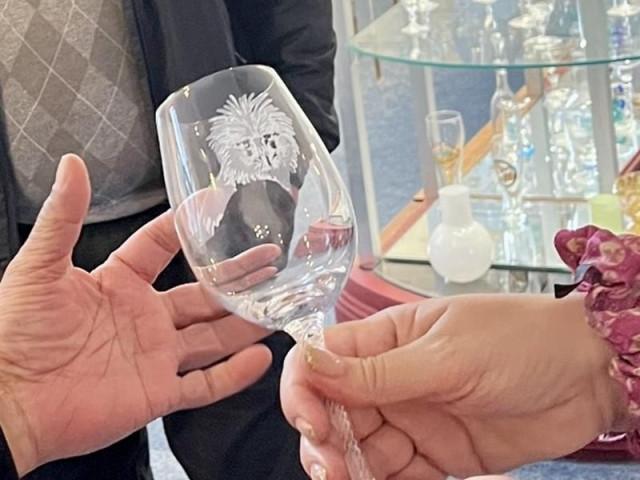
Ambassador Meñez praised the Czech-Filipino mission’s goal, saying it is beyond a dream but a manifestation.
“Not only do you find ways to support the program, but you also raise knowledge and awareness about our endangered species,” he said.
Ibañez said the partnership contributes to an evidence-based conservation objective.
“This is the beauty of this proposed partnership, as it mainly addresses a major conservation issue for Philippine eagles. It's beyond the idea of just loaning birds or exchanging birds, but it’s very much targeted to improve the Philippine eagle population.” — BAP, GMA News

