

 GMA Brandtalk
 Tracking
 Archives


Philippines among countries where mangrove cover has increased in the last 4 decades
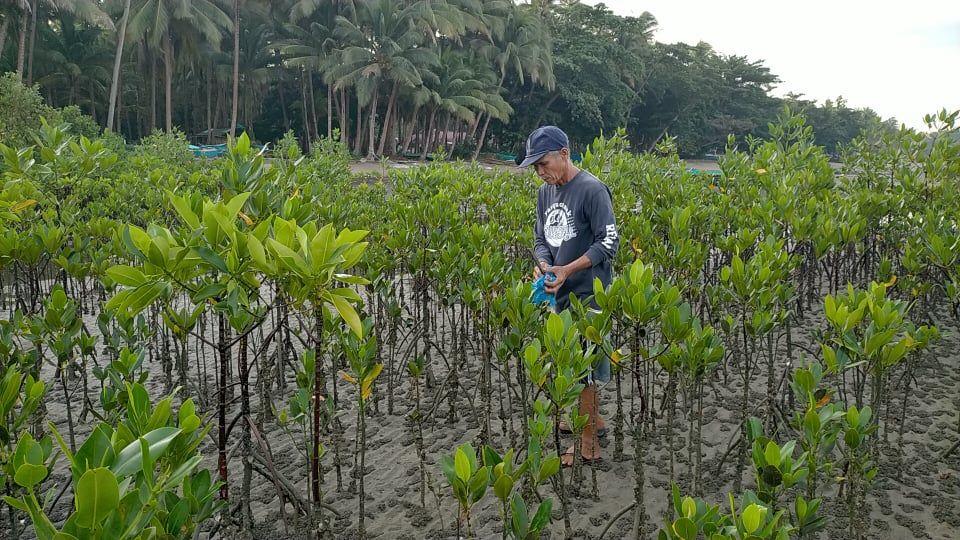
Who else is game for some good environmental news?
The Philippines is among the countries where mangrove cover increased in the last four decades.
According to the latest update from the Global Mangrove Watch (GMW), the Philippines saw modest gains in its mangrove cover, adding 473.43 square kilometers of additional mangroves between 1985 and 2025.
As of 2025, the mangrove habitat in the Philippines is 3,037.78 square kilometers, GMW added.
Australia led the charge with 1,396 square kilometers of additional mangroves, while India had 1,180 square kilometers, Pakistan 439 square kilometers, and Senegal 349 square kilometers.
GMW said total global mangrove cover saw a net gain of 477.2 square kilometers or a modest increase of 0.3% the same time period. It aligns with the findings of a recent study published on Science in June 2026 that said, "Mangroves declined globally before 2010, but have mostly recovered since then, with both forest loss and degradation (declining canopy cover) rates slowing over time."
"Mangroves are mostly expanding into new habitats, but also regenerating in former habitats, suggesting hope for ecosystem recovery," the study added.
But GMW remains cautious in its good news, saying the "this success conceals losses in some of the world's most important mangrove countries."
Indonesia has lost 2,043 square kilometers since 1985, while Myanmar's mangrove cover declined by 1,457 square kilometers. Malaysia's by 389 square kilometers, and Nigeria 312 square kilometers.
GMW is a mapping initiative of the Global Mangrove Alliance, "a coordinated, multidisciplinary approach to mangrove conservation and restoration at a scale that matters," it said on its website.
Per GMW, "the data shows that increases in the mangrove cover are partly the result of afforestation and restoration efforts."
According to the UN-REDD Program, afforestation is "the direct human-induced conversion of land that has not been forested for a period of at least 50 years to forested land through planting, seeding and/or the human-induced promotion of natural seed sources."
In the Philippines, government- and community-led initiatives are paving the way for mangrove's rebound.
For instance, the valiant effort of fisherman Roberto "Dodoy" Ballon to lead a community of fisherfolk in focusing on mangrove reforestation in the Zamboanga Sibugay peninsula has helped him become a Ramon Magsaysay Awardee in 2021.
The municipality of Del Carman in Siargao meanwhile has been able to grow its Mangrove Reserve some 500 hectares between 2012 and 2025, helping it become a wetland of international importance under the Ramsar Convention on Wetlands.
Apart from sustaining food security and livelihoods, mangroves also "protect coastal communities and cities from storm surges and sea level rise," GMW said.
Mangroves can also sequester carbon "at rates up to four times higher than terrestrial forests" which is needed in fighting climate change. — LA, GMA News

