

 GMA Brandtalk
 Tracking
 Archives

ADVERTISEMENT
Filtered By: Scitech
SciTech
For the love of bones: What the dead can teach the living
+
Make this your preferred source to get more updates from this publisher on Google.
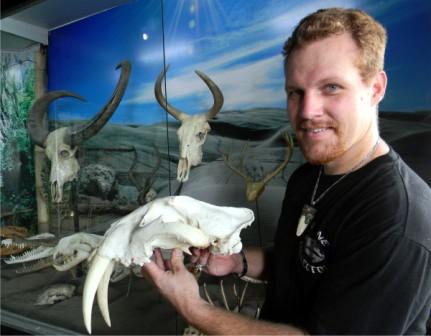 Darrel Daniel "DD" Blatchley remembers the day well: he had got wind of news that a 58-foot-long sperm whale had died in the waters of Davao Gulf and its body had wound up off the coast of Samal. It was June 25, 2010.
 DD immediately contacted the regional office of the Bureau of Fisheries and Aquatic Resources (BFAR), the government agency tasked with monitoring Philippine marine species. The official on the line told him that the provincial government of Davao Oriental had already claimed the whale body, for educational purposes.
And that was that, or so DD thought. But the following day, the BFAR called him up to ask for his help recovering the whale's bones. Some three hours of pre-planning and several hours worth of phone conversation later, DD found himself off to get him some really big bones.
On June 30, DD joined up with authorities in Davao to start the recovery in earnest. DD's six-member team began dissecting the whale while is wife, Mary Gay, took notes.
In all, it took the team three whole days to recover all the bones.
The rotting meat was harder to dispose of, however: it took an additional team of 19 workers to haul off the remains to Mati City, where they were safely buried.
“It was all so very funny,” DD recalls. “These people had paper surgical masks thinking it would get rid of the stinking smell. Nothing short of military grade gas masks will eliminate that smell. The sperm whale, which was roughly 46-plus tons, had been dead for three weeks already.”
After taking out all the meat, the bones were brought to barangay Bucana, about 45 minutes away by boat from Talikud Island. “Due to the different size of the bones —the skull alone was 17 feet long— and the amount of oil present in the marine mammal, it took us nearly nine days to clean the bones.”
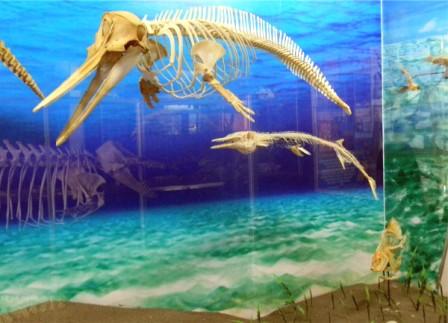
But it took DD well over a year to completely finish the project. Before 2012 ends, the sperm whale skeleton will be exhibited in Mati City in a building built especially for the animal.
“It is a good thing that the bones of the sperm whale will be used in bringing awareness of the bountiful coastal ecosystem that Mati has,” DD beams. “Also, it will help in creating consciousness regarding the rich biodiversity of its waters.”
Former Davao City Council Leonardo R. Avila III has this to say: “Most of us self-professed environmentalists are committed to save the environment – we plant trees, we dispose our garbage properly, we save water, we observed Earth Hour every year. But Darrell’s way of preserving the environment makes our combined efforts almost trivial.”
For his part, DD can't help but wax philosophical about it all: “For me, bones are the ultimate learning tool,” DD says. “So much can still be learned upon death. It tells you the life of the animal; whether it had a good life (healthy bones) or a hard life (cracked and deformed bones).”
DD is the curator and owner of the D’Bone Collector Museum in Davao City, which opened to the public in January. The place is filled with bones of snakes, tarsiers, marine turtles, fish, sharks, birds, and other fauna.
“Each group that goes to the museum gets a tour about the animals found in each of the displays. One of the things we show them is how some of the animals died due to humans throwing garbage into the ocean or canals and how these kill the whales and dolphins,” DD explains.
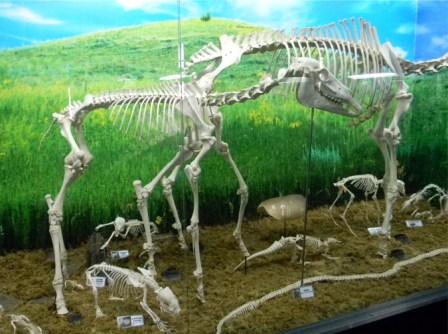
Every animal displayed has a story. There’s Mercy, for example, a dwarf sperm whale who died in a fish net. “She was still alive when the fishermen found her but they killed her thinking she was a shark that got tangled in their net,” DD says. “When she was dead and they realized that she wasn’t something valuable or edible, they threw her back into the sea. When we recovered her, we discovered she was pregnant.”
Another sad story is that of a false killer whale named Alcoholic, ironically named because he was found dead with a beer bottle in his stomach.
Many of the animals represented in the museum are now rarely seen in the wild. “That for me is sad,” DD says. “It is because of human neglect, waste, carelessness, over harvesting, or greed that they are now endangered. I want people to know this fact before these species are gone forever.”
DD is going full-tilt with his awareness campaign. “You don’t have to stop a whaling ship to save one of these animals,” he says. “Just by properly throwing away your garbage, you can save one. It takes only two steps to the garbage can or just not throwing the plastic bag on the ground. By not buying that endangered parrot which the poacher has for sale outside the mall is another example. Little things like these that when you add them all make a huge difference.”
Indeed, DD is making a huge difference among Filipinos. Born in the United States, he grew up in Thailand. When he was 15, his family moved to the Philippines, where his parents now work helping poverty-stricken and displaced children in Davao City via the Family Circus Children’s Ministries (FCCM).
Although he is the museum's owner and full-time curator, DD still works with his parents as a youth pastor. “Working in the museum is dealing with dead animals. But with young people, I am dealing with real people who can still be taught,” DD says.
Nevertheless, DD sees the Bone Museum as an important part of his ministry. “God cares for His animals and we humans should take care of His creations,” he says. “The most important thing is still our fellow beings. The museum merely teaches us to be good stewards of what is around us.”
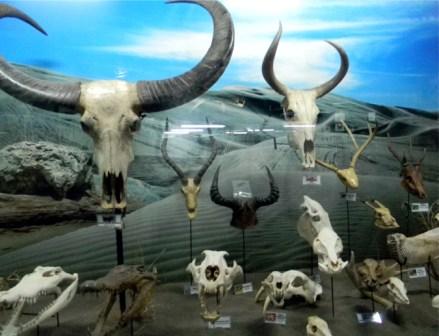
Most of the 300 specimens in the museum come from DD's personal collection, while some were donated by friends and acquaintances from around the world.
“Ever since I was a kid, I enjoyed animals,” DD admits. “It didn’t matter if they were alive or dead. If I found a dead animal, I wanted to learn from it what caused its death. Growing up in Thailand, I was exposed a lot to people that had animal bones in their homes and collections. It was and is a fascination for me.” — TJD, GMA News

