

 GMA Brandtalk
 Tracking
 Archives

ADVERTISEMENT
Filtered By: Scitech
SciTech
The science of cartoons: Making learning fun for kids
Whoever said that cartoons are just for fun?
On Sept. 25, Nido Fortified Science Discovery Center (NFSDC) and Cartoon Network opened a new array of exhibits entitled "The Science of Cartoons." 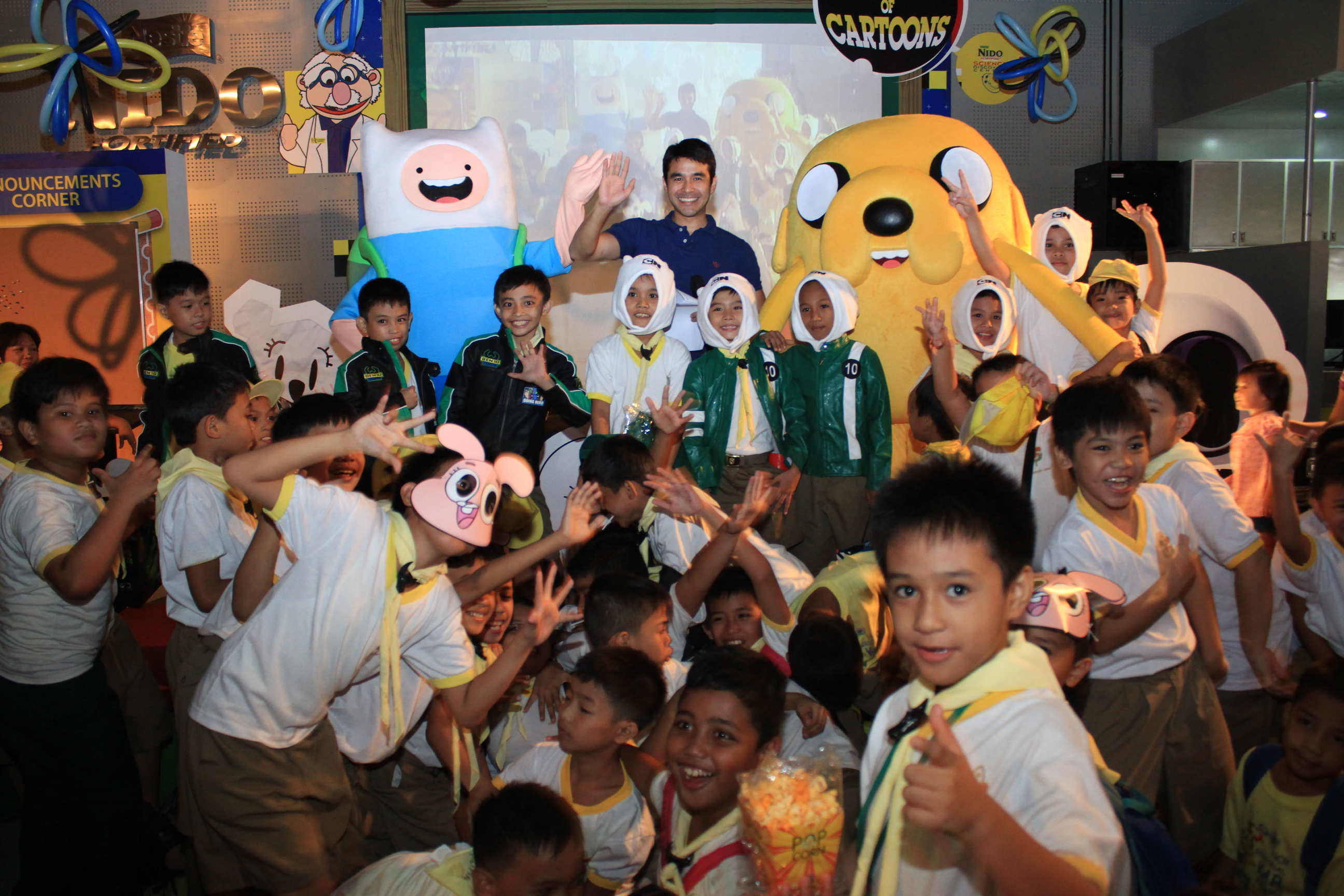
Atom Araullo (center), flanked by Cartoon Network characters Finn and Drake from "Adventure Time". (Photo: NFSDC)
"What we've done is to get our really popular characters like Gumball, Ben 10 and come up with a gallery where people could learn about the history of cartoons, where they come from and how they started," said Cartoon Network Regional Marketing Manager Ben Adams.
The newly-renovated science center's main lobby is filled with exhibits that harken back to childhood with interactive exhibits, from a drawing booth and behind-the-scenes animation exhibits to an immersive booth that lets you be a cartoon character yourself.
Cartoons' forgotten lives
Long before their modern popularization as children's entertainment, cartoons in the form of still drawings were a major part of literature —particularly in Europe in the Middle Ages, due to the population's low literacy rates.
Centuries later, in anticipation of the emergence of cinema, cartoons played a key role in the development of technologies for conveying the sense of movement in pictures. Early examples of animation include the zoetrope, popularized in the late 1800s, and a replica of which is presented in the Discovery Center exhibit.
These early efforts at animation helped paved the way for a clearer understanding of movement and how it can be successfuly captured, preserved, and displayed —the same lessons that kids are invited to discover on their own through the exhibit.
NFSDC Senior Operations Manager Arturo Carballo said in an interview, "We like to make learning more fun. We like to merge entertainment and education."
Adams said that Cartoon Network had already tied up with NFSDC before in similar goals to "make learning fun for kids."
Bringing classroom lessons to life
Museums and science centers strive to make classroom lessons more exciting to help kids learn better, said Carballo.
"We partnered with Vibal Publishing. Almost all our exhibits here are curriculum-based," Carballo explained. Vibal Publishing is one of the publishers of basic education textbooks for elementary and highschool.
Among the NFSDC exhibits is the "Be Connected" display, which tackles the history of communication from papyrus to the Internet; the "All About You" gallery of interactive exhibits on human anatomy; Transportation Nation", which is all about vehicles; the "All About Plants" gallery of plant anatomy; and a lot of other exhibits taken from the pages of elementary science textbooks.
On Aug. 22, NFSDC also came out with a program showcasing one of the newest additions to the science center: an exhibit about "Lolong", the largest saltwater crocodile in captivity. (See related story here.)
For field trips and leisure tours
Carballo said that NFSDC has an average of less than a thousand visitors a day for the entire year. He took into account that school days as part of the peak season and summer time is the off-peak season.
NFSDC was established in 2007. — TJD, GMA News

