

 GMA Brandtalk
 Tracking
 Archives

ADVERTISEMENT
Filtered By: Scitech
SciTech
These pterosaurs were social butterflies—literally!
+
Make this your preferred source to get more updates from this publisher on Google.
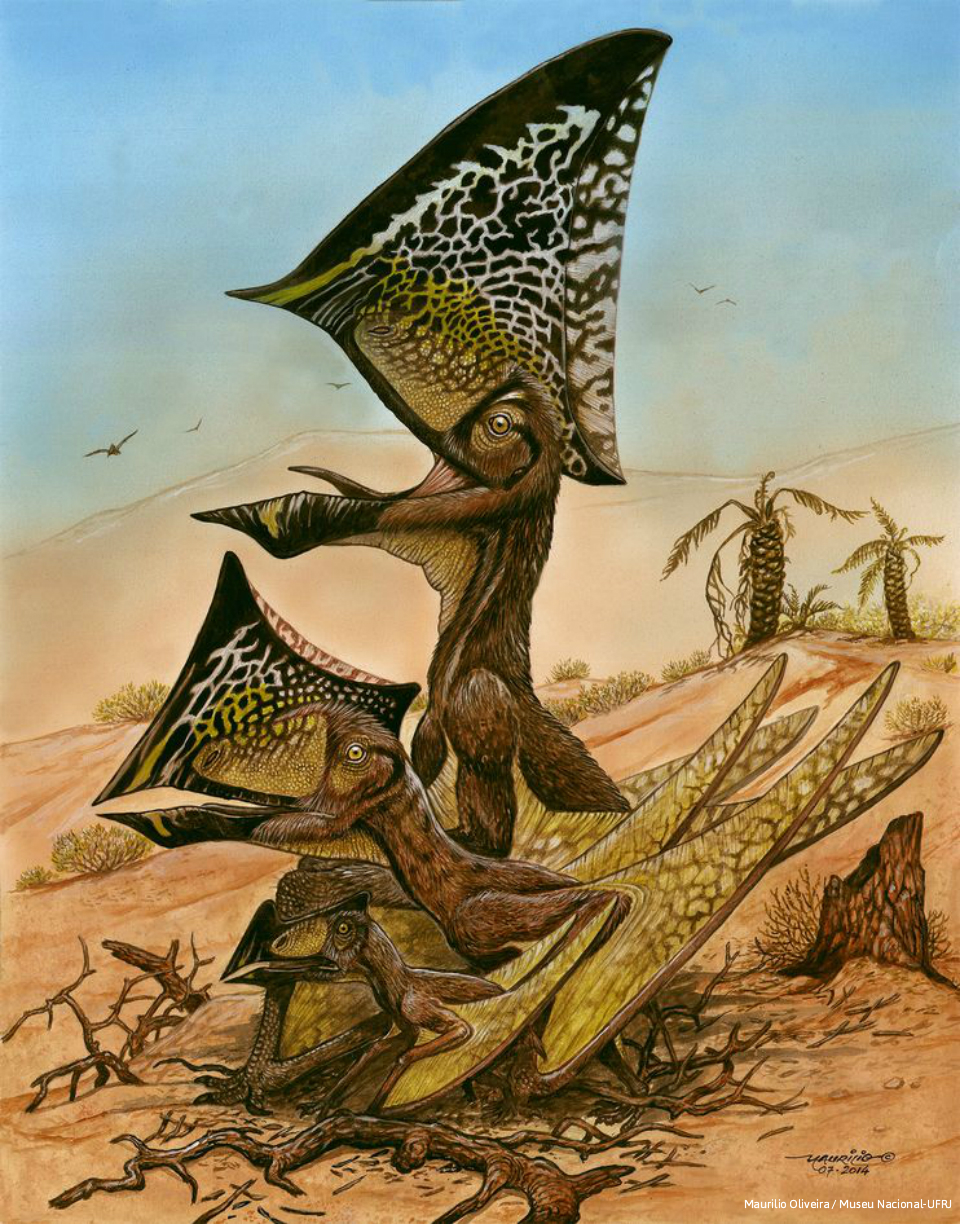 Recently uncovered in a forgotten fossil bed in southern Brazil, a unique species of pterosaur has given new meaning to the term “social butterfly.”
 Caiuajara dobruskii, named after the Caiuá geologic formation where it was unearthed, existed around 80 million years ago, had a maximum wingspan of 7.71 feet (about 2.35 meters), and possessed an oddly-shaped skull, with a butterfly-like bony protrusion that extended to the front of its eyes.
The fossil bed, located near Cruzeiro do Oeste, was discovered by a farmer named Alexandre Dobruski and his son João in 1971.
Based on the dirt and sediment on the bones, the site was a large late Cretaceous desert with a central oasis. The rare bone bed was left untouched for four decades, and was only rediscovered two years ago.
Based on the dirt and sediment on the bones, the site was a large late Cretaceous desert with a central oasis. The rare bone bed was left untouched for four decades, and was only rediscovered two years ago.
The site contained hundreds of fossilized fragments, and according to estimates, at least 47 individual pterosaurs were buried there, with possibly hundreds more waiting to be discovered. Researchers speculate that a drought or desert storm may have been responsible for the pterosaurs’ demise.
Sociable pterosaurs: An idea that could fly
The sheer number of specimens that were buried in the bone bed was surprising, suggesting that these pterosaurs were actually social creatures that may have lived in large groups or colonies. “This was a flock of pterosaurs,” said Alexander Kellner, a paleontologist from the Federal University of Rio de Janeiro and author of the study, which was published in the online journal PLoSONE.
A few C. dobruskii juveniles were also found at the site, with wingspans measuring 2.1 feet (0.65 meters). These fossils confirmed that the bone crests on these pterosaurs changed in shape and orientation as they grew.
Moreover, since the youngsters’ skeletons appeared to be as well-developed as the adults’, researchers believe that C. dobruskii had the ability to fly even in its early developmental stages, and that juveniles were not typically dependent on their parents.
Amazingly, the fossils were preserved well enough to maintain their 3D structure. Previously discovered pterosaur specimens were mostly poorly preserved and incomplete.
Additionally, palaeontologists usually base most of what they know about pterosaurs on a single skeleton for each species; in this case, the abundance of C. dobruskii fossils in the bone bed has allowed the researchers to fill in many of the gaps in their knowledge about this specific kind of pterosaur.
Additionally, palaeontologists usually base most of what they know about pterosaurs on a single skeleton for each species; in this case, the abundance of C. dobruskii fossils in the bone bed has allowed the researchers to fill in many of the gaps in their knowledge about this specific kind of pterosaur.
Perhaps even more remarkable is the fact that the pterosaur fossils were even found at the site in the first place. While pterosaur fossils have been found on every continent, the discovery of C. dobruskii marks the first time that these extinct flying reptiles were found in a desert instead of an ocean or lagoon site.
"To be honest with you, when they first told me they had pterosaur bones, I was going, 'Yeah, sure,'" said Kellner. "To find part of what could be part of a [pterosaur] population is really splendid." — TJD, GMA News

