

 GMA Brandtalk
 Tracking
 Archives

ADVERTISEMENT
Filtered By: Scitech
SciTech
Great Scott! What predictions for 2015 did Back to the Future get right?
+
Make this your preferred source to get more updates from this publisher on Google.
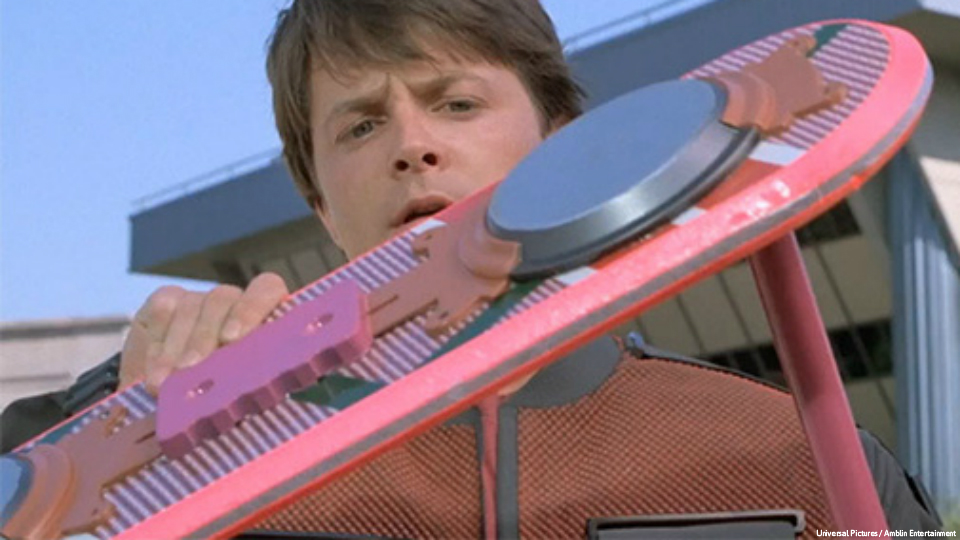
Close to 30 years after the film "Back to the Future II" hit theaters, just how close—or far—was the cult classic's predictions of what our lives would be like in 2015?
Futurists believe biometrics, videoconferencing and large-screen displays top the "right" list, while nobody expected the demise of phone booths and fax machines.
Futurists weighed in on the film and how accurate its predictions were, in a special report by Newsweek.
Back to the Future 2 sees hero Marty McFly (Michael J. Fox) going 30 years into the future to save his son from getting arrested.
His jaunt forward in time revealed a bright future of hoverboards and instant pizzas, it also hinted at a future still fraught with pollution and traffic.
What the movie got right
Right on the tick. Amazing. Absolutely amazing.
—Doc Brown, Back to the Future 2
Robot gas stations. "(W)e don’t really have robot arms putting gas into your car, but we’re pretty automated," said Glen Hiemstra.
Pollution. "If you look at the pollution, they predicted [a] gloomy future which was very, very polluted. This was [after] you had the energy crisis in the ’70s. The thinking was already there. They portrayed the future as very polluted. I think they got that right," said Anne Lise Kjaer.
Video glasses. "It’s interesting that that is now coming into play with Google Glass and a number of other competitors," said Ross Dawson.
"All of this about voice control channel, multiple screens, then of course the Glass technology—they sit around the table and they have the eyewear already. And Skype and the digital pay system. We already have that now, right?" added Kjaer.
Biometrics. "Skype and Facetime are part of everyday usage; by the end of the decade I think it will be totally natural for younger users to transition from text to audio to video in a single call, depending on the content at the moment," said Rogers.
Internet of things. "Of course, when they did this film, the Internet wasn’t big. They have all the right ideas, with the flat tablet, the thumb print biometric. All of that will be done through the Internet of Things. Smart clothing as well. You will be wearing healthy, healing clothing. It will go through the Internet of Things," said Kjaer.
Drones. "Drones are in the news. When the Christmas season is analyzed, drones will be one of the Christmas gift items of the year... Doesn’t look that different from the little quadcopters you could buy at RadioShack now. We don’t have dog-walking drones yet, but we may not be that far from it," said Glen Hiemstra.
Dehydrated food. "They’re in his future house with his future self. And they make the pizza. And then a thing comes down out of the ceiling, which is a big garden thing that has fresh fruit and herbs and other vegetables in it. We do microwave a lot of things. You can go to any outdoor [camping supplies] store and get a pretty wide array of dehydrated food that isn't that far off from that small pizza," said Hiemstra.
Smart clothing: "Smart clothing is also very interesting because 2014 was the year of wearables. We had materials, we have smart materials that are already self-drying," said Kjaer.
"There’s the clothes that self-dry and automatically adjust in a big way to fit Marty. I’m surprised Dyson hasn’t made a self-drying jacket of some kind with a little motor in it. That’s one that technically you could say they got wrong," added Hiemstra.
Holographic billboard. "There are a couple of technologies which appear to be close to giving us a holographic representation, including a company called Magic Leap. We all want more immersive entertainment. This kind of holographic movie—it seems like something we would want, we would pay for, and it seems like we are getting close," said Ross Dawson.
Large screen displays. "Consider that a 24” LCD television cost $3,000 in 2005, and now costs about $159. Fifty-five-inch screens are becoming the norm in many households and with new manufacturing technology, the wall-size screen will be quite doable by the early ’20s," said Michael Rogers.
Body obsession. "The other one I took a note on was the use of rejuvenation face masks. Doc takes off his skin and he looks perfectly young. The idea of body obsession, body surgery—this is a culture that started there," Kjaer said.
Computers and electronics. "It’s interesting to note that the technology predictions that came true involve computers and electronics, the area in which it’s easiest to make rapid progress. Big items—like cars—don’t change nearly as fast," Rogers said.
What the movie got wrong
Wrong answer, McFly!—Griff Tannen, Back to the Future 2
Fax machines. "The number one thing they got wrong was the dominance of fax machines in 2015... Fax machines were relatively new in the late ’80s... Faxes are still around but they aren’t in any way dominant," said Glen Hiemstra.
Self-lacing shoes. "I suppose part of the issue around that is, it seems like a good idea. But how are you going to pay for self-lacing shoes if it’s an extraordinarily advanced technology when it’s not that hard to lace yourself? Is it really worth developing self-lacing shoes as opposed to other things that could be more practical in our lives?" said Ross Dawson.
"(I) don’t think it’s going to happen next year. I don’t know if any manufacturer has got any plans for it," added Adrian Berry.
Phone booths. "One they got wrong is that there are phone booths everywhere. It’s pretty hard to find these days. In fact it's really rare to see a phone booth," Hiemstra said.
Lawyers. "The movie mentions that they had abolished lawyers by 2015. That has not happened," Hiemstra said.
A note on flying cars, hoverboards
Among the most memorable futuristic elements in "Back to the Future 2" are its now-iconic hoverboards and flying cars.
Rogers said that while flying cars have been the stuff of science-fiction, the barriers to their mass production are monumental, encompassing everything from car design to driver skills.
"And finally, the FAA. Consider how cautious the regulators are being about drones, which weigh a few pounds and don’t carry passengers. Multiply that caution by, oh, about a million, and that’s how the regulators will respond to flying cars," he said.
Berry said that while flying cars could happen, the flying would be computerized lest many accidents occur "because people are not very good at driving in two dimensions," and flying in three dimensions could be "a recipe for disaster."
"I’ve thought about them for years and years, but I think they’re terribly dangerous for the whole population. As soon as you start driving the things yourself, there will be an awful lot of dead bodies falling out of the sky," added Berry.
As for the hoverboard, Rogers said it would require anti-gravity technology something that may not quite exist in 2015.
However, Hiemstra pointed out that there is a hoverboard company now whose products use magnetic repulsion: the "Hendo" hoverboard claims to be the world's first "real" hoverboard, and was backed by an overwhelmingly successful Kickstarter campaign.
— Joel Locsin/TJD, GMA News

