

 GMA Brandtalk
 Tracking
 Archives

Freaky Tully monster continues to baffle scientists
A sea creature so bizarre it defies classification continues to leave scientists stumped.
Last year, it was believed the mystery of the Tullimonstrum, or Tully Monster, had already been solved, with two separate teams of scientists declaring they had evidence that proved it was a vertebrate.
However, other researchers have joined the dispute – and now they’re claiming this conclusion is far from accurate. In other words: that freaky thing was not a fish!
So what, exactly, was the Tullimonstrum?
'It’s so weird'
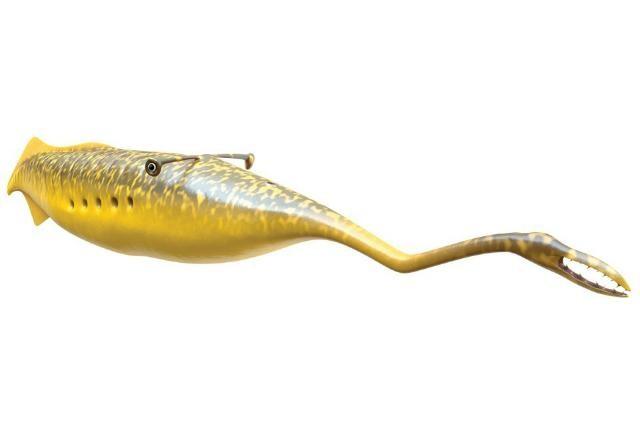
The Tully Monster, as it is colloquially known, existed 300 million years ago. It is believed to have made its home in shallow and muddy seaside waters in an area that is now the Eastern United States. It measures up to 14 inches long, with the smallest only around 3.1 inches long.
T. gregarium is the only known species of the Tully Monster, and its fossils have been discovered in a single region: the fossil beds of Illinois' Mazon Creek.
Since the creature’s discovery in the 1950s, the Mazon Creek area has yielded hundreds of Tullimonstrum fossils, which are now at Chicago’s Field Museum.
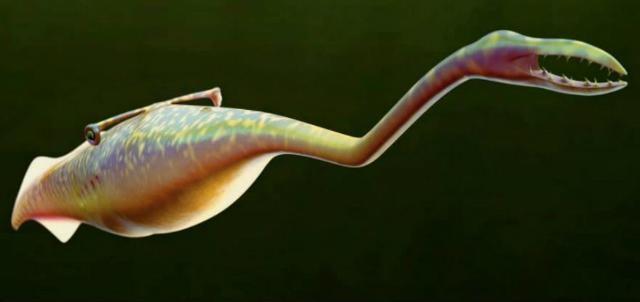
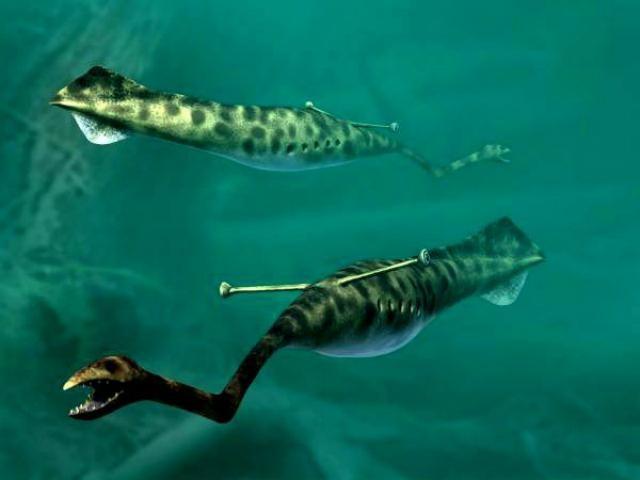
The Tully Monster is a weird mishmash of body parts, with eyestalks resembling a crab’s, fins not unlike a cuttlefish’s, and what can only be described as a jaw on a stick.
Its unusual appearance has not stopped scientists from comparing it to a variety of organisms such as arthropods, molluscs, and even worms. More recently, it has been likened to vertebrates such as lampreys.
“This animal doesn’t fit easy classification because it’s so weird,” states the University of Pennsylvania’s Lauren Sallan, who is part of the team responsible for the most recent examination of the Tully Monster.
“It has these eyes that are on stalks, and it has this pincer at the end of a long proboscis, and there’s even disagreement about which way is up. But the last thing that the Tully monster could be is a fish.”
Discovery, examination, and conclusion
Ever since its discovery by Francis Tully in 1955, the creature has been the subject of various scientific analyses in an effort to figure out what it was.
“I knew right away. I’d never seen anything like it,” Tully once stated. After consulting a number of experts, he admitted his inability to assign the Tullimonstrum to any animal group was a “serious and embarrassing matter.”
For decades, it was generally assumed that the creature was a type of sea cucumber-like mollusc. Or maybe even an anthropod, like the lobster.
Then, in March 2016, two studies provided a vastly different take on the matter.
According to a Yale University team of researchers, the light line spanning the Tully Monster’s middle was a notochord, and not a gut as suggested by previous researchers.
What’s a notochord? It’s a skeletal rod serving as the basis of backbones in vertebrate animals. It’s an integral structure in chordates - a massive vertebrate group that consists of mammals, reptiles, birds, amphibians, and yes, fish.
In addition to the notochord, the researchers also discovered that some among the 1,200 fossil specimens had gill pouches. This made them extremely ‘fish-like’ as opposed to the suggestions of previous studies.
The research team therefore concluded that the Tully Monster was most likely a vertebrate.
The team claimed other researchers had probably missed this feature due to the strange fact that most of these creatures died not on their sides, but either on their backs or fronts. This position “obscured their gills as they turned to stone,” explained Ed Yong in his article for The Atlantic.
A second research group hailing from the UK’s University of Leicester arrived at the same conclusion, but after looking at a different body of evidence.
Said group scanned electron microscope images of the Tully Monster’s eyes, which revealed melanosomes – structures in charge of producing, storing, and transporting melanin. The presence of said structures suggested the animal possessed complex eyes, which in turn gave credence to the notion of it being a vertebrate.
Here comes a new challenger!
So both teams believe the Tully Monster was a vertebrate. But the story isn’t over, just yet, because according to Sallan and her team, both research groups are mistaken.
“It’s important to incorporate all lines of evidence when considering enigmatic fossils: anatomical, preservational and comparative,” states team member Sam Giles, who is from the UK’s University of Oxford.
“Applying that standard to the Tully monster argues strongly against a vertebrate identity.”
According to the team, the Yale researchers have misunderstood how fossils are created on the ocean floor. Basically, only soft tissues are preserved; the notochord and other internal structures generally don’t fossilize.
“In the marine rocks you just see soft tissues, you don’t see much internal structure preserved,” Sallan explains.
As for the Leicester team’s claim about melanosomes, Sallan and colleagues state the presence of these structures in an animal’s eyes doesn’t necessarily prove it’s a vertebrate. This is because there is an abundance of invertebrates that have evolved eyes boasting surprising complexity.
Sallan’s team also scrutinized the Tully Monster’s fossilized eyes. Their conclusion? They’re “cup eyes” – simple structures that don’t have lenses.
“Eyes have evolved dozens of times. It’s not too much of a leap to imagine Tully monsters could have evolved an eye that resembled a vertebrate eye,” Sallan states.
“So the problem is, if it does have cup eyes, then it can’t be a vertebrate, because all vertebrates either have more complex eyes than that or they secondarily lost them. But lots of other things have cup eyes, like primitive chordates, molluscs and certain types of worms.”
While the team isn’t convinced that the Tully Monster is a vertebrate, they’re not sure what it is, either.
Some might think that Sallan and company have only added confusion to the mix. This is, however, how science works; before you can close the book on any matter, you have to examine it from every conceivable angle. And this is what the research team has done – analyzed the Tully monster mystery from a previously unexplored angle, and in the process expanded our knowledge on it.
“Having this kind of misassignment really affects our understanding of vertebrate evolution and vertebrate diversity at this given time,” Sallan sates.
“It makes it harder to get at how things are changing in response to an ecosystem if you have this outlier. And though of course there are outliers in the fossil record - there are plenty of weird things and that’s great - if you’re going to make extraordinary claims, you need extraordinary evidence.”
The study was published in the journal Palaeontology. — TJD, GMA News

