

 GMA Brandtalk
 Tracking
 Archives

Climate action should be at the heart of country’s COVID recovery — scientists
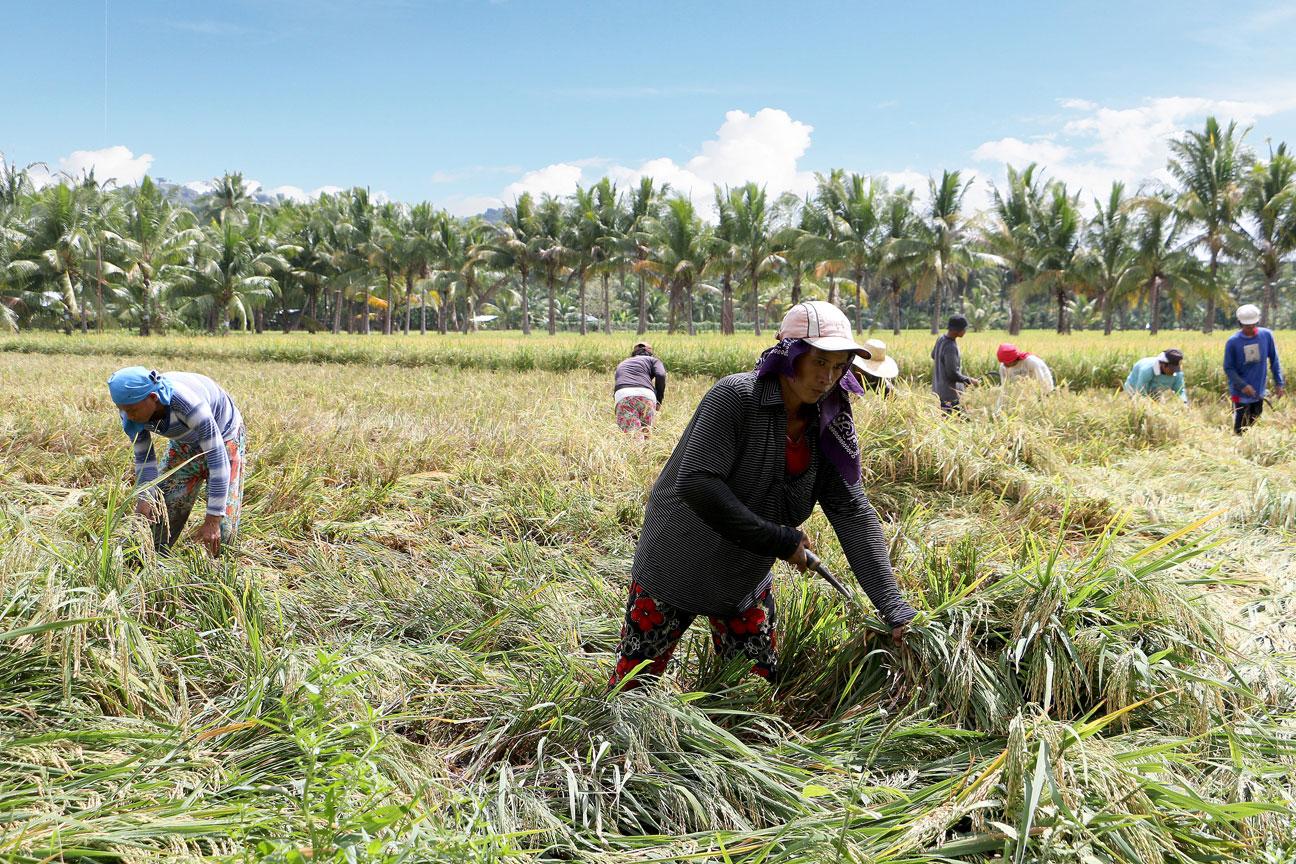
Following the release of a new major scientific report on climate change, Filipino scientists on Thursday said the country’s climate adaptation and mitigation strategies should no longer be fragmented and must be at the heart of the government’s recovery plans from the COVID-19 pandemic.
Scientists Rosa Perez, Rodel Lasco, and Juan Pulhin stressed that climate change impacts, from extreme weather events to sea level rise, will exacerbate poverty and inequality in the country, especially among marginalized sectors that also bore the brunt of the pandemic.
“While the urgency of climate change poses many challenges, it also creates the opportunity to emerge from the pandemic and economic volatility with healthier, more resilient, and climate-safe society and environment,” said Perez in a stakeholders’ briefing organized by the nonprofit research organization Oscar M. Lopez (OML) Center.
“The Philippines has many problems… However, we can view climate change as a threat multiplier,” she added. “If we don’t address climate change, it will enhance current vulnerabilities and will reduce options for people to adapt.”
Perez, Lasco, and Pulhin are among the lead authors of the new Intergovernmental Panel on Climate Change (IPCC) report released on Monday, which sounded the alarm bells anew on urgent and concerted climate action across all sectors.
The IPCC is a United Nations body that assesses existing science related to climate change. A total of 270 authors from 67 countries worked on the 3,676-page report, titled “Climate Change 2022: Impacts, Adaptation and Vulnerability.”
The report highlighted a “rapidly closing” window for action to avert the worst possible impacts of the climate crisis, which are already disproportionately felt in communities and ecosystems that have the least capacity to cope.
“The cumulative scientific evidence is unequivocal: Climate change is a threat to human well-being and planetary health,” the report read. “Any further delay in concerted anticipatory global action on adaptation and mitigation will miss a brief and rapidly closing window of opportunity to secure a liveable and sustainable future for all.”
Worsening impacts
Approximately 3.3 to 3.6 billion people — or nearly half of the global population —live in “contexts that are highly vulnerable” to climate change, according to the IPCC. It is a figure that is seen to rise.
Dangers associated with climate change are already evident in many regions across the globe. Storms and other extreme weather events in 2019, for instance, have displaced over 13 million across Asia and Africa.
By 2050, at least one billion people living on coasts are at risk of floods worsened by rising seas.
Increases in frequency, intensity, and severity of droughts, floods, and heatwaves, along with continued sea level rise, will also result in increased risks to food security, which can then lead to more cases of malnutrition across the world.
At the same time, climate change will adversely impact human health, with climate-sensitive food-, water-, and vector-borne diseases, such as dengue and malaria, projected to rise under all levels of warming without adaptation.
“The findings are so rich and there are so many things that are relevant to us,” said Lasco, who serves as executive director of the OML Center. “Food security is something [we need] to pay attention to, as well as nature-based solutions [and] protecting our biodiversity and natural ecosystems.”
Lasco, who was among the lead authors of the chapter on food, fiber, and other ecosystem products, said there should be a promotion of diversification of crops and livelihoods among Filipino farmers and food producers, so they would not be dependent on one or few sources of food and income.
“Reducing food waste and post-harvest losses will help,” he said.
Holistic, inclusive approaches
These solutions and adaptation measures should not be treated in silos, said Pulhin, a lead author of the report’s chapter on Asia.
“The traditional highly fragmentized, sectoral, and uncoordinated approaches will bring us nowhere,” he said. “It is high time for the government and all of us to recognize that the multiple stressors in our country require science-based and integrated solutions.”
Even as the world moves towards climate adaptation, the IPCC report also highlighted the uneven progress on adaptation and increasing gaps between actions taken and those needed to deal with increasing risks.
It also warned against maladaptation, an “unintended consequence” that can further expose communities to even greater climate risks and deepen existing inequalities.
An example of maladaptation is the construction of coastal sea walls meant to protect communities from rising seas, but in turn, exposed other settlements to flooding and degraded coastal mangroves.
“Our national agencies could have all these climate change programs, projects, and activities, but it should be integrative,” said Perez, who was a lead author of the chapter on climate-resilient development pathways. “One sector could think that it is good for [them], but it could be detrimental to another. There should be discussions on solutions that will be forwarded.”
As the Philippines gradually eases out of the pandemic and votes for new leadership in May, Lasco said it is crucial that climate change is among the priorities of those who will be put in positions of power.
“On the immediate term, national and local leaders should include addressing climate change in their top priorities and provide support to it,” he said. “In the long-term, we should have long-term national strategies, plans, and enabling policies that will operationalize climate-resilient development pathways.” — LA, GMA News

