

 GMA Brandtalk
 Tracking
 Archives

Filipinos gaze at night sky for rare seven-planet parade

Filipinos witnessed a rare celestial spectacle on Friday, February 28, much like everyone else in the world.
At the University of the Philippines' NISMED Observatory in Quezon City, hundreds of people waited in line to view the alignment of seven planets in our solar system: Mars, Jupiter, Uranus, Venus, Neptune, Mercury, and Saturn.
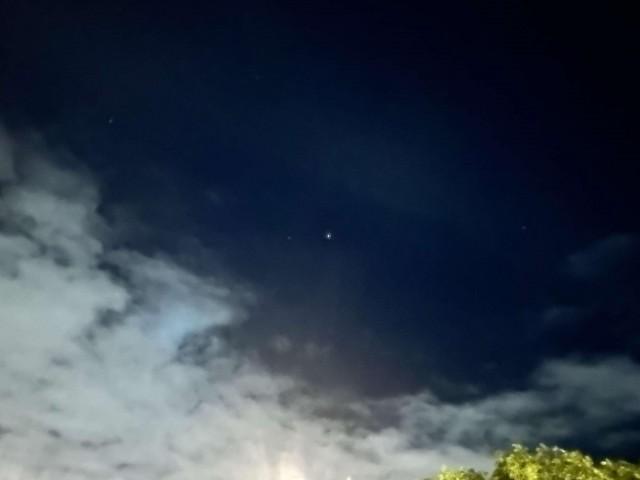
However, cloudy conditions kept many of the people who assembled at UP NISMED from seeing most of these planets, with the exception of Mars and Jupiter.
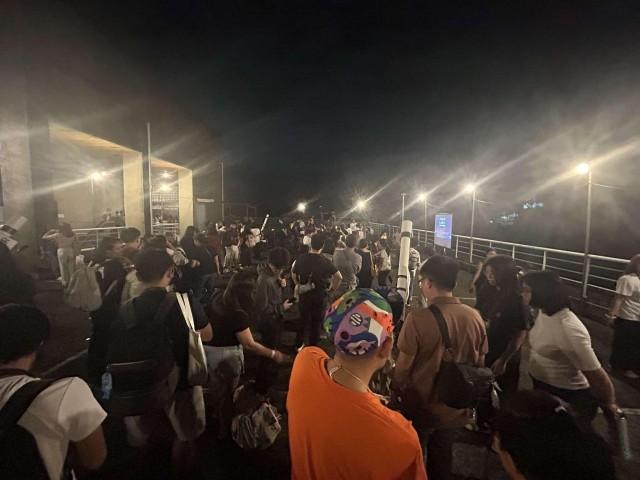
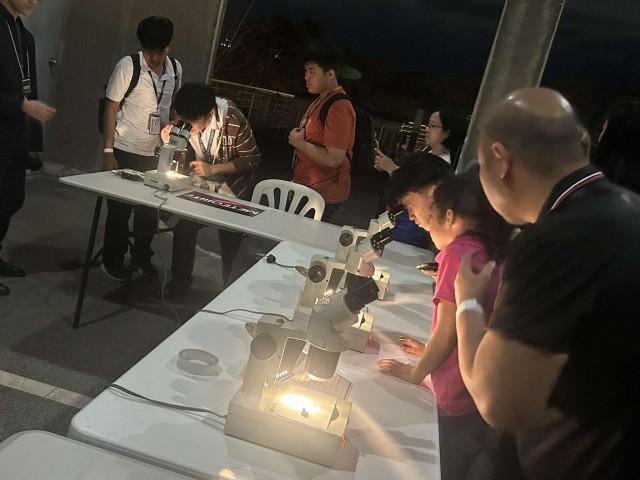
Up to 4,000 people, including kids and space enthusiasts, had signed up for the free event, which also allowed them to see meteorite fragments under a microscope.
Saturn may be difficult to find since it is low on the horizon, but Mars, Jupiter, Venus, and Mercury are visible to the naked eye, the National Aeronautics and Space Administration (NASA) said. Distant planets Neptune and Uranus can only be seen with a telescope or binoculars.
''The dusk sky of March will still feature the full planetary alignment of seven planets—Saturn, Neptune, Mercury, Venus, Uranus, Jupiter, and Mars—but will be marked by Saturn’s gradual fading out of view in the first few days, which will be followed by Neptune, Mercury, and Venus disappearing in the sky within the first two weeks of the month,'' PAGASA said in its astronomical diary.
''Mars, Jupiter, and Venus are readily visible while Mercury and Saturn are positioned very low on the western horizon. Meanwhile, Neptune and Uranus can only be observed using a modest telescope or high-powered binoculars. It should be noted that planetary alignments are visual occurrences and do not directly affect the planet Earth,'' it added.
According to NASA, ''as the planets of our solar system orbit the sun, they occasionally line up in space in events called oppositions and conjunctions.''
"A planetary alignment can also refer to apparent lineups in our sky with other planets, the Moon, or bright stars.''
Reports say the next seven-planet alignment is not expected to occur until 2040. — GMA Integrated News

