

 GMA Brandtalk
 Tracking
 Archives

Why shallow earthquakes cause more damage than others
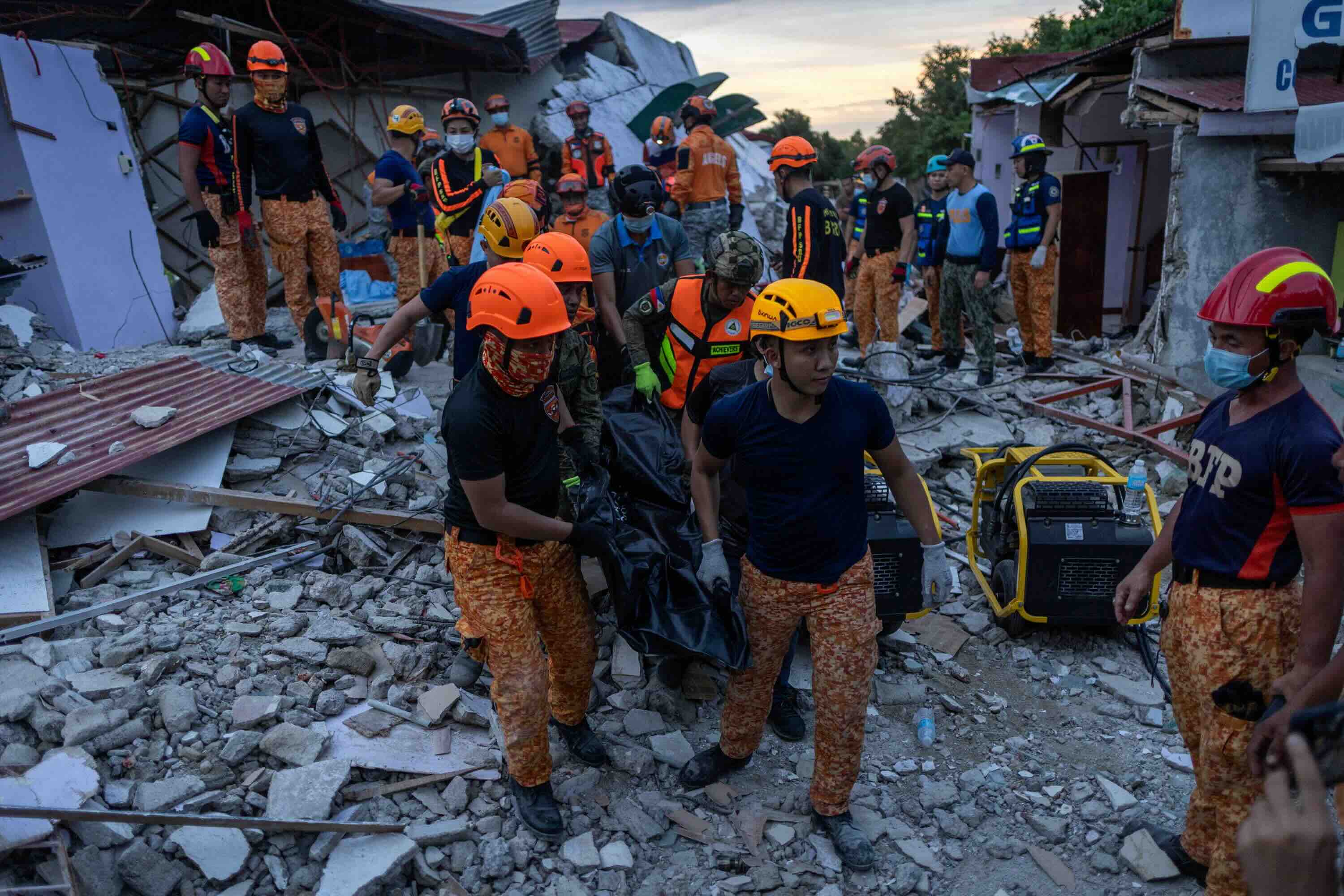
The magnitude 6.9 earthquake that hit Bogo City in Cebu on Tuesday evening has already claimed 68 lives, according to the National Disaster Risk Reduction and Management Council (NDRRMC).
Occurring at a depth of 5 kilometers, the earthquake was shallow and had devastating consequences, the Philippine Institute of Volcanology and Seismology (PHIVOLCS) said.
The September 30 tectonic earthquake, caused by an offshore fault that had not moved for at least 400 years, was also the strongest ever recorded in northern Cebu.
Prior to September 30, historical records and the PHIVOLCS Earthquake Catalog show that Cebu and its neighboring provinces had experienced at least eight significant earthquakes between 1885 and 2013 with magnitudes ranging from 5.0 to 7.2.
"The recent damaging earthquakes were the Magnitude 6.9 event in Negros Oriental on February 6, 2012, and the Magnitude 7.2 event in Bohol on October 15, 2013. In both earthquakes, several buildings and infrastructure were damaged in Cebu Province," PHIVOLCS said.
What is a shallow earthquake?
In an interview with GMA News Online on Thursday, Dr. Teresito Bacolcol, director of PHIVOLCS, said that in the Philippine context, a shallow earthquake has a depth of less than 30 km.
The extent of damage, however, is dependent on both the magnitude and depth of an earthquake.
“The shallower the earthquake, and kapag mataas din ang magnitude, mas destructive 'yan,” Bacolcol said.
(An earthquake is more destructive if it is shallower and has a higher magnitude.)
“It's not only the depth that's a factor doon; ang magnitude din kasi kahit shallow ang earthquake kung magnitude 3 lang naman, hindi naman 'yan destructive,” he added.
(Depth is not the only factor, but also the magnitude, because even if the earthquake is shallow, if it's only magnitude 3, it's not going to be destructive.)
Bacolcol added that the farther one is from the epicenter of an earthquake, the less intense the shaking is.
According to Bacolcol, past occurrences have demonstrated that shallow earthquakes are common in the Philippines.
- Magnitude 7.8 earthquake in Northern and Central Luzon on July 16, 1990 (15-19 km depth)
- Magnitude 6.2 earthquake in Masbate on February 15, 2003 (12 km depth)
- Series of earthquakes in Cotabato in late 2019 (6-11 km depth)
- Magnitude 7.4 earthquake in Hinatuan, Surigao del Sur, on December 2, 2023 (25 km depth)
Cebu and its neighboring provinces, meanwhile, are located in one of the seismically active regions in the country, PHIVOLCS said.
"Among the earthquake sources are Bogo Fault, Daanbantayan Lineament, and the Cebu Fault System. There are also local inland and offshore faults, some concealed by recent deposits, capable of generating earthquakes ranging from minor to strong magnitudes," it said.
Follow the Building Code
Bacolcol said strict compliance with the National Building Code of the Philippines might prevent or lessen earthquake-related damage.
“We have to make sure we follow the Building Code. Yung earthquakes naman hindi 'yan nakakamatay (Earthquakes are not potentially deadly),” he said.
“It's the collapse of man-made structures that claim life, such as yung pag-collapse ng (the collapse of) retaining walls, ceilings, and walls,” he added.
Bacolcol also urged the public to participate in earthquake drills to know what to do when the actual shaking occurs.
Department of Public Works and Highways (DPWH) Secretary Vince Dizon has ordered building officials and municipal engineers to thoroughly inspect all buildings and infrastructure affected by the Cebu earthquake.
Cebu Archbishop Alberto Uy has also released a directive to conduct a structural assessment of churches and rectories in the archdiocese. —VBL, GMA Integrated News

