

 GMA Brandtalk
 Tracking
 Archives

PH gets at least 30 earthquakes a day, DOST says
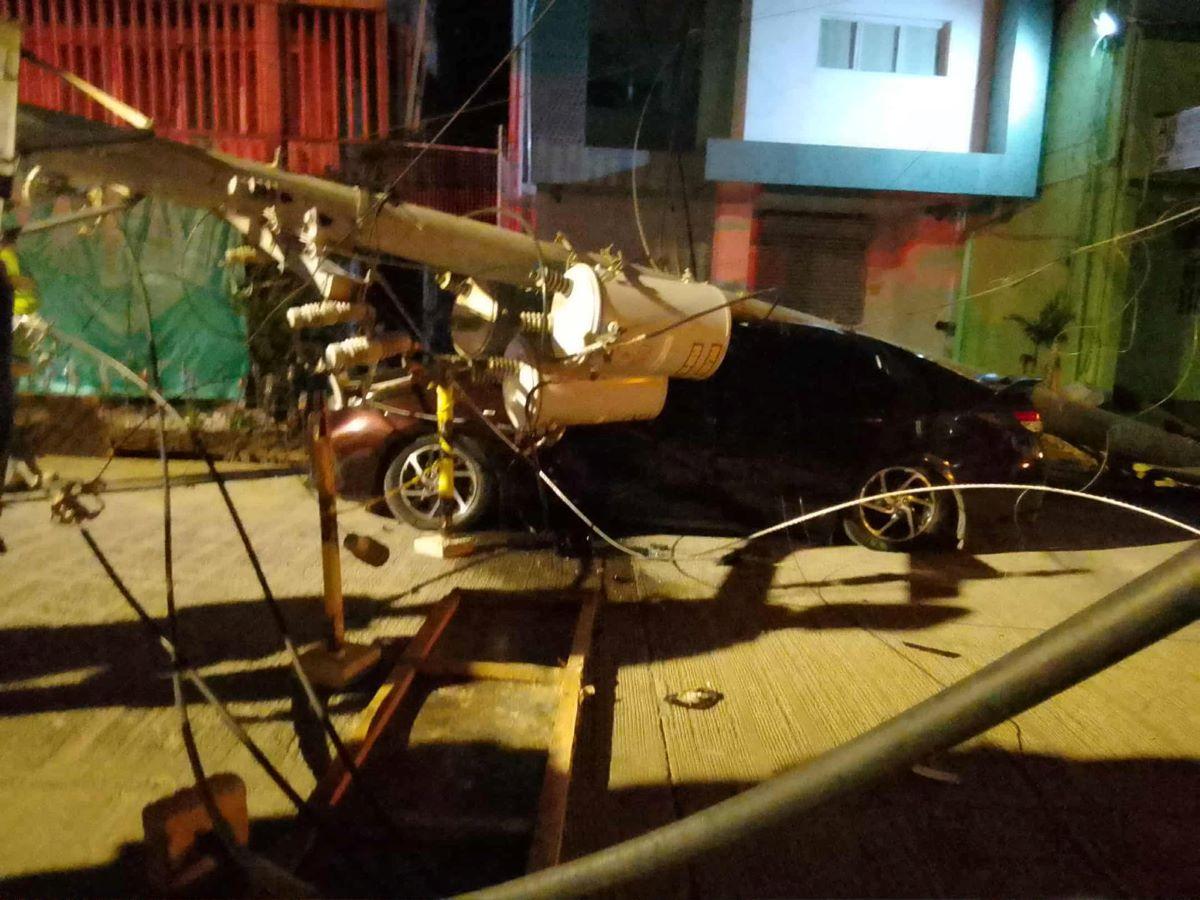
With strong earthquakes having occurred one after the other recently in the Philippines, people have wondered if this is unusual.
The Department of Science and Technology (DOST) however, on Sunday said this has happened before, and that the country gets around 30 earthquakes a day.
"Meron namang pagkakataon na nagkasunod-sunod 'yung malalaking mga lindol. Although siyempre ngayon, sa dami ng ating instrumento na nakapaligid sa Pilipinas at being aware na through social media, talagang madaling malaman ng ating mga kababayan ‘yung nangyayari sa iba’t ibang lugar," DOST Secretary Renato Solidum said in an interview on Super Radyo dzBB.
(There have been instances when there were big earthquakes that occurred one after the other. Although of course now, with the many instruments around the country and being aware through social media, it is easy for our countrymen to find out what is happening in other areas.)
"But definitely, ang dahilan niyan, sa ating bansa ay napakaraming aktibong faults sa lupa at sa dagat at ganoon din ‘yung trench na tinatawag kung saan ‘yung karagatan ay sumusuksok pailalim sa Pilipinas," he said.
(But definitely, the reason for that is our country has many active faults on land and in the sea, as well as trenches where tectonic plates collide.)
"Kada araw, may 30 earthquakes at least na nare-record ang DOST-PHIVOLCS," Solidum said.
(Each day, at least 30 earthquakes are recorded by DOST-PHIVOLCS.)
"Kaya hindi naman nakakapagtaka na paminsan-minsan na mangyayari ang mga malalakas na lindol sa iba't ibang lugar," he added.
(So it is not surprising that sometimes there are huge earthquakes in various places.)
Most of the earthquakes that occur each day are small, Solidum said.
"Pambihira 'yung mga magnitude 6 or greater pero hindi naman 'yan nangyayari na naze-zero tayo sa isang taon. Nangyayari talaga 'yan. 'Yung iba lang, masyado naging malayo sa lupa kaya hindi naging mapaminsala," he said.
(Those with magnitude 6 or greater do not happen often, but it does not mean we don't get any in a year. It really happens. Some are just farther away from land so they are not as destructive.)
Last September 30, a magnitude 6.9 earthquake struck Bogo City in Cebu. This caused considerable damage especially among heritage churches.
On Friday morning, October 10, a magnitude 7.4 earthquake rocked offshore Manay, Davao Oriental.
This was followed that evening by a magnitude 6.8 earthquake that also hit offshore Manay, Davao Oriental.
PHIVOLCS earlier said the second earthquake in Davao Oriental was not an aftershock but the latter half of a doublet — two closely-timed earthquakes happening nearby.
"Minsan hindi lang dalawang kilos [ng lupa] kundi mas marami pa. Multiplets ang tawag," Solidum said.
(Sometimes not only two, but more plates move. These are called multiplets.)
"Mas maigi na 'yan kaysa isang birada na tuloy-tuloy," he added.
(That [doublet] is better than just one earthquake that is continuous.)
On Saturday night, October 11, an earthquake with a magnitude of 6.0 also occurred off the coast of Cagwait, Surigao del Sur.
Duck, cover, and hold
Solidum said he has seen videos uploaded on social media of people running while the recent earthquakes were ongoing.
This may lead to further accidents, he said.
The first thing the public should do during an earthquake — whether in a house, building, or mall — is look for the safest place and stay there, Solidum said.
"Doon pumuwesto habang lumilindol, tsaka lumabas," he said.
(Stay there while the earthquake is ongoing, then leave thereafter.)
PHIVOLCS Director Teresito Bacolcol also reminded the public to stop and protect their heads while an earthquake is going on.
“Kasi kung tatakbo ka during the shaking, puwede kang matumba, ‘yung kasunod sa 'yo, puwede rin matumba. And then magpa-pile up din ‘yung mga bodies,” Bacolcol said, according to a 24 Oras Weekend report on Saturday.
(If you run during the shaking, you may stumble, and those behind you will fall as well. And then the bodies will pile up.)
PHIVOLCS said the public should do the duck, cover and hold posture instead. —KG, GMA Integrated News

