

 GMA Brandtalk
 Tracking
 Archives

UP Manila, TESDA launch competency standards for anatomy lab technicians
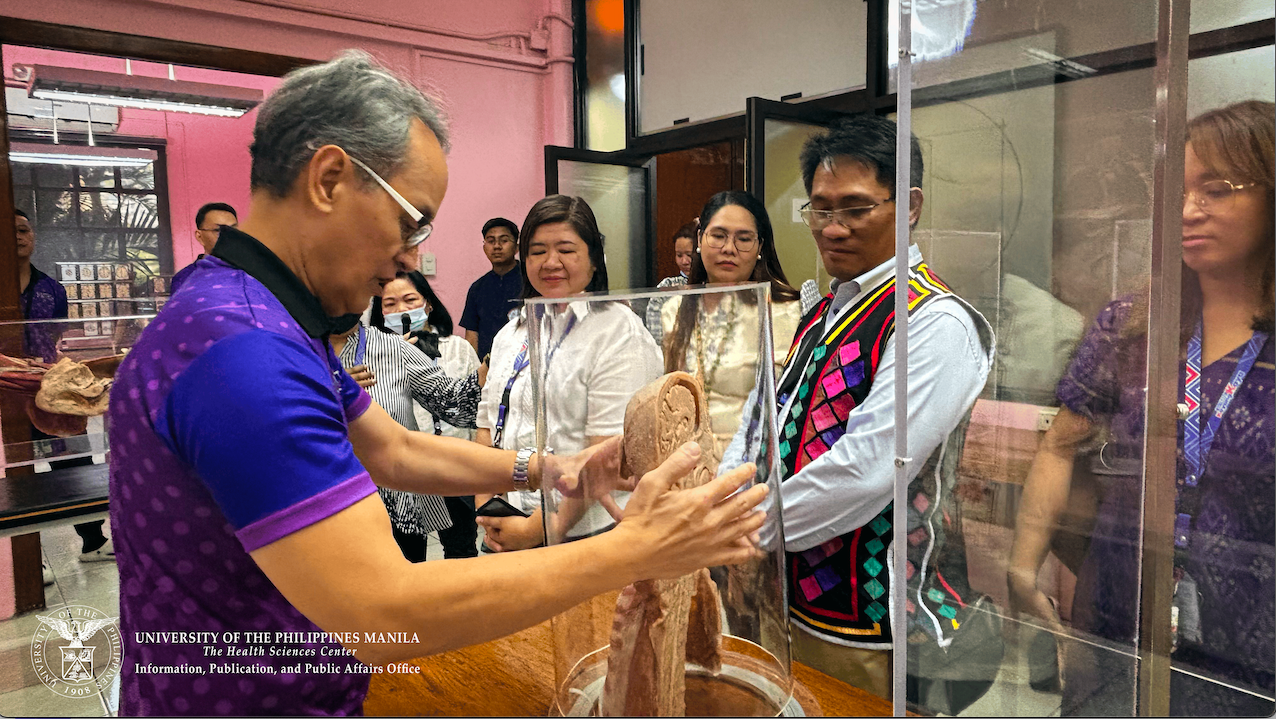
The University of the Philippines Manila (UP Manila) and the Technical Education and Skills Development Authority (TESDA) on Monday launched two new competency standards in support of the country’s medical education system.
The new qualifications are Cadaver Preservation Services Level III and Academic Simulation Services Level III, which are both aimed at professionalizing and upgrading the competencies of technical staff who will assist future healthcare professionals in anatomy laboratories.
“They say before there’s a doctor in the operating room, there’s a technician in the anatomy lab. During every simulation, there’s someone setting up the tools, fixing the systems, keeping things running when no one’s watching,” TESDA Secretary Jose Francisco Benitez said during Monday’s ceremonial launch.
“After the students graduate, those same people stay, building the next generation’s classroom of care. Today, TESDA and UP Manila stand together to say, ‘Hindi na sila invisible. Their work, their skills, their service – kita na, kilala na at kinikilala na natin ngayon,” he added.
(After the students graduate, those same people stay, building the next generation’s classroom of care. Today, TESDA and UP Manila stand together to say, ‘They are no longer invisible. Their work, their skills, their service – are now seen and recognized by us.)
Monday’s launch is the first time that the government formally developed competency standards on Anatomy Laboratory Technician and General Laboratory Technician education.
The Cadaver Preservation Services Level III program will train learners to handle, preserve, and manage cadavers for academic and research use, including anatomical embalming and ethical disposal. Graduates may serve as Cadaver Care Technicians, Anatomy Laboratory Technicians or Anatomic Embalmers.
On the other hand, the Academic Simulation Services Level III program focuses on the management and operation of simulation-based learning facilities in health sciences education. Graduates may pursue careers as Simulation Technicians or Simulation Operations Specialists.
“As the number of medical schools increases because of the Doctor Para sa Bayan Act, there is also a need to ensure that we have the technicians, simulation specialists, and laboratory personnel who help make quality education possible,” Benitez said.
He was referring to Republic Act 11509 which established a medical scholarship and return service to help deserving medical students pursue education and training in the field of health and medicine.
According to TESDA’s 2025 TVET (Technical-Vocational Education and Training) Skills Insights Report entitled “Behind the Scenes of Care: Labor Insights into the Auxiliary Health Workforce,” each new medical school requires three to four laboratory technicians.
TESDA and UP Manila then identified six priority areas for TVET development: Anatomy Laboratory Technician, General Laboratory Technician, Cadaver Preservation, Cadaver Soft Embalming, Academic Simulation Assistant, and Simulation Technician.
The launch of the new competency standards is part of the memorandum of understanding signed by TESDA and UP Manila in September last year on standards development, skills training, and enterprise-based learning to strengthen medical education.
UP Manila Chancellor Michael Tee said the new competency standards is in fulfillment of the university’s long-standing call to professionalize support personnel in medical and health sciences education.
“As the prime mover for simulation-based and technology-driven health sciences education, UP Manila will ensure that support staff in health sciences courses are properly trained and recognized in the academic community,” Tee said. — JMA, GMA Integrated News

