

 GMA Brandtalk
 Tracking
 Archives

Need for more science-based disaster solutions tackled at Handa Pilipinas Visayas leg
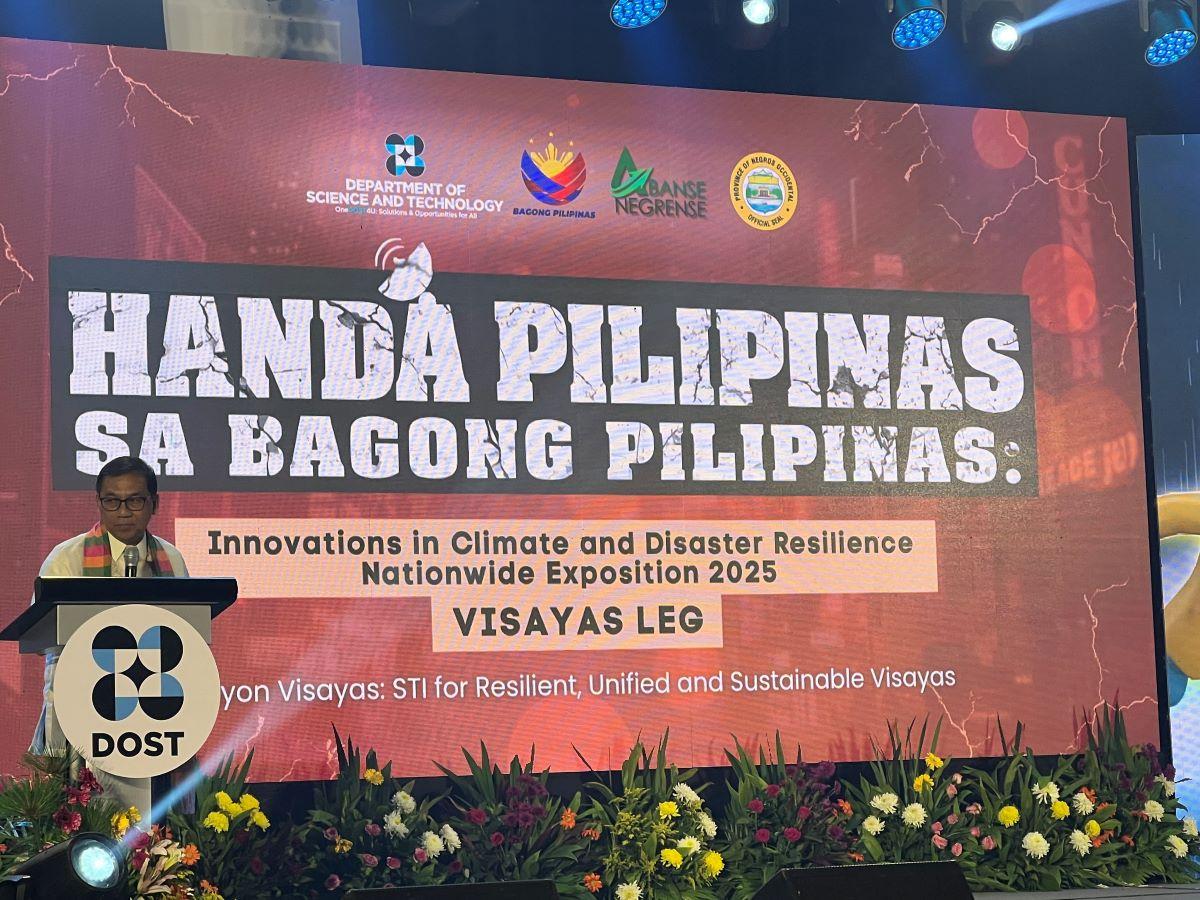
BACOLOD CITY – The Department of Science and Technology (DOST) highlighted the importance of establishing science-based disaster resilience solutions in Visayas during the opening ceremony of the Handa Pilipinas and Regional Science and Technology Week (RSTW) Visayas leg in Bacolod City on Monday.
In his keynote message, DOST Secretary Renato Solidum Jr. noted that resilience actions must be localized per region as risks were also localized.
Solidum noted that the Visayas leg of the event intended to invoke thoughts on how Visayan resilience can be transformed into empowering scientific innovations in line with HANDA Pilipinas’ goal of uniting science, technology, innovation, and local action for disaster and climate resilience.
“Disaster risk reduction begins with accurate, timely, and localized data. Without a clear understanding of the risks unique to each community, planning and preparation become reactive instead of proactive… There’s no one-size that fits all your needs, LGU or community needs,” he shared.
“That is the true essence of Padayon Visayas: to keep moving, keep innovating, and keep building a Visayas that stands strong, together, no matter what lies ahead,” he added.
Solidum shared the DOST’s goals for the event included turning disasters into lessons for resilience, building a “science-driven and people-centered” Visayas, and strengthening partnerships for the region’s future.
“A unified Visayas means no one is left behind, urban or rural, coastal or upland, big city or small barangay… Preparedness must begin before disaster strikes, and the best time to prepare is now. Our effort to build resilience must also become developmental, focus on uplifting the lives of the most vulnerable,” he said.
“Through Science, Technology, and Innovation, and through our unity as Filipinos, we can transform disasters into opportunities, challenges into collaborations, and risks into resilience,” he continued.
Negros Oriental Governor Manuel Sagarbarria also described the event as a platform for exchange, collaboration, and innovation, with the goal of protecting lives, livelihoods, and the environment.
“[Recent catastrophes] remind us that resilience is not an option… It is a compelling duty we must continue to build upon every day. Here in Negros Oriental, we take that imperative to heart. We recognize that resilience is built not only through infrastructure and technology, but through informed citizens, empowered communities, and collaborative governments,” Sagarbarria said.
Bacolod City Mayor Greg Gasataya echoed his sentiments by stating that the event was a step closer towards a “safer, stronger, and smarter Visayas” with science and technology as a backbone.
“Recent earthquakes across the country and of course here in the Visayas, the flooding that recently happened across several parts of the country and of course the ongoing activity of Kanlaon Volcano remind us always of our continuing vulnerability to natural hazards, and these events underscore the urgency of developing science-based, technology-driven and community-centered solutions,” Gastaya said.
Gasataya emphasized the role of DOST in helping the region develop innovations to save lives, protect livelihoods, and sustain socio-economic progress.
During the event, DOST had signed memorandums of agreement with representatives from the local government and the Department of Interior and Local Government (DILG).
The partnerships were made to further promote science-based disaster resilience and sustainable governance in line with the event.
Bacolod and DOST also entered an agreement for a Community-Based Flood Early Warning System (CBFEWS), which is a cost-effective non-structural flood mitigation structure equipped for water monitoring and warning residents and authorities on incoming flooding. —KG, GMA Integrated News

