

 GMA Brandtalk
 Tracking
 Archives

Critically endangered pitcher plant species discovered in Palawan
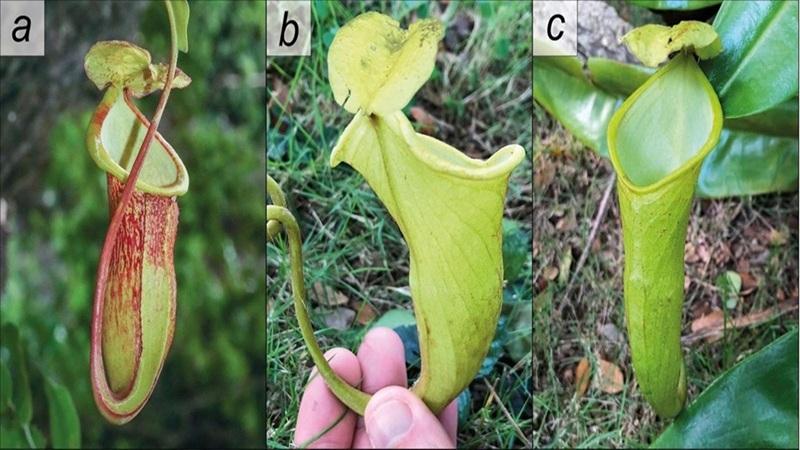
A new species of the pitcher plant has been found in in Puerto Princesa, Palawan, but it is currently in danger of going extinct.
Researchers John Charles A. Altomonte, John Paul R. Collantes, Vernaluz Mangussad, Rene Alfred Anton Bustamante, and Alastair S. Robinson from Ateneo de Manila University and Australia had confirmed the presence of Nepenthes megastoma in Palawan.
The plant can only be found in three areas at Puerto Princesa Subterranean River National Park, and only in steep cliffs where it usually thrives and can only be accessed through drones.
"It's amazing that these plants have evolved to survive in such difficult and inaccessible conditions. And yet, despite their hardiness, their existence is threatened by human activity — directly by way of encroachment and poaching, and indirectly through the effects of anthropogenic climate change," said researcher John Charles Altomonte.
The Nepenthes megastoma is a carnivorous cup-like pitcher plant that feeds on insects, with upward-pointing female flowers and a fuzzy coating.
Its pitchers change from wide and flared to slim and elongated depending on the season.
Researchers noted that the plant had already been seen in 2013 and mistaken for a different species of a pitcher plant, but that it was later confirmed through further study that it was a new species.
Despite the recent discovery, the Nepenthes megastoma is currently classified as “Critically Endangered” as it only had 19 mature clumps with about 12 non-flowering plants left due to its vulnerability to typhoons, drought, poaching, and deforestation.
The number of plants may also dwindle further due to increased risk and illegal harvesting. — Jiselle Anne C. Casucian/BAP, GMA Integrated News

