

 GMA Brandtalk
 Tracking
 Archives

9-year-old Oriental Mindoro student tops international Science Olympiad in US
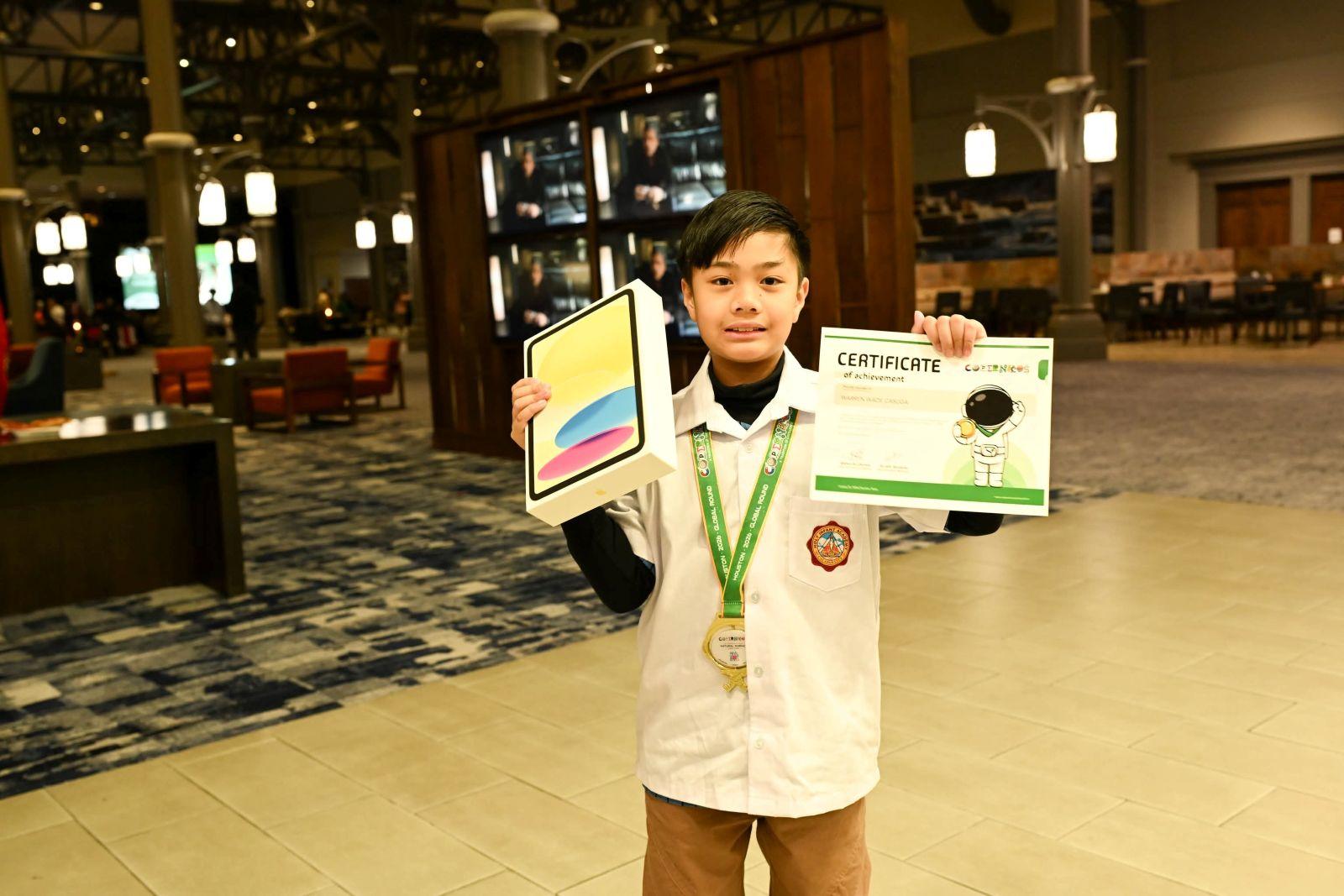
What began as quiet anxiety inside an international competition hall in Houston, Texas, ended in a historic victory for Philippine science education.
Nine-year-old Warren Wade Casuga, a Grade 4 student from Holy Infant Academy in Calapan City, Oriental Mindoro, became the first Filipino to be named Absolute Winner of the VII Copernicus Olympiad Global Round, held at Rice University from January 21 to 25, 2026.
Casuga topped the Natural Science category and outperformed young science talents from 16 countries, including the United States, Brazil, Vietnam, China, Turkey, Indonesia, and Romania.
He was proclaimed 1st place overall and received a gold medal, along with the competition’s grand prize, a brand-new iPad.
For Warren, the moment was almost unreal.
“Noong una po, hindi talaga ako makapaniwala. Kinakabahan po ako habang tinatawag ang mga winners—una bronze, tapos silver, at hindi pa rin ako natawag," he told GMA News Online.
(At first, I really couldn’t believe it. I was nervous while they were calling the winners—first bronze, then silver, and my name still wasn’t called.)
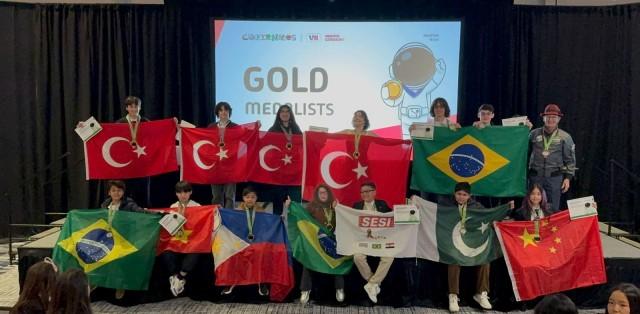
The Copernicus Olympiad is known for its rigorous problems that test scientific reasoning, analysis, and problem-solving skills rather than rote memorization.
According to Casuga, this was what made the competition especially challenging.
“Ang mga problems po halo-halo, may science concepts, analysis, at computations. Tinapos ko rin po ang allotted time na 75 minutes para ma-review ko lahat ng mabuti yung mga questions," he said.
(The problems were mixed—there were science concepts, analysis, and computations. I also used the allotted time of 75 minutes to carefully review all the questions.)
As the first Filipino to claim the Olympiad’s highest honor, Casuga said the victory goes beyond personal achievement.
“Pinapakita po nito na kaya po nating mga Pilipino makipagsabayan sa international level sa science," he said.
(It shows that Filipinos can compete at the international level in the field of science.)
Casuga said his preparation involved daily reviews and constant exposure to difficult questions, a routine that sometimes left him exhausted.
“Nag-review po ako araw-araw at sinanay ko po ang sarili ko sa mahihirap na questions," he said.
(I reviewed every day and trained myself to handle difficult questions.)
Facing competitors from 16 countries, he said confidence and composure became his greatest strengths.
“Lahat po sila ay magagaling at very confident. Ginamit ko po ang mga techniques sa pagsasagot na natutunan ko," he said.
(They were all very good and very confident. I used the techniques I learned.)
Casuga also credited his father for nurturing his love for science from a young age.
“Siya po ang palaging nag-eexplain sa akin ng mga scientific explanations kung bakit nangyayari ang mga bagay na gusto kong malaman," he said.
(He always explains the scientific reasons behind the things I want to understand.)
Casuga hopes his story will inspire Filipino children who feel unsure about pursuing science.
“Gusto ko pong ipakita na masaya ang science at parang laro lang kapag naintindihan mo," he said.
(I want to show that science is fun and feels like a game once you understand it.)
After completing his remaining school activities and taking a short rest, Casuga plans to resume training for upcoming international competitions in London in July and New York in August.
He also shared a message for young Filipinos dreaming of success in science.
“Subukan n’yo lang po nang subukan at huwag matakot matalo, dahil darating din po ang araw na mananalo kayo," he said.
(Just keep trying and do not be afraid to fail, because the day will come when you will win.) —VBL, GMA Integrated News

