

 GMA Brandtalk
 Tracking
 Archives

DOST launches iHubs in Pangasinan schools UDD, PPC to empower local ideas
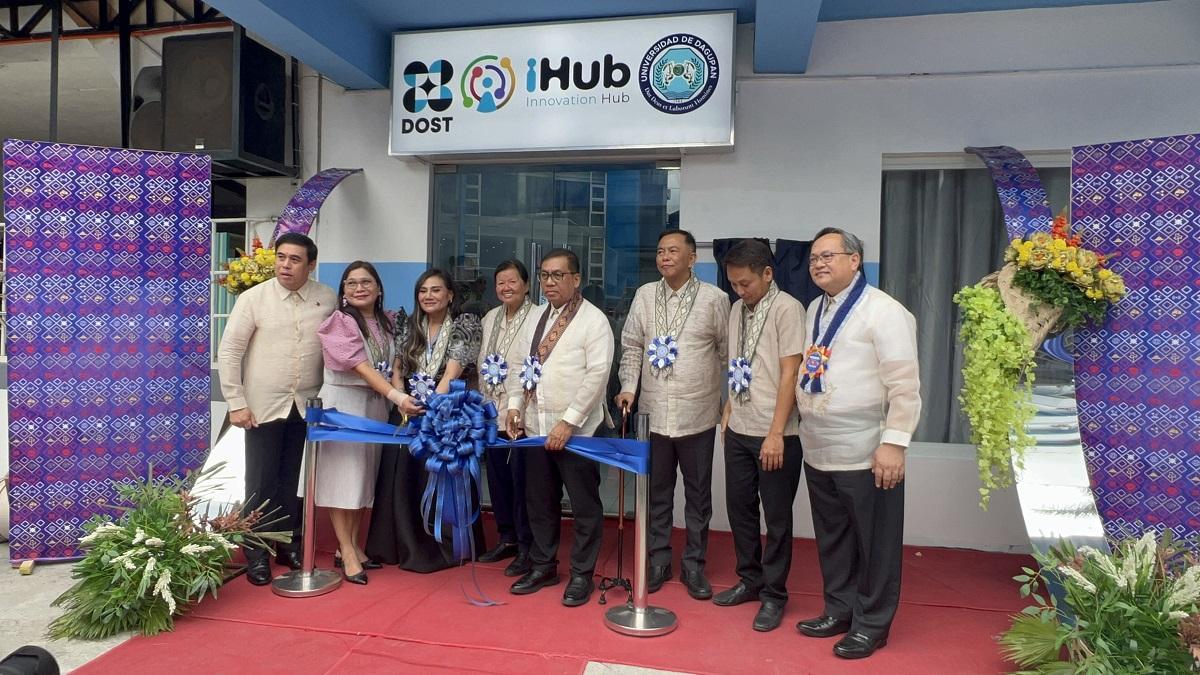
DAGUPAN CITY/LINGAYEN, Pangasinan — The Department of Science and Technology (DOST) officially unveiled two innovation hubs (iHubs) at the Universidad de Dagupan (UDD) and the Pangasinan Polytechnic College (PPC) during the 2026 Regional Science and Technology Week for Region I.
During the UDD launch on Monday, Solidum underscored how the iHubs are avenues where science, technology, and innovation can empower communities by helping develop ideas into businesses.
“When you want to promote commercialization of innovation, it is really the city government or the town that provides the administrative and business process support to the innovators? The role of the Department of Science and Technology is to produce the innovation, but the local government must nurture it so that they will be integrated in their daily business operations,” he said.
“The innovation hub that we are establishing would really provide opportunity for any ideas… That is why if you have an idea, go to the innovation hub. You will be entertained. Lahat po ng idea, pwede [All ideas are allowed],” he added.
UDD said that the iHub will serve as a “collaborative and enabling environment” where students and faculty members will be pushed to create innovative technology and industry-driven solutions for real-world challenges.
The iHub intends to provide students with technical skills, entrepreneurial mindsets and access to mentorship, facilities and industry networks.
Over the next three years, UDD’s iHub will pursue product labelling, product development, marketing of commercially-ready robotics, solutions for logistics, healthcare, manufacturing, integration of AI-driven predictive solutions, copyright and patent filing.
“Knowledge is not enough to commercialize information, and for that knowledge to be commercialized, it must be converted to innovative or imaginative products. So in this hub, we will actually have the opportunity to collaborate with the academic, industry, government, and civil society… They come together to co-create solutions that benefit our communities, the city of the Dagupan, the people of the Dagupan, for the benefit of the people. This I-Hub will serve as a catalyst for inclusive growth and sustainable development,” Solidum said.
On Wednesday, DOST opened another iHub at the PPC in Lingayen, Pangasinan.
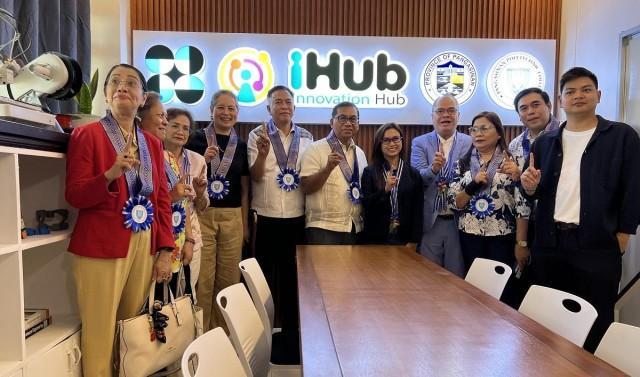
Similar to the iHub in UDD, the hub aims to encourage students and local researchers to communicate innovation at the household level and solve local issues by making innovation “more visible, understandable, and relevant at the local level.”
PPC said that they are branding themselves as a “nexus for change, creativity, and community” and push for community-inspired solutions that will improve basic social services and quality of life in Pangasinan.
“This hub is your platform. Use it to explore emerging technologies, develop prototypes, test bold ideas, and build enterprises that uplift communities… When we strengthen innovation ecosystems in the regions, we strengthen the entire nation. When we empower local talents, we reduce gaps in opportunity. And when science and technology serve the people, development becomes inclusive and sustainable,” Solidum said.
Pangasinan Vice Governor Mark Ronald Lambino said that the establishment of the iHubs in the province will help bridge educational gaps in the province.
“This time we'll bridge the gap to future entrepreneurs, future scientists, future imagineers… This will bridge the gap into transforming an idea into a reality. We don't always have to present the solution to everything. We should always start at the beginning and finding what is the root cause of all the issues and all the problems. And this is one step or this is one avenue where we can find the ways or the starting points into solving these problems,” he said.
“The province of Pangasinan is not short in innovations or ideas, but this is what we need to take it one step further and putting those ideas into reality,” he added.
84 iHubs to offer solutions to community problems
DOST Undersecretary for Regional Operations Engineer Sancho Mabborang said that there are now 84 iHubs nationwide.
According to data from the DOST, there are 44 iHubs in Luzon, 16 in Visayas, and 24 in Mindanao.
“It's a physical space where students, researchers, businessmen, and ordinary Filipinos can go and discuss to us, with our people, and the host institution, yung kanilang [their] ideas about a project, a business endeavor, or an idea to be able for us to assist them… We brought the innovation platform on the ground,” said Mabborang in an interview with GMA News Online.
“This is good for the country, this is good for the community, for the Filipino people because right now magkakaroon na tayo ng isang physical space, isang platform [we will have a physical space, a platform] where they can discuss to our people, competent at that, about their ideas and innovations,” he added.
Mabborang said that iHubs nationwide are now conducting several pitching activities and consultations, with some ideas now being connected to funding institutions, consultants, and experts for further development.
He said that they encourage innovators to solve baseline problems within their communities first before diving into solving national issues.
“It's sort of a practice na dito ka muna, small league, and then you go to the big league later. Sa idea din kasi or technology, mas maganda na may iteration. So once it is being used and utilized by your community, na-reiterate, then you can find out kung kailangan mong debugging, kailangan ng calibration, improve and so on and so forth before you can consider the big market,” Mabborang said.
(It’s sort of a practice that you start here in the small league, and then you go to the big league later. In ideas or technologies, it’s better to have iterations. Once it is being used and utilized by your community, it is reiterated, then you can find out if you need debugging, recalibration, improvements, and so on and so forth before you can consider the big market.)
Solidum added that iHubs will continue to harvest and nurture ideas into real projects that make an impact.
“I believe that students and ordinary people have a lot of ideas because their tendency of thinking is simply, will this work? What are the positives? Will this work? And then [come] the problems, and challenges, and solutions,” he said. — BM, GMA Integrated News

