

 GMA Brandtalk
 Tracking
 Archives

Total lunar eclipse visible in PH on March 3 — PAGASA
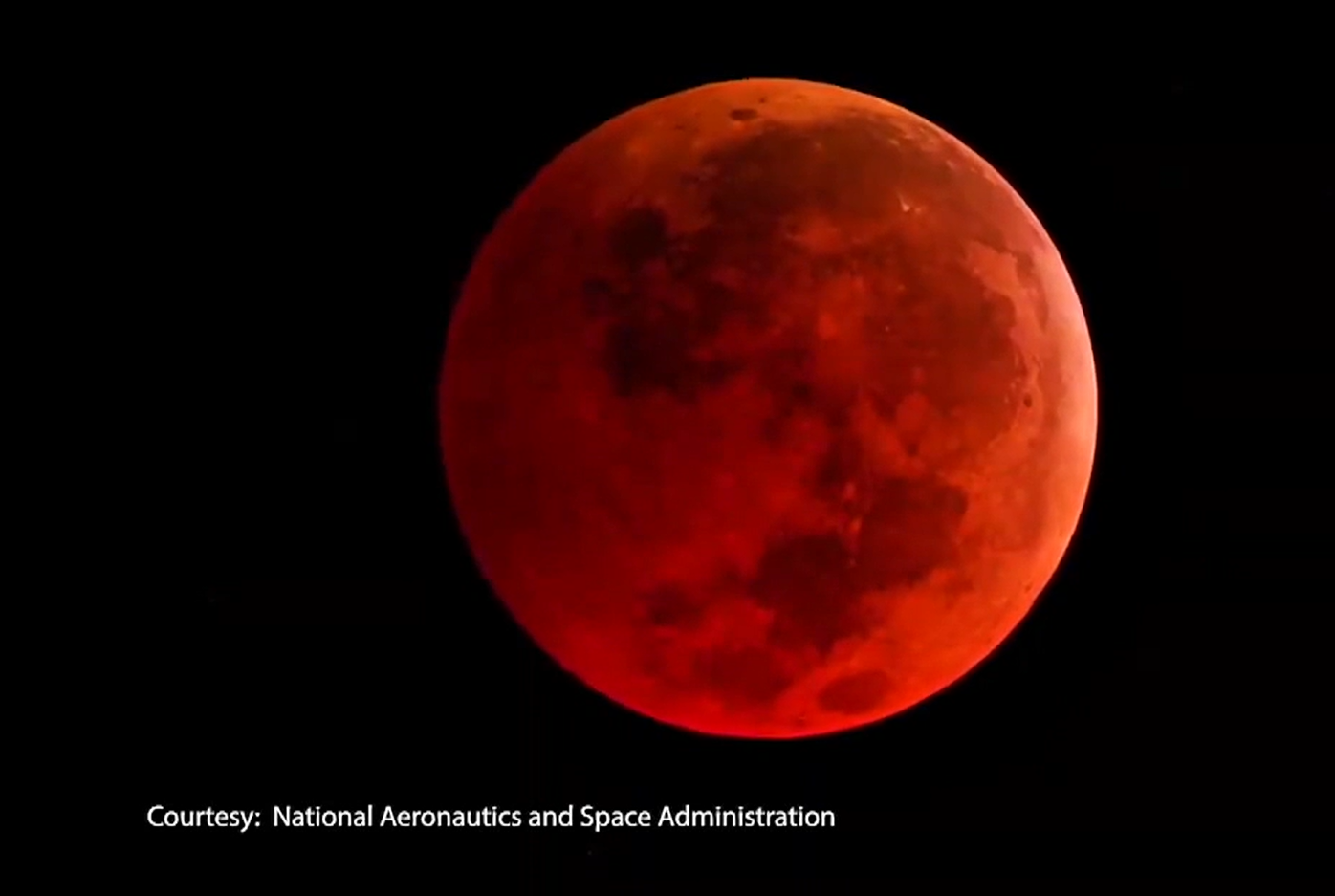
A total lunar eclipse will be visible in Manila and other parts of the Philippines on Tuesday, March 3, 2026, according to the Philippine Atmospheric, Geophysical and Astronomical Services Administration (PAGASA).
In a statement on Monday, PAGASA Administrator Nathaniel Servando said the total lunar eclipse will last about 59 minutes and 24 seconds.
The phenomenon will also be completely visible over East Asia, Australia, the Central Pacific, and most of the Americas.
Servando said the maximum eclipse will occur at 7:34 p.m., with the Moon entering totality at 4:04 p.m.
“During the umbral phase, the Moon will remain in the Earth’s primary shadow until 8:03 p.m. and leave the umbral shadow at 9:17 p.m.,” he explained.
“The Moon will rise in Manila at 5:58 p.m., already partially eclipsed. These stages will continue until the Moon emerges from the penumbral shadow at 10:25 p.m.,” he added.
During the umbral phase of a lunar eclipse, the Moon passes through Earth’s central, darkest shadow, where direct sunlight is completely blocked.
At maximum eclipse, a so-called “blood moon” appears as Earth’s umbral shadow fully covers the Moon’s disk, giving it a reddish color because the planet’s atmosphere filters and scatters sunlight.
The total lunar eclipse can be observed with the naked eye, though binoculars or small telescopes may enhance viewing.
“Contrary to solar eclipses, observing a lunar eclipse is completely safe and does not require any protective eyewear,” PAGASA said.
The agency also released the predicted schedule of the eclipse’s major phases across key metropolitan areas in the country.—MCG, GMA Integrated News

