

 GMA Brandtalk
 Tracking
 Archives

Potential renewable energy surveyed in Philippine Sea — UP marine scientists
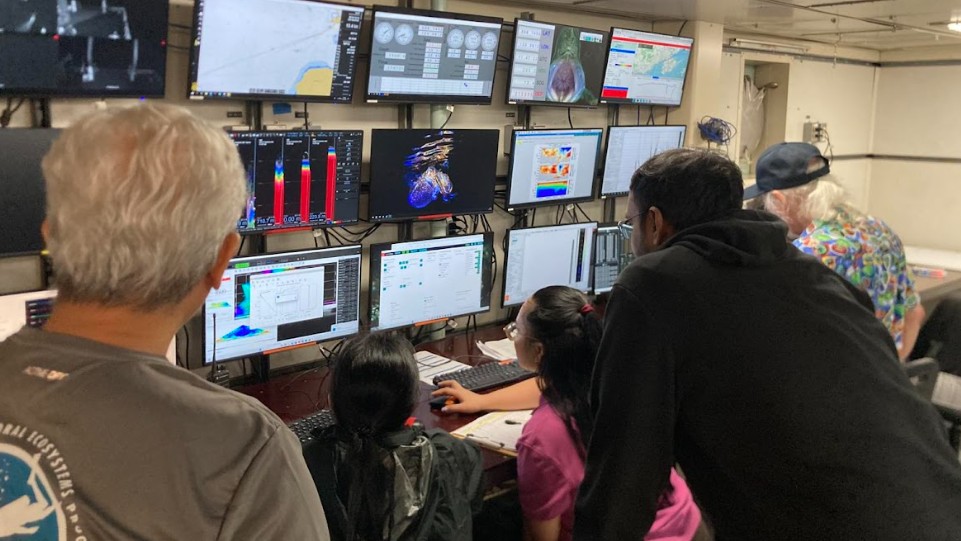
The southern part of the Philippine Sea could be an ideal location to acquire renewable energy, according to an expedition of the University of the Philippines Diliman Marine Science Institute.
Dr. Charina Lyn Amedo-Repollo, who leads the Physical Oceanography and Observation Laboratory, said the Southern Philippine Sea has a “strong surface-to-deep temperature contrast,” which is required to operate an Ocean Thermal Energy Conversion (OTEC).
OTEC is a technology that converts thermal energy into electricity.
"The strong surface-to-deep temperature contrast observed in the southern Philippine Sea meets the thermal requirements for OTEC, indicating high potential for continuous baseload renewable energy, with additional applications for desalination, and seawater cooling," Amedo-Repollo said.
Amedo-Repollo explained that the thermal structure is influenced by the major currents along the eastern coast of Mindanao, particularly the southward-flowing Mindanao Current and the northwesterly-flowing Mindanao Undercurrent.
Meanwhile, the Basilan Strait and the Sangihe Arc have become natural hotspots for internal waves, enhancing ocean mixing and supporting life beneath the surface, due to their steep and complex ocean floor.
Potential industrial, pharmaceutical products
Scientists also found life forms at a volcanic feature in the Celebes Sea south of Balut Island.
Dr. Fernando Siringan explained that volcanic edifices are conducive to unique marine life, which may yield unique bio-compounds with potential for industrial and pharmaceutical products.
Meanwhile, scientists discovered unmapped faults off eastern Palawan.
One of these is along the continental slope, which shows a displacement of about 10 meters.
A series of faults also cut through the sediment packages over a span of about 20 kilometers along the projected extension of the Ulugan Bay Fault, which stretches west of Palawan Island.
Siringan hypothesized that the alignment of volcanic features on the west side of the Sulu Sea with the Manguao Volcano in Taytay, Palawan may also be related to one of these faults.
The expedition also marked the first time water samples were collected from a depth of 5,200 meters in the Celebes Sea.
Siringan and Amedo-Repollo shared the results from a recent expedition in their talk "Mapping the ocean environment through acoustics: Field data of the RV Thompson TN 447 Cruise" on February 3. —Mariel Celine Serquiña/RF, GMA Integrated News

