

 GMA Brandtalk
 Tracking
 Archives

Political will needed for PH to achieve personalized ‘P4’ medicine —expert
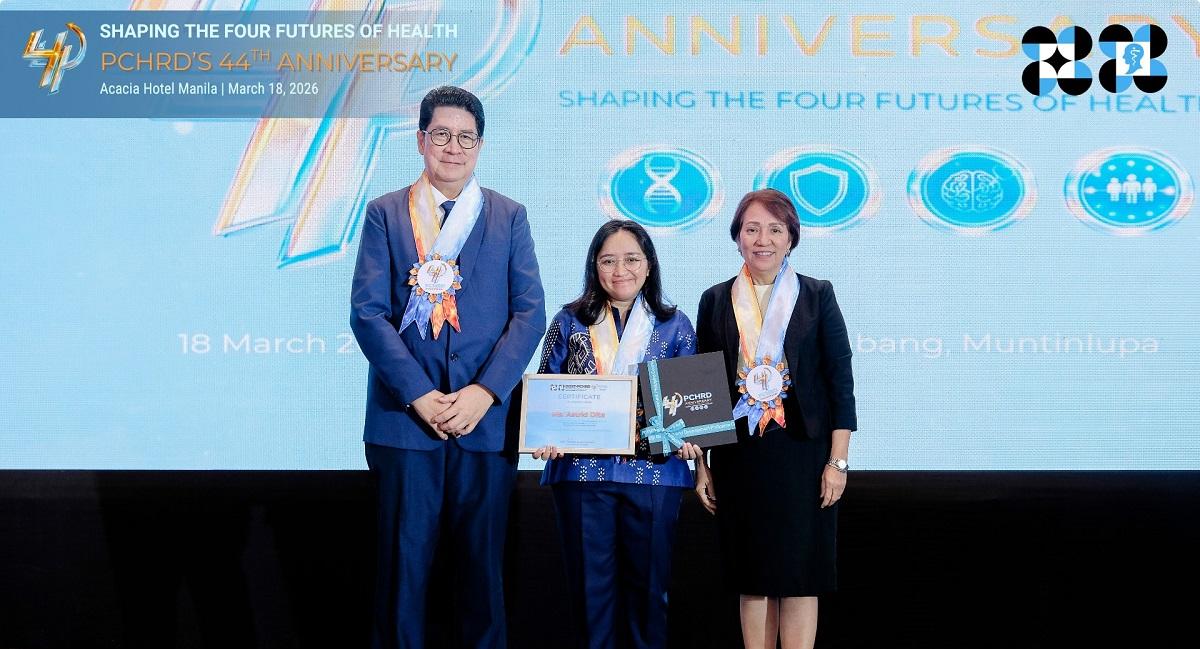
Lack of political will and coordination may be the reasons why the Philippines still isn’t ready for full implementation of a more proactive and preventive form of healthcare called "P4 medicine," an expert said.
At the 44th anniversary of the Philippine Council for Health Research and Development (PCHRD) on Wednesday, Tony Blair Institute for Global Change head of AI and Innovation Astrid Dita said that the P4 agenda would be the foundation of healthcare in the Philippines, but that political leaders might have different focuses amid current conflicts.
“What is important is that amidst all of those external shocks and everything, it's really important for the government to still carry on with its core agenda at home… It's worth for the government to still also put the attention on this agenda to be able to meet or deliver the result for the Filipino population,” she said.
According to the US National Library of Medicine, P4—or predictive, preventive, personalized, participatory—medicine is a health care model that places emphasis on proactive care, promoting and focusing on wellbeing and healthy aging.
It “requires the generation of a vast database of information on factors associated with the health and disease of the individual… This database would characterize both health and disease status of the individual, offering the possibility to observe the shift from one to the other, and consequently to recognize the alarm signs of disease occurrence,” read a 2021 study.
Dita said that the Philippines must work on five aspects to achieve P4 medicine:
- It must establish a national governance body and strategy on medical research before scaling up programs
- It must start with small projects that yield quick results before expanding
- It must invest in health research for Filipinos by using population-specific data
- It must train more experts on data and genetics to ensure a more accurate, specialized workforce
- It must ensure that government funding is properly utilized into needed projects
“Having a really clear strategy would be the first point where you start, and then that strategy will hopefully be able to also rally all the stakeholders behind a singular coordinated direction,” she said.
Dita said that the government must place focus on long-term domestic agendas and making them more tangible.
“There are actually a lot of really good innovations at home… what I have to commend the Philippines government for doing is that there are some really good initiatives here. It's the quality of the research of something that the Philippines government would still need to look after or maintain the culture,” she added.
Outgoing PCHRD Executive Director Jaime Montoya said that the PCHRD is now implementing P4 medicine in their research and are working closely with the Department of Health regarding health sectors that needed specific focus.
“We're doing it already… We're doing participatory research, making health research inclusive. We are actually doing the things that look to the future, so I don't think we are just farting anything. We're already there,” he said.
“We just have to do more of what we're doing and be more committed, have more people do research because we also have to build our critical mass for researches, and we're getting there,” he added.
Low research budget for health
The Philippines has currently allocated only 0.16% of its Gross Domestic Product (GDP) to health research.
Dita said this is far behind the country’s neighbors Thailand, which allocates 1%, and Singapore, which allocates 2.2%.
“I think it's definitely a number that the government should try to improve to catch up with other countries, because competing priorities would also probably be a factor behind it but it's just a matter of how do we make sure that we can get more out of that constraint,” she said.
Montoya said that while the allocation was indeed low, the GDP was consistently growing and investments were increasing.
“It doesn't really make a big difference what's the percent of the GDP for research, but we're looking forward that as more funds come in, more people do research, we do capacitate, and researchers now are more decentralized,” he said.
He added that a whole-of-government approach was needed to improve health research.
“We're looking more and more into technologies that will benefit communities,” he said. — BM, GMA Integrated News

