

 GMA Brandtalk
 Tracking
 Archives

UN: Global climate at 'emergency' level as key indicators 'flash red'
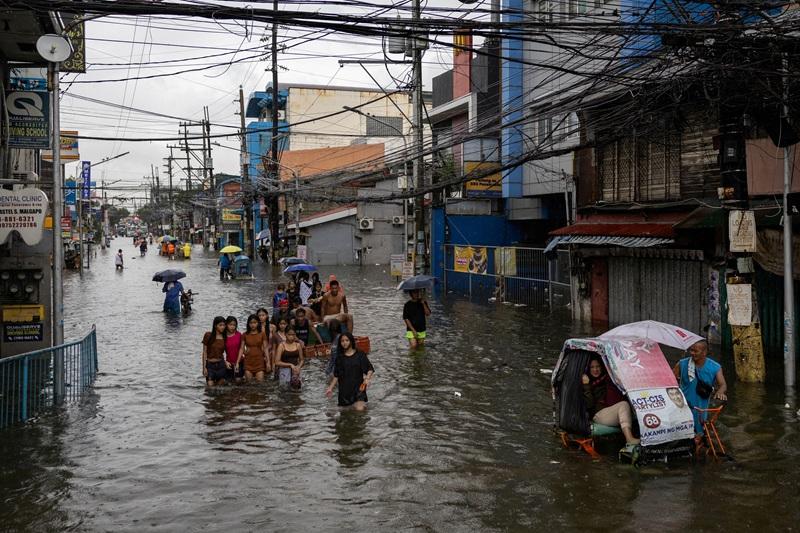
The state of the global climate has reached emergency levels, with every key indicator now “flashing red,” according to the United Nations.
In its State of the Global Climate 2025 report, the World Meteorological Organization (WMO) said the planet’s climate system is now “more out of balance than at any time in history.”
The WMO identified eight major climate indicators behind the alarming status:
- Earth’s energy imbalance: More heat is being trapped by greenhouse gases, reducing the amount of energy released back into space.
- Greenhouse gases: Carbon dioxide levels are at their highest in two million years, while methane and nitrous oxide concentrations have reached levels unseen in 800,000 years.
- Global temperatures: January 2025 was the hottest January on record.
- Ocean heat: Ocean heat content hit a record high in 2025, contributing to coral bleaching and increasing threats to marine ecosystems.
- Sea ice and glaciers: Accelerated melting in the Arctic and Antarctica has reduced sea ice extent.
- Sea levels: The rate of sea-level rise has nearly doubled since 2012 due to ocean warming and ice melt.
- Ocean acidification: Declining pH levels are making oceans more acidic.
- Overall indicator status: Combined data point to worsening climate conditions.
“It is an emergency because once we breach critical thresholds, it could lead to what we call runaway climate change,” said 350 Pilipinas Strategy and Communications Advisor Chuck Baclagon.
“Runaway climate change refers to a point where human civilization may struggle to adapt to rapidly changing environmental conditions brought about by global warming,” he added.
Despite the escalating crisis, the Philippines remains unprepared, Baclagon said.
As an archipelagic country, he explained, the Philippines is particularly vulnerable due to its extensive exposure to surrounding waters.
“In archipelagic countries, a larger portion of landmass is exposed to water, and most climate change impacts occur in areas close to it,” he said.
If the crisis worsens, the country could face stronger typhoons, reduced agricultural output due to erratic climate patterns, and more frequent class disruptions caused by extreme weather.
The Philippines has several policies aimed at addressing climate change, including:
- Clean Air Act (1999);
- Renewable Energy Act (2008);
- Climate Change Act (2009);
- Disaster Risk Reduction and Management (DRRM) Act (2010); and
- Energy Efficiency Act (2019).
However, Baclagon pointed to gaps in governance.
“There is a lack of governance structures that ensure our adaptability to climate impacts. Climate change is often approached from a disaster response perspective, when it should be treated as part of the broader development agenda,” he said.
He also highlighted the limited role of science in policymaking.
“Development decisions are often made to address immediate needs, without sufficient consideration of long-term impacts or the use of data to guide planning,” he added.
The advocacy group also urged the Philippines to take a more active role in global climate action.—MCG, GMA Integrated News

