

 GMA Brandtalk
 Tracking
 Archives

DOST explores bamboo, agro-forest waste as sustainable fuel alternatives
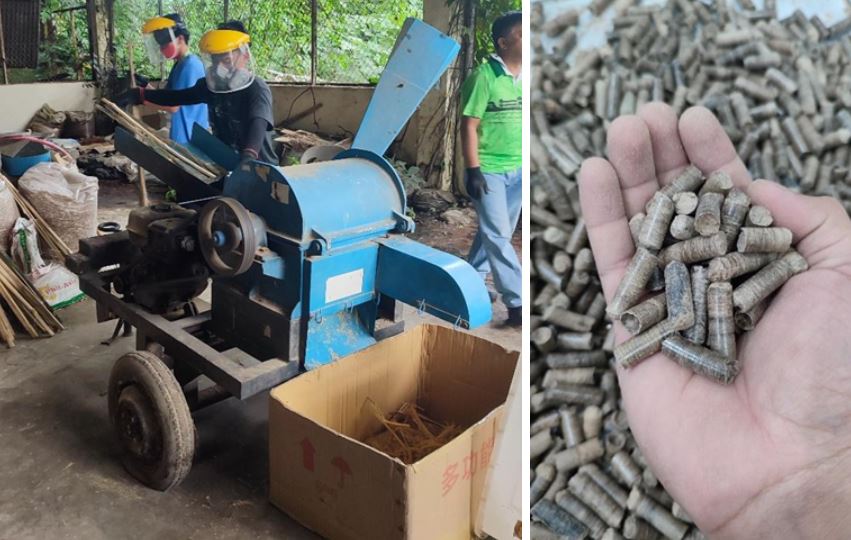
The Department of Science and Technology (DOST) is turning to local innovations that could serve as sustainable fuel alternatives as the country continues to face the effects of the fuel crisis.
The department, through its Forest Products Research and Development Institute (FPRDI), has developed bamboo pellets and charcoal briquettes, which offer cleaner, locally available, and energy-efficient biomass fuel options while promoting sustainable, community-based energy production.
“The recent declaration of a state of national energy emergency shows our country’s vulnerability to disruptions in fuel supply. By converting abundant biomass materials into efficient fuels, we offer a renewable, locally sourced substitute that can help with our country’s needs,” said DOST Secretary Renato Solidum Jr. in a news release.
Bamboo pellets
According to DOST, bamboo pellets are a densified form of bamboo designed for optimum combustion.
"These pellets have higher energy density than other biomass materials, such as wood chips and agricultural residues. Materials with high energy density contain and give off more energy," it said.
Bamboo pellets, which are typically cylindrical in shape and with a diameter of about 8-12 mm and a length of 20-30 mm, are also lightweight and easy to transport.
DOST-FPRDI researcher Dr. Anniver Ryan Lapuz said that one cubic meter of pellets can generate as much as 12.15 gigajoules (GJ). One GJ is approximately 277 kilowatt hours (kWh), he added.
“In coal-fired power plants, bamboo pellets can be used as a co-firing fuel. For biomass-based industries, they can serve as a supplementary fuel source to conventional materials such as bagasse and rice hull. At the household level, these pellets could be used for cooking just like your regular charcoal— only, it is denser and gives higher heating value than the ordinary ‘uling’,” Lapuz said.
DOST said that studies show that co-firing bamboo pellets with coal can significantly reduce greenhouse gas emissions. This makes bamboo pellets a promising option in the country's efforts to mitigate climate change, it added.
"Bamboo is an ideal and reliable biomass energy source because it is abundant and fast-growing," said DOST-FPRDI Director Rico Cabangon.
He said some species of bamboo can grow more than one meter per day or about four centimeters per hour. It can also thrive almost anywhere— in poor soil conditions, grasslands, denuded lands and watersheds, and in both tropical and temperate regions, he said.
“By turning a fast-growing local resource like bamboo into a fuel alternative, we are helping build a future that is less dependent on finite resources and more grounded in sustainable materials,” he added.
Charcoal briquette
DOST highlighted another innovation, which is the charcoal briquette.
A charcoal briquette is a compacted mass of fuel material made from a mix of charcoal fines and binder, and molded under pressure.
"Compared to ordinary charcoal, these briquettes are less messy and easier to handle because they are compact and uniform in size," DOST said.
"They also burn slowly, give more intense heat per unit volume, and are almost smokeless when burning," it added.
DOST-FPRDI said it has manual and hydraulic charcoal briquetting technologies ready for adoption.
Opportunities for MSMEs, rural communities
Cabangon said the new technologies also open opportunities for small businesses and rural communities to engage in biomass fuel production.
“Promoting biomass-based energy technologies can stimulate rural livelihoods while addressing crucial energy concerns,” he said.
“With the right support, communities can establish small-scale pelletizing or briquetting operations to generate income as they participate directly in building a more resilient and localized energy system," he added. —LDF, GMA News

