

 GMA Brandtalk
 Tracking
 Archives

Eta Aquarid meteor shower peaks
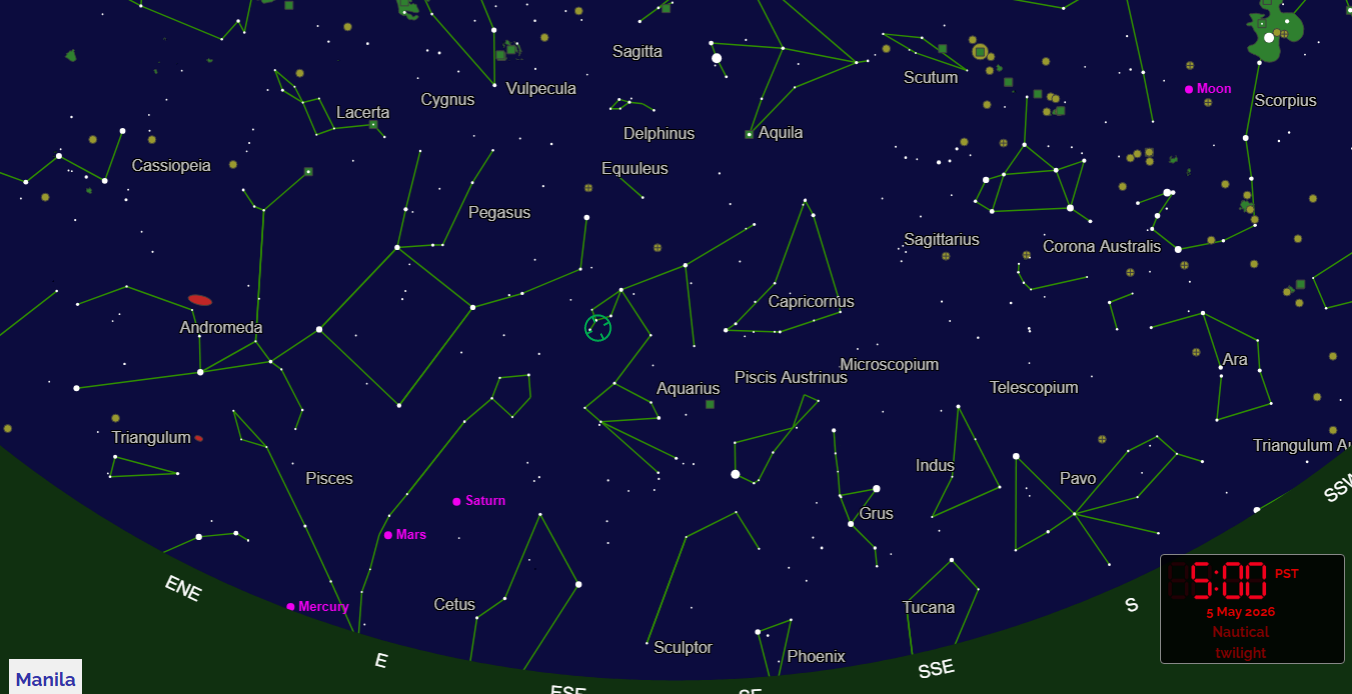
This year's Eta Aquarid meteor shower reached its peak activity on Tuesday, May 5, according to the state weather bureau PAGASA.
Active since April 19, the Eta Aquarid meteor shower is produced by debris from Halley's Comet and is expected to generate around 40 meteors per hour under favorable conditions.
Eta Aquarids are well-known for their speed, entering Earth's atmosphere at a speed of roughly 40.7 miles per second (65.4 kilometers per second), the US National Aeronautics and Space Administration (NASA) said.
"The shower will not be visible until approximately 1:31 a.m. each night, when its radiant—located in the constellation Aquarius—rises above the eastern horizon. It will remain observable until the onset of dawn at around 5:06 a.m. Although the radiant culminates after sunrise, the best viewing conditions are expected shortly before dawn, around 5:00 a.m.," PAGASA said.
Eta Aquarids will grace the skies until May 28.
Meanwhile, the annual Lyrid meteor shower will be active from May 3 to May 14, peaking on May 8, PAGASA said.
It is expected to produce up to three meteors per hour under ideal observing conditions.
What are meteors?
According to NASA, meteors originate from "leftover comet particles and bits from broken asteroids."
"When comets come around the Sun, they leave a dusty trail behind them. Every year Earth passes through these debris trails, which allows the bits to collide with our atmosphere where they disintegrate to create fiery and colorful streaks in the sky," it said.
Meteor showers, PAGASA said, are visible to the naked eye.
"Maximize the viewing experience by choosing a dark observation site away from the city lights under clear and moonless sky conditions," it said. —VBL, GMA News

