

 GMA Brandtalk
 Tracking
 Archives

Gov't urged to expand infrastructure to boost nonwoven textile industry
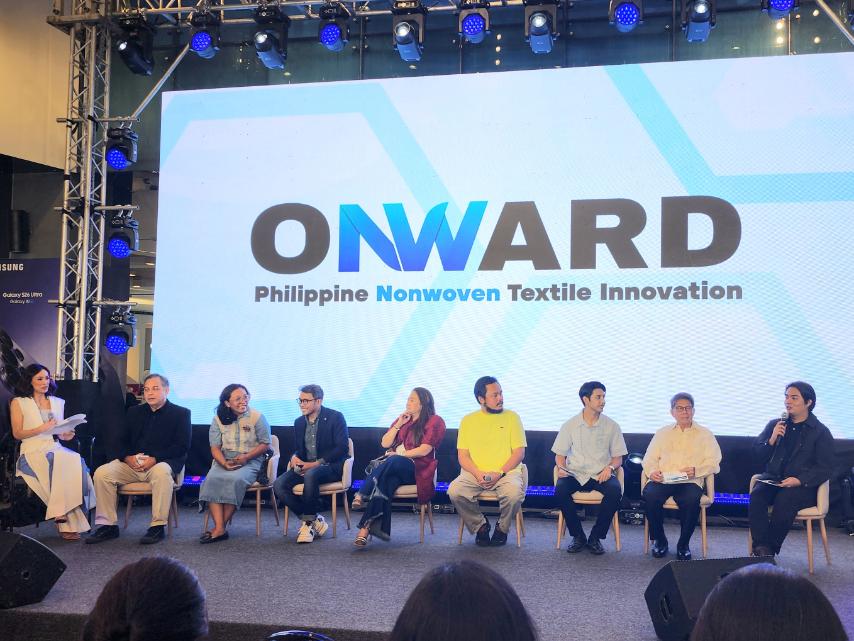
The government should invest in more infrastructure for the production of nonwoven textiles to help grow the industry, an entrepreneur said.
Jed Yabut, founder of the namesake furniture brand, said that while the government is expanding opportunities for stakeholders in the nonwoven textile sector, it should also invest in facilities that can turn raw materials into market-ready products.
"Siguro pwede natin i-pump up yung infrastructure natin to create more of these raw materials. Damihan natin siya," Yabut said during a panel discussion earlier this week, noting that expanding infrastructure could help lower production costs.
(The government can invest more in infrastructure to produce more of these raw materials. We need more production facilities.)
Yabut also underscored the importance of government leadership in shaping industry priorities.
"Nagma-matter talaga yung sitting government officials," he said. "Kung ano man yung gusto nila, at ng mga secretaries na ito, yun talaga yung pinu-push nila."
(Who sits in government positions really matters. Whatever priorities they and their Cabinet secretaries have are the ones they will push.)
Yabut made the remarks during the launch of "ONWARD: Philippine Nonwoven Textile Innovation," an initiative of the Department of Science and Technology–Philippine Textile Research Institute (DOST-PTRI) in Quezon City.
Gina Nebrida Ty, president of the Fashion Accessory Makers of the Philippines, echoed Yabut's view.
"So, what I'm saying is that if you want to win the battle, the government has to give us enough ammunition to fight it out," Ty said.
Nonwoven textiles are fabrics made by bonding fibers into sheets using heat, chemicals, pressure, or other processes instead of weaving or knitting threads.
ONWARD aims to expand the country's textile industry beyond conventional woven fabrics by promoting nonwoven materials for use in healthcare, construction, transportation, agriculture, furniture, fashion, and infrastructure.
Meanwhile, Singco Siahentiong of Fivecent Global Corporation said technological advancements inevitably come with additional costs.
"All costings are relative," Siahentiong said. "There's no advancement in technology without additional cost."
DOST-PTRI Director Julius Leaño, however, said production costs would decline once manufacturing scales up.
"The cost of production will definitely go down once production normalizes. Pag mababa ang production mo, mahal talaga 'yan," Leaño said in an ambush interview.
(The cost of production will definitely go down once production normalizes. When production is low, production costs are inevitably higher.)
"For the meantime, hindi muna tayong makikipag-compete sa mass market. The initial target is the specialized high-end market," he added.
(For the meantime, we won't be competing in the mass market. The initial target is the specialized high-end market.)
Bridging stakeholders
Leaño said DOST-PTRI is working to bridge the entire nonwoven textile value chain—from raw material suppliers and production facilities to manufacturers and end users—through facilities and other support initiatives.
"What we need to do is bridge them to the end user," he said.
He added that DOST-PTRI can provide innovations, quality testing, certification, and sustainability support to strengthen the country's nonwoven textile industry.
"Lahat ng materials natin, hindi pwedeng basta naging material lang. They have to be tested," Leaño said.
(All materials must undergo testing. They cannot simply be declared ready for use.)
"We don't want greenwashing. Ayaw natin yung sasabihin lang na this is eco-friendly," he added.
(We don't want greenwashing. We don't want people to simply claim that a product is eco-friendly.)
DOST-PTRI is set to inaugurate its first integrated nonwoven textile center in Taguig City in January 2027.
The facility will serve as a research and development hub, showroom, and production center for nonwoven textiles. — VBL, GMA News

