

 GMA Brandtalk
 Tracking
 Archives

EXPLAINER: Why is the Philippines turning to nuclear energy?
Following the US and Israeli strikes on Iran early this year, Tehran closed the Strait of Hormuz—a key maritime chokepoint for global oil shipments—heightening concerns over potential disruptions to oil supplies.
The escalating tensions prompted President Ferdinand Marcos Jr. to declare a state of national emergency in March, directing the Department of Energy to take appropriate measures "to safeguard the stability and adequacy of the country's energy supply and mitigate the adverse effects of disruptions in global energy supply markets."
Four months later, with no end to the Iran conflict in sight, Marcos said in his penultimate State of the Nation Address (SONA) on July 27 that it is time for the Philippines to revisit nuclear energy.
“Pushing the envelope further, perhaps it is time for us to revisit nuclear energy production. After all, we are already using nuclear energy in the fields of medicine, in agriculture, water filtration, and the upcycling of plastic," Marcos said.
He also expressed confidence in nuclear power's capacity “to reinforce our energy security and to bring down the cost of electricity in our country."
With the Philippines looking to reduce its reliance on fossil fuels, why has nuclear energy emerged as a key option?
What is nuclear energy?
According to the International Atomic Energy Agency (IAEA), nuclear energy is generated from the nucleus of an atom. It is produced either through fission, which splits atomic nuclei, or fusion, which joins two nuclei together.
"The nuclear energy harnessed around the world today to produce electricity is through nuclear fission, while technology to generate electricity from fusion is at the R&D phase," the IAEA said.
"Inside nuclear power plants, nuclear reactors and their equipment contain and control the chain reactions, most commonly fueled by uranium-235, to produce heat through fission. The heat warms the reactor’s cooling agent, typically water, to produce steam. The steam is then channeled to spin turbines, activating an electric generator to create low-carbon electricity."
From Bataan to today
The Philippines' nuclear power ambitions took shape during the administration of former President Ferdinand Marcos Sr., the current president's father.
The first Marcos administration also pursued the construction of a nuclear power plant to strengthen energy security by reducing the country’s dependence on imported oil and developing an alternative source of electricity.
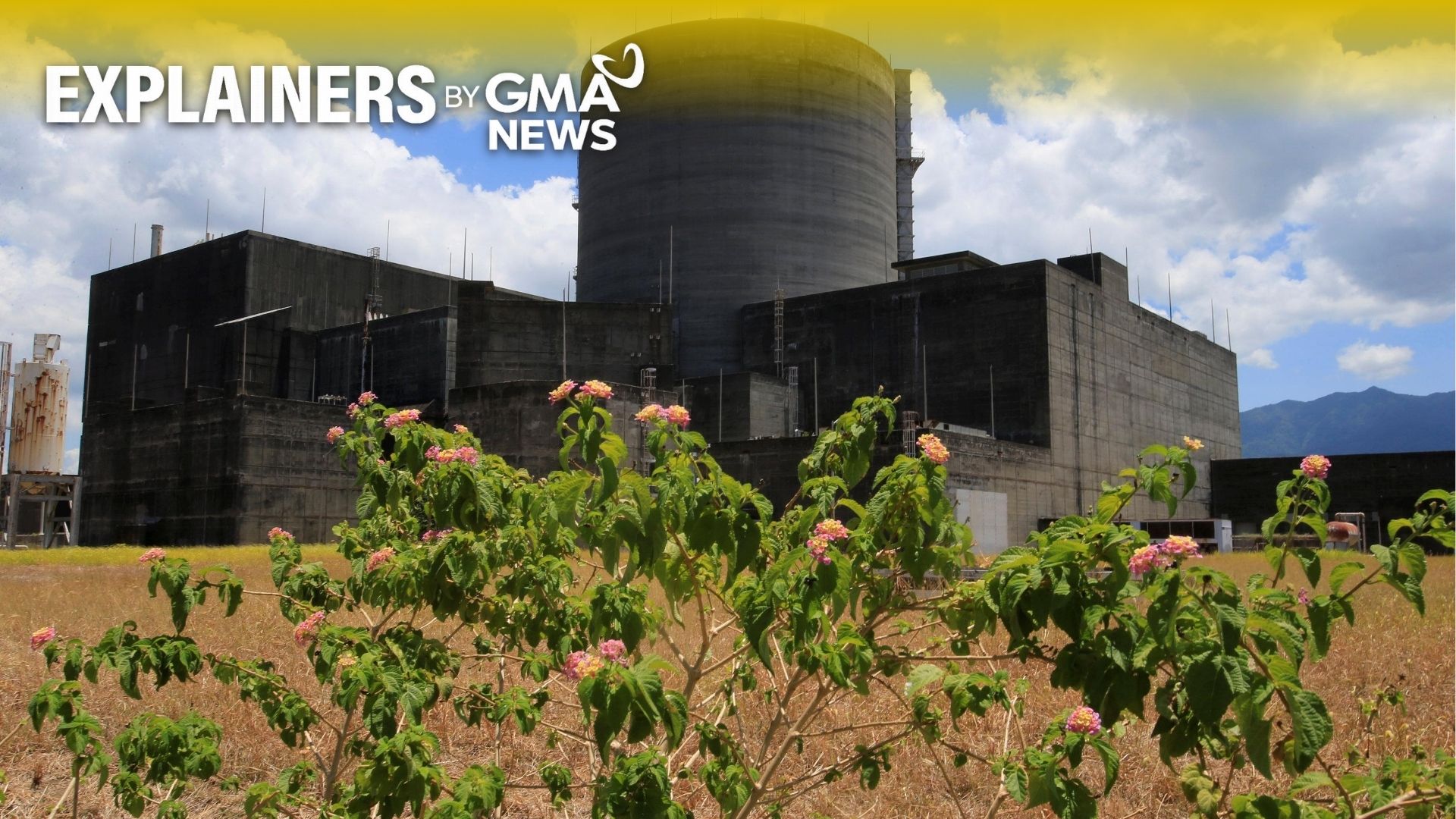
Construction of the 620-megawatt Bataan Nuclear Power Plant (BNPP) began in 1976.
In 1979, three years after construction began, work on the BNPP was temporarily suspended to allow the Commission on Nuclear Reactor Plants—created by Marcos Sr. to review the project's safety—to conduct an independent assessment.
In a letter signed by Marcos Sr. in November 1979, he said the commission concluded that the BNPP was "not safe" and posed "a potential hazard to the health and safety of the public."
The commission's findings were echoed by other experts who also raised safety concerns about the plant. However, Marcos Sr. ordered construction to resume in 1981 despite the recommendations to discontinue it.
After Corazon Aquino succeeded Marcos Sr. following the 1986 People Power Revolution, she issued an order formally halting the operation of the BNPP, citing safety and economic concerns.
The BNPP, which cost about US$2.3 billion, remains one of the most expensive infrastructure projects in Philippine history.
Nearly four decades later, then-President Rodrigo Duterte signed Executive Order 164, committing the government to introducing nuclear power into the country’s energy mix.
"The state will ensure the peaceful use of nuclear technology anchored on critical tenets of public safety, national security, energy self-sufficiency, and environmental sustainability," the EO, dated February 28, 2022, stated.
The EO stated that the national “government will assess, review and develop nuclear energy plans using integrated approaches that consider both the provision of energy supplies, and the role of energy efficiency in meeting increasing demand for energy."
The government, under the Duterte administration, projected demand for clean energy to grow at 4.4% a year, requiring almost 68 gigawatts of additional capacity by 2040.
“Considering this demand and the depletion of natural gas resources, nuclear power will play an important role to the required capacity to achieve energy security, especially to meet the needs of an emerging upper middle income country," the EO read.
In 2025, Marcos signed Republic Act 12305, also known as the Philippine National Nuclear Energy Safety Act, which established the Philippine Atomic Energy Regulatory Authority (PhilATOM), a quasi-judicial body with exclusive jurisdiction over nuclear energy regulation.
“Under the law, PhilATOM will be tasked with protecting people and the environment from the harmful effects of ionizing radiation, issuing licenses for nuclear-related activities, and ensuring compliance with international commitments such as those with the International Atomic Energy Agency (IAEA). The agency will also regulate the transport, storage, and disposal of radioactive materials,” Malacañang said in a press release.
On July 29, 2026, the DOE said that it is considering three locations for a future nuclear power plant, with Bataan among the shortlisted areas.
“We're shortlisting about three areas. I just don't really want to mention it yet because the final evaluation is not out yet. But Bataan is one of those three,” DOE Secretary Sharon Garin said.
Criticisms
The government’s push for nuclear power has drawn criticism from environmental groups, which have raised concerns over safety, cost, and the country’s vulnerability to natural disasters.
In 2025, Greenpeace Philippines criticized the passage of RA 12305, calling it “beyond alarming.”
“The so-called ‘Philippine Nuclear Safety Act’ shows how the government undervalues public safety and highlights their long history of ignoring people’s opposition,” Greenpeace Philippines Campaigner Jefferson Chua said in a statement.
Chua cited the Philippines’ exposure to extreme weather events and active fault lines as major reasons why operating nuclear power plants could pose risks.
“We are a nation battered by at least 20 typhoons in a year, sitting on earthquake faults. Operationalizing nuclear plants in the country is reckless and dangerous. The lessons from Chernobyl and Fukushima are clear: one nuclear accident can cause irreversible devastation; this is a risk we cannot afford,” Chua said.
Greenpeace also disputed claims nuclear power could help reduce electricity costs.
“Nuclear energy has never been clean or affordable. It is expensive, risky, and should never be considered as a solution to our energy insecurity, and as a pathway to getting out of the climate crisis,” Chua said.
Another group echoed these concerns, pointing to what it described as the lack of emphasis on renewable energy in Marcos' priorities.
“The likes of waste-to-energy and nuclear power have taken center stage in BBM’s priorities, while renewables were basically deemphasized,” Aksyon Klima Pilipinas JL Algo said in a statement.
The Asian Peoples' Movement on Debt and Development (APMDD) also warned against considering nuclear power as a viable option.
“Pitching nuclear power as a quick fix for high power bills is a dangerous distraction that misleads the public. In reality, nuclear energy is too slow, vastly expensive, and inherently unsafe," the APMDD said.
“A single seismic event could trigger radiological contamination, devastate marine ecosystems, and destroy local livelihoods,” it added.
Marcos said the government would prioritize safety in nuclear energy projects and inform the public about the potential benefits of nuclear power. –VBL, GMA News

