

 GMA Brandtalk
 Tracking
 Archives

Teachers must guide students in using AI responsibly — SEAMEO INNOTECH
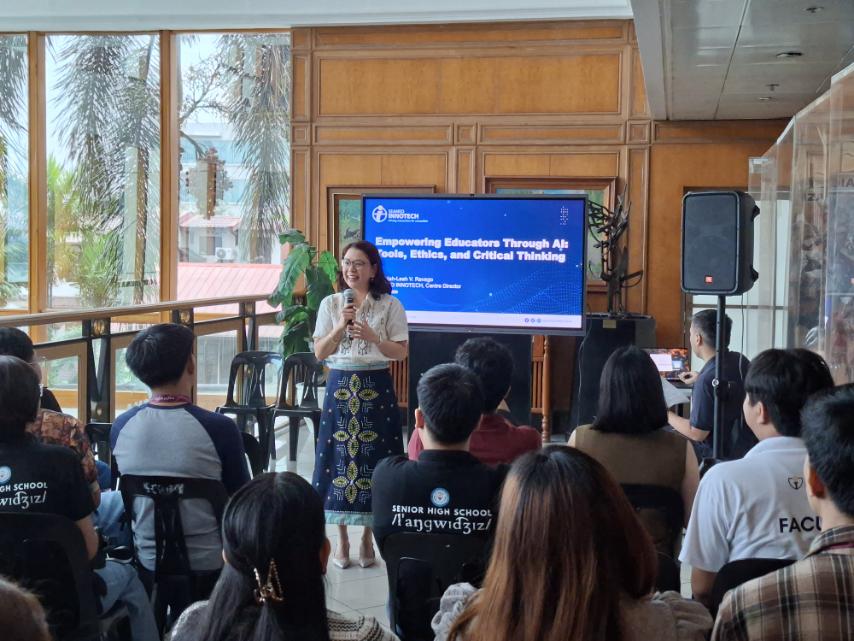
As artificial intelligence (AI) rapidly evolves, teachers are seeing firsthand how students use the technology—and they now have an important role in teaching learners how to use it responsibly, according to the Southeast Asian Ministers of Education Organization Regional Centre for Educational Innovation and Technology (SEAMEO INNOTECH).
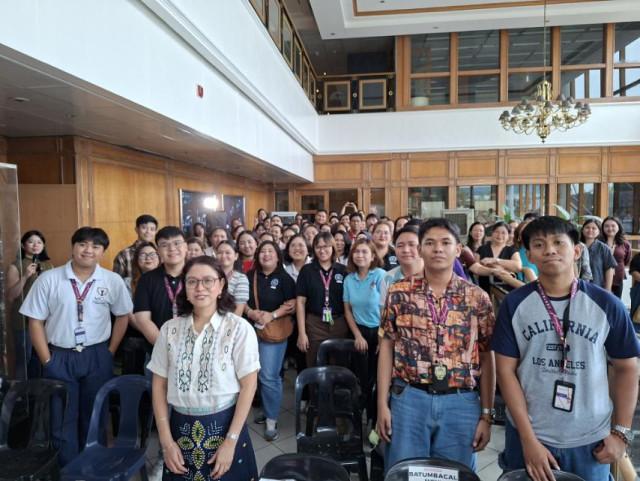
In celebration of National Teachers’ Month, GMA Network held a learning session on Saturday on the use of AI in education, attended by teachers from various schools, including Manila Central University, Trinity University of Asia, Pasig Catholic College, and Culiat Elementary School.
The session was led by Dr. Majah-Leah V. Ravago, Centre Director of SEAMEO INNOTECH, an organization focused on addressing gaps and challenges in education.
Ravago, an economist and educator, said AI has made teachers even more important—not less.
“Educators matter in the age of AI. So, we see ourselves looking at the big picture, okay? Teachers are nation builders. You don't just go to the school, to your classroom, just to teach. You play a bigger role in the development of the country,” Ravago said.
It would be unfeasible to stop the development of AI, Ravago said. The role of teachers, therefore, is to help students use the technology ethically and with critical thinking.
AI as a tool
“AI will not replace us. So do not be scared. But it should help us expand our capabilities. So first, AI as a tool, right? We can view AI as our teaching assistant,” she said.
Ravago said teachers are not in competition with AI and should remain in control of how the technology is used.
“Assess. You don't just accept. You still have to read and assess,” she said.
When using AI, teachers should still define their own learning objectives, adapt the information generated by the technology to the appropriate context, and, most importantly, remain accountable for its output.
While AI can quickly generate answers, teachers still need to verify the information. Consulting with colleagues can also help assess whether AI-generated content is accurate and appropriate.
Ravago also pointed out that AI is not neutral because it can adapt to and reinforce users’ preferences and biases. Teachers, she said, must also be willing to examine their own biases when using the technology.
“AI should expand educators' capabilities, not replace your judgment. Okay? So, our task as educators is not simply to make educators' AI users. You are not just users of tools. It is to equip educators to be informed users, critical thinkers, ethical decision makers, and confident professionals who remain firmly in control of teaching and learning,” Ravago said.
Ravago acknowledged that AI is already widely used for tasks that are meant to develop creativity and critical thinking.
Instead of simply prohibiting students from using AI, she said teachers should adapt the way they assess learning.
For instance, handwritten examinations could be conducted in classrooms, while presentations could be done in person, she said.
“Because AI technology is very dynamic, our assessment also needs to adapt,” Ravago said.
Environmental and privacy concerns
Ravago also acknowledged the environmental costs associated with AI use.
She cited the principle of resource and environmental economics, saying technology can be used as long as its benefits outweigh its costs.
She noted, for instance, that paper also has an environmental cost because trees have to be cut down to produce it.
Still, she stressed the need to give natural resources time to recover after they are used.
“This does not mean that you keep using it and using it to the point that it spoils and that it does not grow again. We also leave them time to grow,” Ravago said in a mix of English and Filipino.
On privacy, Ravago cautioned teachers about the information they enter into AI systems.
Sensitive information, such as students’ names and the salaries of private school teachers, should be handled with greater caution, she said.
Ravago also said teachers using AI for research should ensure transparency and obtain consent when necessary. They should likewise understand the terms and conditions of the AI models and platforms they use. — VBL, GMA News

