

 GMA Brandtalk
 Tracking
 Archives

ADVERTISEMENT
Filtered By: Scitech
SciTech
Online scams, child porn on the rise in the Philippines
+
Make this your preferred source to get more updates from this publisher on Google.
The number of cybercrime cases reported in the Philippines skyrocketed by over 200% in 2014, to 614 cases from 288 the previous year, according to the PNP Anti-Cybercrime Group's 2014-2015 Annual Cybercrime Report.
The most popular forms of cybercrime were Internet frauds and scams, followed by libel:
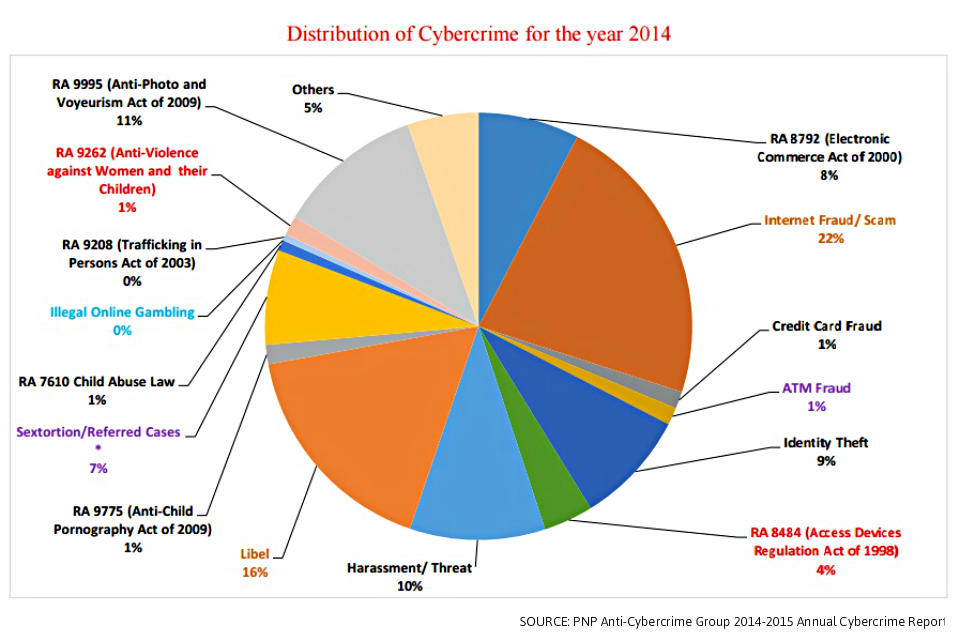
Internet frauds and scams are commonly perpetrated by hackers posing as official business entities, such as banks and online service providers. Posing as a legitimate agency fools unsuspecting victims into giving away their passwords and other personal details, and is more cost-effective than the so-called "brute force" hacking often portrayed in movies.
Child porn
However, Department of Justice Secretary Leila de Lima found the most reason to worry about child pornography, even if it currently accounts for just 1% of all reported cases in the PNP study.
In GMA News' Raffy Tima's report, he PNP pointed out that the number of child porn sites rose by 345% since 2011—all but opening the door to child pornographers all too eager to exploit impoverished Filipino kids.
Awareness and action
De Lima also said that the number of reported child pornography cases is not necessarily indicative of the number of perpetrators: it could mean that there are more people becoming aware of, and reporting, the crime.
“Because of the high level of awareness, kaya marami nang nagre-report,” said Secretary de Lima. “And that’s actually good. That’s good because kung nire-report, ina-aksyunan.”
In the past few months, multiple raids have been conducted against child pornography operations and it’s come out that it’s usually the parents or other relatives that are behind the crime. According to de Lima, they’re planning on proposing legislative action to address the liabilities of these adults.
Roots of child porn
Syndicates usually convince parents to engage in child pornography by promising them that nothing will happen to their children since they only need to take pictures of videos, and the customers won’t actually be able to touch the children.
Attorney Ronaldo Aguto, Jr., head of the NBI Cybercrime Division, said that there are actually reports that come from outside of the Philippines. And aside from child pornography, reports of identity theft, credit card fraud, and hacking are also increasing.
One of the more common scams now is when a criminal pretends to be someone on social media, engaging the victim’s friends and contacts in conversation and eventually trying to extort money. The syndicates look for accounts with complete personal information available and then use these accounts in their scam. — Bea Montenegro/TJD, GMA News

