

 GMA Brandtalk
 Tracking
 Archives

Necromancer brings blood, guts, and glory to Diablo 3
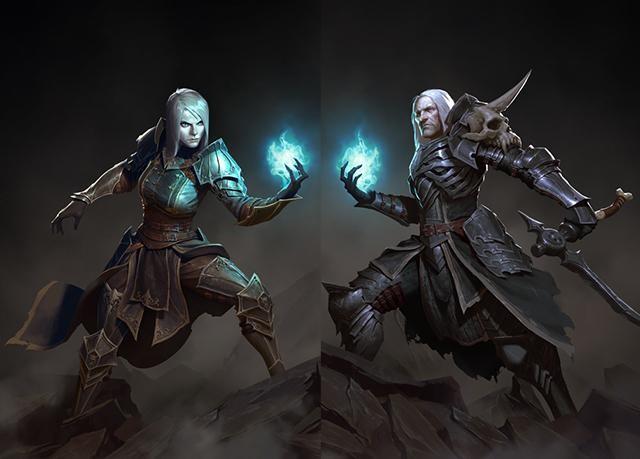
It’s easy to see the appeal of Diablo II’s Necromancer. He sported long, white hair draped over a gaunt face; vampire-pale skin stretched over an almost skeletal body; clothes the color of midnight; and boasted an affinity for scythes, curses, skulls, and death. That’s as metal as hell. More importantly, he boasted a shockingly innovative playstyle – one involving summoning your own personal army of undead to do most of the fighting for you.
Well, good news for “Diablo III” fans: the “Rise of the Necromancer” update brings back the heavily fan-demanded class. This contemporary iteration of the Necromancer isn’t an exact copy of the original, but he does feel like a natural evolution of the class, one that’s a perfect fit for “Diablo III.” He still summons dead things to do his bidding, he still throws around curses and fiddles with bones. But he’s also learned a bunch of deliciously wicked new tricks that’ll please anyone hankering for a little more blood and guts in their “Diablo III.”
Private army
The Necromancer is primarily a pet-themed spellcaster. But he’s unique in that he relies on two resources: essence and corpses.
Essence is basically mana, and is consumed to perform skills. Its pool is renewed with constant use of your primary abilities (those performed by clicking the left mouse button).
I never thought I’d say this, but the real fun begins with the corpses. Every time an enemy dies, a bloody chunk of flesh is left behind. The Necromancer can weaponize these “corpses” to hurt enemies. One of the first skills you’ll learn is Corpse Explosion, which comes under the Corpses discipline. As the name suggests, this skill detonates corpses in fantastic sprays of gore, damaging all nearby enemies. A single explosion can set off nearby corpses, resulting in a magnificently messy domino effect that’ll fill the entire screen with blood and carnage, taking down all enemies in the vicinity and producing more dead bodies in the process. It’s one of the most visceral and satisfying moves I’ve ever had the pleasure of executing.
Alternatively, the Necromancer can Devour corpses to regenerate lost life points. Or, using Corpse Lance, you can yank bones from the cadaver, gather them into a lance-like projectile, and impale a single target.
One of my other favorite corpse-related skills, Revive, doesn’t come until your Necromancer is a little more advanced in experience. By targeting an area littered with corpses, this spell allows you to reanimate up to 10 fallen enemies, who will join your cause for a time.
And so we come to the Necromancer’s most iconic specialty – the summoning of the dead, which falls under the Reanimation discipline.
Command Skeletons is a Reanimation skill that the Necromancer picks up early in his adventure. This automatically summons 7 semi-permanent skeletal warriors to your side. While skeletons can fall in battle, they are quickly replaced by new recruits as long as the skill remains in your Action Bar. Furthermore, you can focus their attack on a single target by simply selecting said target. The skeletons will then hurl themselves across the screen towards the enemy, then hack it into pieces.
Or you could instead opt for Army of the Dead, which summons a ghostly army to ravage a specified area for a short duration.
If you’re not one for crowds, however, you can instead use Command Golem to call forth a single towering golem, which packs quite a punch.
Perhaps the Necromancer’s most underwhelming discipline is Curses. This includes skills that cause a variety of ill effects on enemies, such as reductions to movement speed and attack damage. While such debuffs are useful, it’s hard to recognize their benefits with so many things happening on the screen at the same time.
The Necromancer also has the choice of going the melee warrior route or ranged caster. Bone Spikes summons bone shards from the ground to impale targets in the distance. Siphon Blood drains blood from faraway targets, simultaneously damaging them and healing you. Grim Scythe is a magical close-range weapon that is capable of cursing enemies or healing you.
The Necromancer’s skills are extremely comboable. For example, you can suck the blood out of a target, killing it, then create a Corpse Lance out of its carcass to exterminate another. You can assemble a cadre of Skeleton Mages to murder some monsters, then blow up their remains to destroy even more monsters.
As with all other classes, Skill Runes allow for a rich variety of builds for the Necromancer. To each major skill, you have a choice of assigning one of five runes, with each creating a different, additional effect. For instance, the Ice Golem rune gives your golem an ice blast attack, while the Flesh Golem rune allows you to command the behemoth to leap to an area, where it then collapses into a huge pile of usable corpses.
As amazing as the Necromancer is, you’ll have to decide whether or not you’re willing to spend $15 to acquire him. Unlike the update that brought us the Crusader, “Rise of the Necromancer” doesn’t come with a new story arc. You do get additional storage space, extra character slots, a pet, and a few cosmetic options, but when it comes down to it, you are essentially paying for the Necromancer.
Total, bloody chaos
Just when I thought I’d given up on “Diablo III” for good, along comes a new class that draws me back into its grim, hellish world.
The Necromancer is devilishly fun to play thanks to unique, inspired skills that are as much fun to watch as they are to use. With armies of undead at his command, and more than one way to turn a dead body into an instrument of destruction, this dark priest revels in total, bloody chaos. And it is absolutely glorious. — TJD, GMA News

